
This is How Elon Musk, Bezos, Gates and Buffett Made Their Money
Here’s what you can learn from them
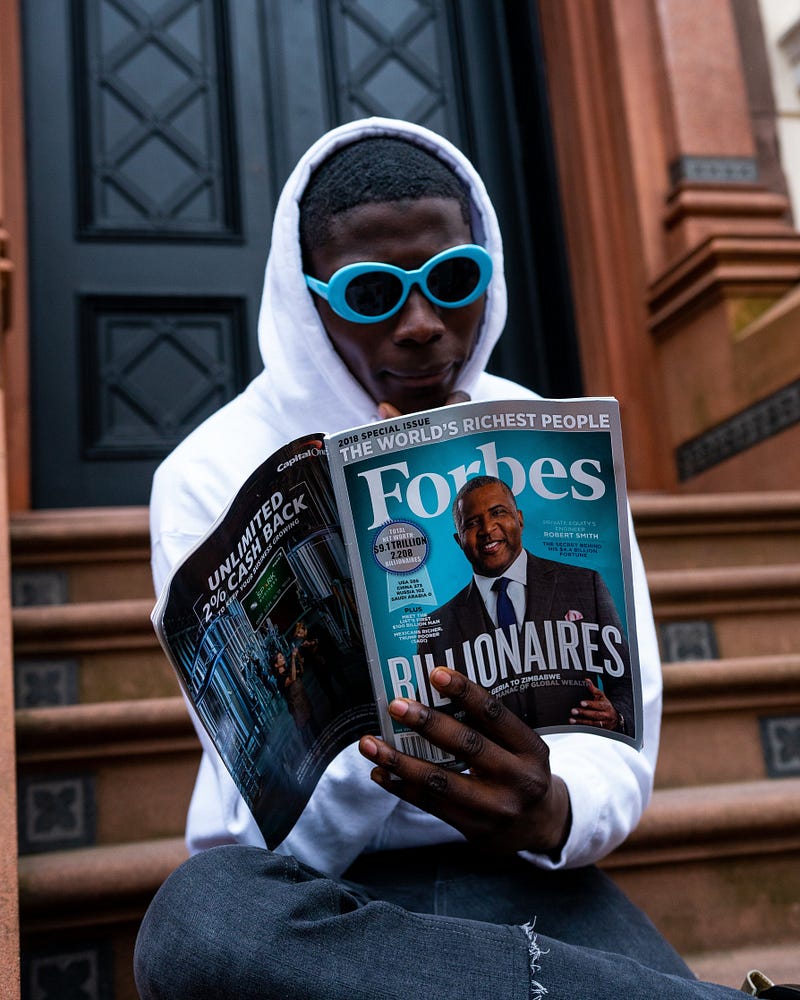
What do Elon Musk, Jeff Bezos, Bill Gates, and Warren Buffet have in common? They are all billionaires and they have been at some point in the recent past, the richest person in the planet.
But how did they get there?
Inheritance, hard work, or even entrepreneurial ability can only take you so far, but to become a billionaire you need something else.
Debt
It is not possible to make that kind of money unless you use leverage. Just saving, reinvesting profits, and being frugal doesn’t cut it. Borrowing at low interest rates and investing in solid assets is the only way to multiply your money 1000x.
Right now, we live in a low-interest era. The cost of borrowing is almost 0% and thanks to inflation, any scarce asset is guaranteed to appreciate substantially. This is an investors paradise, it doesn’t matter what you buy, it will go up in price. Guaranteed.
If you can borrow 100 million at 1% and earn a 20% yield with, that’s a 19 million profit a year. It’s a no-brainer.
Interest rates
Never has been so easy or so cheap to borrow money. Rates are at an all time low. Providing you can afford the monthly payments and that you are investing in scarce assets, the odds of making money are fairly high.
Of course, there are risks involved. Rates might go up, your source of income could dry out, and your credit score might drop. There are always risks involved but risk also means opportunity.
Inflation is here to stay and it’s unlikely that Central Banks raise interest rates because national debt to GDP ratios would become unsustainable. The only way forward is to print more money.
Inflation
Inflation is at its highest for the last 40 years, meaning that assets appreciate faster than ever before in dollar terms.
In this scenario, borrowing at low rates and using the money to buy inflationary assets like real estate, seems like a good deal.
Can anybody foresee depreciation in assets when inflation is at 20%? It seems highly unlikely.
The way to riches
Borrow money, invest in scarce assets, and then use those assets to get more leverage and provide liquidity.
This is exactly what Elon Musk and the others do and this is the main reason why they have gone from millionaires to billionaires.
Elon, despite being the richest man on earth, has no cash, everything is invested and every time he needs liquidity, he just borrows some more.
You might argue that this is ok for him but it’s not possible for us mere mortals. But I disagree.
The reason most people have accumulated some wealth is leverage. Your mortgage is exactly that and it is likely to be your most precious asset. If you use leverage wisely you can improve your chances of success.
Leverage
There is good debt and there is bad debt.
Borrowing money at low interest, with a long enough time frame, and investing it in sound assets is the best decision for your financial future, providing you do your due diligence and don’t over exert yourself.
Conversely, leveraging a position 20x in the stock market in order to make a quick bug is financial suicide.
The key here is to study the market, only invest for the long run, make sure you have enough liquidity, and keep some reserves to survive the dips.
Risk
Some people are averse to risk, yet this could be completely irrational and even dangerous.
Avoiding risk is sometimes the riskier thing you can do. Driving in order to avoid flying is as stupid as it gets, just look at the statistics. Yet, many intelligent people do it everyday.
The same can be said for investments.
In this inflationary scenario, keeping your money in the bank is a big mistake. It will lose half of its value in the next 5 years. Just because it seems safe, doesn’t mean it is.
We’ve been trained to play safe, to obey the rules, and to follow the crowd, but keep in mind that if you follow the lemmings to the precipice, you end up at the bottom of the cliff.
In these tumultuous times, it pays to be a contrarian. Just working hard, saving, and investing in a pension fund, won’t cut it. You are paying 50% in taxes, you could lose your job at any time, and there might not be a pension for you when you retire. Playing safe can be very risky indeed.
Weimar Republic
Hugo Stinnes was an entrepreneur during the Weimar Republic (Germany) during the 1930s.
The country was suffering from hyperinflation and he decided that in such scenario, borrowing an asset that is worth nothing (cash) in order to buy appreciating assets (real estate, gold, companies) was a good idea. And it was. He became extremely wealthy because he was able to read the situation.
Meanwhile, the people that played safe, work hard, and saved money saw all their wealth disappear due to inflation and currency collapse.
This is why it’s important to read the situation and interpret the signs carefully. Saving money is a great idea during low inflation times, during inflationary periods is just a waste.
Caveat
Of course, this is not financial advice, borrowing involves risk and you have to be prepared for the long run and being able to weather the storm.
This is how the richest people in the planet play the game and there is no reason why we should do the opposite.
Conclusion
Billionaires are wealthy because they have the ability to borrow cheap and the knowledge to invest wisely. While you or I will never get to that level, is worth keeping in mind their strategies and the lessons we can learn from them.
Playing safe can be very risky and risk might be just a biased perception. Try to act as rational as you can and don’t let yourself become fearful or greedy.
In these turbulent times, investing is not only advisable but also necessary unless you want to risk going broke. Learn from those at the top and use that knowledge to your advantage.
Not financial advice


