This is done by 1 out of 10 designers. Why aren’t designers used to research?
In 2019, after three years of working in my branding agency Moloko, I started creating a pre-design research system for designers. Later, it became a methodology “called “Evidence-based design.” With its help, designers can better understand the product, see free zones on the market, analyze color segments on the market and get information about free zones and, in general, have enough facts that allow you to create a product with a good understanding of why a particular design element was created.
Since the agency constantly needs new designers, I conducted my own 3-year study in which I asked the same questions to designers to better understand how they work before starting to come up with ideas. Based on a survey of 127 people, I received the following data.
A total of 113 people did a cursory study, which included a visual inspection of competitors without any statistical analysis.
9 people create boards with visual maps and draw conclusions
5 people make a full-fledged analysis with the findings they provide to the client and base their subsequent development on them.
These results clearly show that within the framework of the educational process in the design field, not enough time is devoted to teaching research. This is in a business environment where I work with people with specialized education.
The “Evidence-based design” method is a research unit that will be used to develop identity and packaging. The block is based on collecting data about companies and analytics and constructing visual maps, allowing you to draw accurate conclusions about the analyzed market segments.
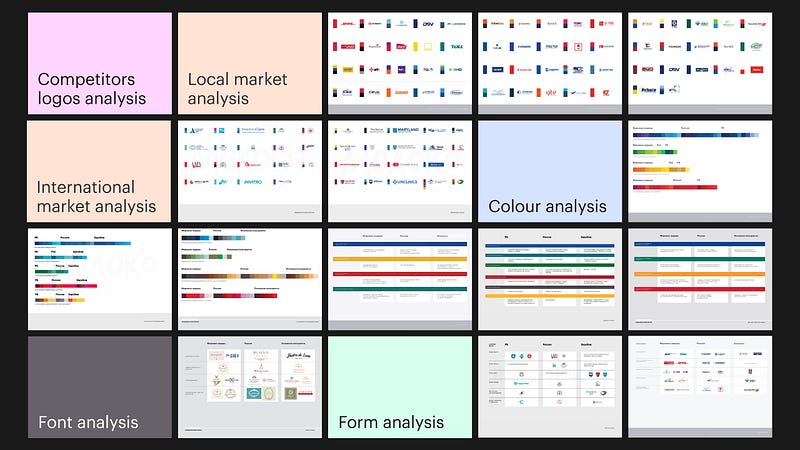
The basic evidence-based design reports include the study of logos, colors, fonts, ideas, and shapes, analyzing growing markets, and identifying visual trends in a particular segment. The expanded version examines the entire identity of competitors, the media used, and the optical component in advertising tools. The basic report can help any brand designer, graphic designer, or art director decide what a new brand should be on the market or how best to rebrand.
Also, the primary report on the “Evidence-based Design” methodology is an essential analytical block for any client. Over the past 4 years, I have talked with more than 50 clients who have created new products, and every time we talked about the competitive environment, they all had a partial picture. This is normal for the customer, but he needs new products more. When research uses the “Evidence-based Design” methodology, the researcher necessarily gathers a competitive field. This helps the client take a much broader look at the market and see all the players, not just those in the immediate field of view. This allows you to remove the focus on 2–3 competitors and show that there are much more companies in the market that you will have to fight.
Every second customer has the mistaken opinion that competing with small and medium-sized companies is unnecessary. Most often, a segment above the average in popularity is taken into the review of competitors. We try to show that this is only partially true, especially when the product is new and will need to bite off market share. And it will need to be bitten off by everyone, not just those who are now the leader.
One of the crucial points of “Evidence-based Design” is the design session that follows it. After presenting the report containing enough facts about the market, it is essential to discuss the conclusions and determine the vector in developing an identity for the company. This is where the most exciting part begins when strategic decisions are already made based on facts, not desires. During the design session, based on the research results using the “Evidence-based Design” methodology, the management can safely make a decision: they will choose a free color zone for the brand or a little-used one, or maybe they will mimic the market leaders. This critical stage allows the client and the agency to better understand what the future product should be.
One of the most valuable parts is the analysis of ideas in the market. This allows you to immediately cut off the directions in which you should not even think. This will enable you to show, for example, the visual dependence of a segment on certain characters. Just look at the pharmacies. 95% of them will use “+” as a mandatory symbol, or companies that sell mobile phone accessories will more often use a mobile phone in their logo. As with the color, this information indicates the state of the segment. And it is enough to understand the decision, whether we are moving within the established rules or creating something new, trying to find a visual blue ocean.
Why are designers and studios not used to doing full-fledged research?
In fact, there are not so many reasons:
1. There is no basic knowledge and understanding that this is a mandatory stage in the work.
2. Because of the cost of the service. When development is sold cheaply, there can be no research question. The main task is to have time to deliver something to the client in the shortest possible time to earn money on the project.
3. There are no standards in the study. By creating the “Evidence-based Design” methodology, we have made standards to systematize the research process.
4. The most essential thing. There is no certainty that the client will rely on the facts he received after the research. We have passed this stage, and I can safely say that clients always listen to the agency. Especially if the agency’s employees confidently talk about the need for all stages of work and show the importance of each of them.
5. In many small studios, designers are managed not by art directors but by marketers and ordinary managers. Accordingly, this immediately indicates that the agency needs to have the right approach to working with branding.
Evidence-based design is the only technique that allows you to develop branding based on facts, not just an idea.