
CULTURE|RELATIONSHIPS
This Is By Far The Hardest Thing To Adjust To Since Immigrating to Germany
I don’t know if I’ll ever welcome such a thing in my life
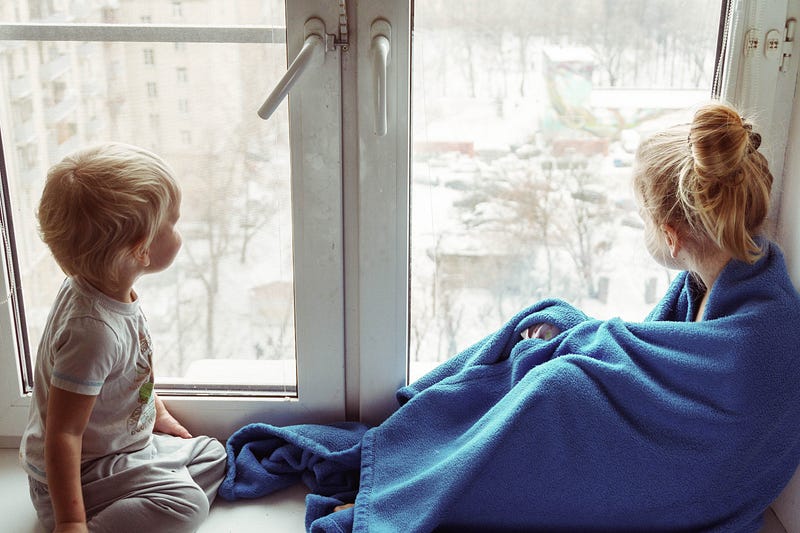
Before moving to Germany almost 4 months ago, I had only visited once for one week during the summer.
Therefore, I was unaware of how much I would be affected by one of the most common practices of Germans.
It’s called lüften, which is a frozen form of hell for heat-loving people like me.

Adapting to another culture can be quite challenging.
The phrase culture shock exists for a reason.
Culture shock refers to feelings of uncertainty, confusion, or anxiety that people may experience when moving to a new country or experiencing a new culture or surroundings.
I was born and raised in the United States.
I’ve visited around 15 countries throughout my life and have lived in Argentina, the Virgin Islands, England, Italy, and Croatia separately for at least 3 months.
Yet, I have never felt such a shock to my system, literally and metaphorically, as the German practice of lüften, which is basically airing out a place by opening at least one window.
Imagine opening all of your windows WIDE OPEN, not just once, but 2–3 times a DAY in the DEAD OF WINTER.
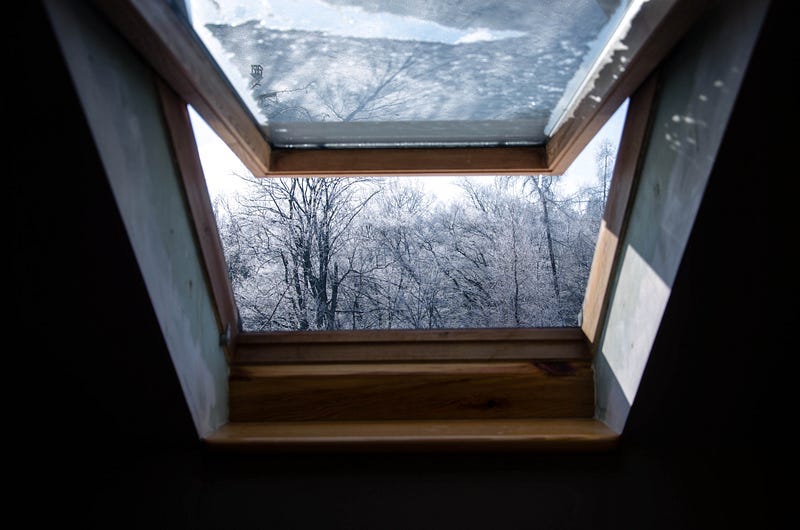
At first, I was in denial as to whether or not my partner and his family (who recommended that we do this) were serious about this practice.
I was skeptical about its practicality, which Germans are known for practicality and efficiency, and immediately set out to discover for myself if their claims were true.
To my unpleasant surprise, they are right and true.
Here’s an excerpt from one of many articles on the matter that sums up why this is done here in Germany:
Most houses in the US are built with wood framing, and the exterior walls are constructed with 4×6 boards (i.e. approximately 6 inches (15 cm) thick). German houses are built with cinder blocks, and the standard thickness for an exterior wall is 14 inches (36 cm)!
The downside to this highly-efficient construction method is that the air quality inside can deteriorate quickly. Without any new air coming in, carbon dioxide and humidity levels rise, and the air becomes, as the Germans like to say, “bad.”
It’s also bad for the building, which is one of the reasons that proper ways of heating and ventilating my home is IN MY LEASE (I was shocked to see that).
Apparently, the creation of modern buildings with new and improved heating and ventilation methods in Germany has been causing a stir because of these long-held practices.
In the study, Bauer and her colleagues highlighted the different ventilation and temperature preferences of two residents of the same apartment building. One was a German woman who kept her windows open so that her living room was a brisk 19 degrees. The other was a Greek man, who preferred his home to be a balmy 27 degrees.
“Those different preferences and habits place big demands on a single building when it is equipped with smart technology to keep air circulating and conserve heat, “ Bauer said. “There’s a tendency to create passive housing that is designed to be energy efficient without residents doing anything, but that ignores the fact that people are stubborn and do things anyway, and not in the standard way that’s been recorded in engineers’ labs.”
27 degrees Celsius is 80.6 Fahrenheit. That’s what I’m talkin’ ‘bout!
Thank goodness for the Internet, where I could read up on and discover other people who could relate to my pain:
Winter is in full swing, which means the hottest debate going on between my German husband and me is also the coldest: lüften. …
Impact ventilation! My ultimate nemesis in the winter months, but something deemed absolutely necessary by my German husband. …
I can still remember the feeling of reading this email in complete disbelief. It was cold outside! It couldn’t really be necessary to open my window twice per day… could it? …
In the seven years since, I have finally learned the proper heating and ventilation methods, but it doesn’t mean I like them.

Here’s one more clip from another unfortunate soul who has felt my cold version of hell:
Ok, I get that building construction methods reduce drafts and a lack of air filters means that the air in a building doesn’t exchange so often. Yes, I understand that this is not really the healthiest thing to breath stale air. But really does this mean that every few hours we need to open ALL the windows for 10 minutes? Seriously? It is mid-February and 40 degrees F outside and the wind is blowing. Still every day at work someone opens several of our large windows in the open plan office that I work in.

I am someone who once quit a job I had as a young adult because I didn’t like having to put my hands in a freezer on a frequent basis (to grab frozen fruit for smoothies).
One of the best things about Iceland that I absolutely LOVED is that even though it was freezing outside (I went for 2 weeks in February), it was always toasty warm inside due to their abundance of geothermal energy.
For now, I’m learning to cope with oversized hoodies, soft sweatpants, and fluffy, warm slippers that I can throw on when it’s time to open all 5 of our windows for “cross ventilation”.
Wish me luck!
Or as they say in German: Die Daumen drücken.

More stories for you: