
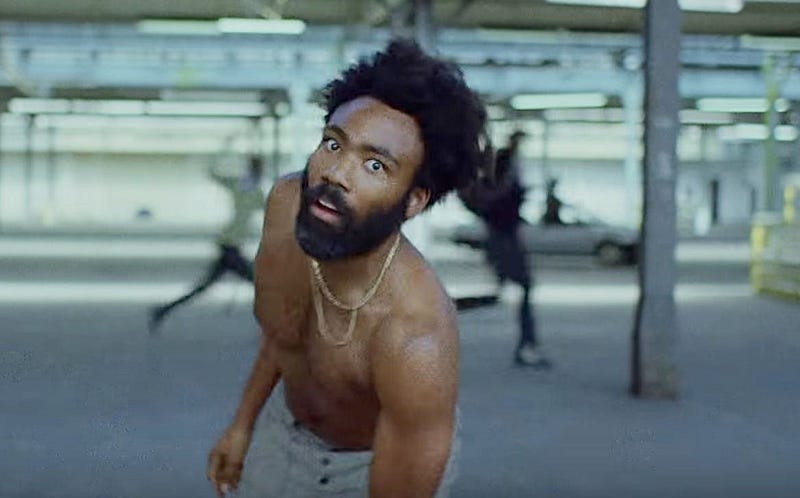
This is America
Musings on the Capitol Riots
This is an excerpt from my keynote speech to City of Birmingham Toastmasters Club on Thursday, January 7, 2021
I got caught rioting in our nation’s capitol.
If you believe in Dr. King’s words, that “ We are caught in an inescapable network of mutuality, tied in a single garment of destiny. Whatever affects one directly, affects all indirectly.”
Then, I saw you rioting too.
Today, I am going to share my insights on social change, especially in consideration of the big moment we find ourselves in and what we — you and I — can do starting today to restore and reclaim the legacy of our foreparents.
“This is America. Don’t get caught slippin’!” - Childish Gambino, 2018
Childish Gambino could not have said it better. But, the truth is we did get caught slippin’ because, in many ways, we have always been slippin’.
The violent riot that took place on Capitol Hill was no mystery for many of us. The sense of outreach and turmoil and frustration and injustice that we have all seen and been feeling for the past few years is what our foreparents felt mere blocks from Birmingham’s city hall two generations ago.
And, two generations before marching in the streets, the parents and grandparents sweltered in the belly of iron ore mines just a few miles from Downtown Birmingham, in Oxmoor Valley, Bessemer and Ruffner Mountain.
And, a few generations before working the mines, it was the same dissonance that our great-great-grandparents felt just outside of Birmingham, in plantations throughout Alabama and the broader South.
This is America. We have been slippin’ for a long, long time.
This country knows how to rage. But, not all rage is treated equally, is it?
The images from our nation’s capitol on yesterday were as classic as they were bizarre. Classic in terms of the audacious, privileged protest of some White Americans. We saw glimpses of White Wakanda, where the privilege sense of propriety and ownership to the exclusion of others is so strong that they burst through the halls of power in broad daylight, kick in the doors, and impermissibly grab this nation by the birthplace with their filthy, ignoble hands.
In 1967, two dozen armed but peaceable Black Panthers led by Huey Newton and Bobby Seales entered the California State Capital general assembly. They were peaceably disarmed by Capitol Police. But, what followed that incident was a national crackdown on Black Panthers, including several state sanctioned killings by the FBI, notably Fred Hampton in Chicago. Of equal consequence, that one act of Black defiance helped catapult California Governor Ronald Reagan into the national political spotlight as a law and order presidential candidate (and president) while also supercharging the largest period of membership growth for the NRA (National Rifle Association.)
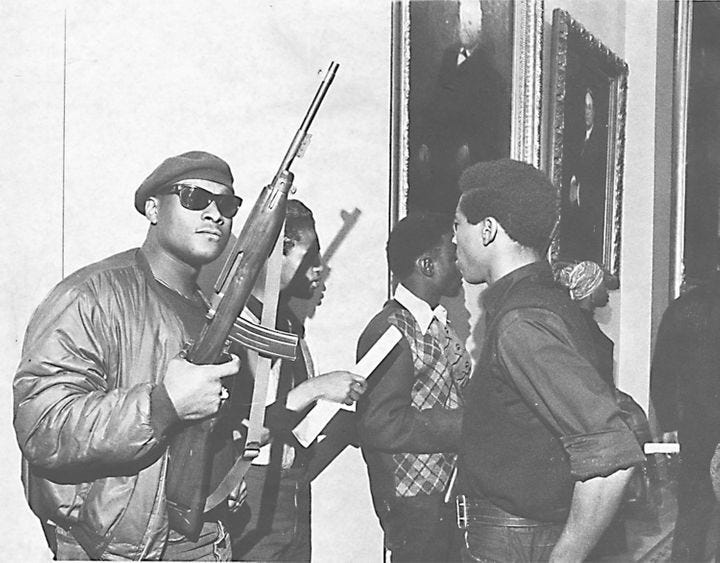
Black Americans have been feeling the consequence of that act of Black rage every since. What will be the enduring consequence of this White Wakanda moment?
In the military there is a concept called “commander’s intent.”
The way commander's intent works is that the leader of a group gives an order and explains why the order is important. Plans are made around that order and then they move to execute the order. But, in the haze of battle plans get changed.
There will likely be a moment in time where there is a pause and re-consideration of what to do next. So, the people following their leader lean on their “commander’s intent” to provide guidance on what to do next, even without hearing from her.
For instance, when Mayor Woodfin was hospitalized with Covid-pneumonia earlier this week there were a number of decisions that still needed to be made by our leadership team. With limited access to the Mayor, we had to pause, re-consider and lean on the commander’s intent: Putting People First. That’s the lense through which we considered every new challenge raised during that time period.
I would argue that the commander’s intent of the formation of this country was to ensure that anglo-saxon white men would never again be subjected to someone else’s authority, someone else’s flag, someone else’s power.
The conquering spirit of the phrase “manifest destiny” personified by an unmasked, rugged individualism was not for women, was not for indigenous people and certainly was not for black folks in this country. Only those that are wholly controlled and owned by white men.
So, knowing this history sets President Trump in the proper context. His rage is perfectly representative of the pure-hearted anglo man who wants what he feels is his birthright. His and his alone. He is bewildered, frustrated and beside himself with imminence of a pluralistic society. For years, pluralism was more of an idea than a reality in terms of real, shared power in America; a mere aspiration.
But, the fundamental societal shift, gains and awakening we have been experiencing for the past few years is real, epitomized by the ascension of Barack Obama to the role of President. There is still work to do to level the equitable playing field. Progress has been felt in many parts of society though not as dramatically detrimental for whites as Trump would portray.
3 Power Tips: Addressing The Problem
Too often, we stewards of institutions see ourselves as caretakers instead of commanders. When the mob behaves badly you don’t have to just sit down and take it, resorting to digital hissy-fits on social media to express your frustration.
If you are concerned about social change and the injustice you find in the world today, then riot yourself. Occupy your street. Command new intent.
Here are three things you can do as a commander of the space you occupy to drive positive change to restore and reclaim the legacy of our foreparents.
1. First, know your history. Not generally, but right where you are. For instance, did you know that former Birmingham Mayor Arrington put forth a public vote to enshrine Birmingham’s civil rights history in a museum in the mid-1980’s not once, but twice. The voters of Birmingham refused to embrace this city’s history as a triumph. Instead, many considered it an embarrassment or a trauma and were willing to set that history aside in for the sake of moving past it. It took a third time to form the Historic Preservation Authority and authorize the commission of the construction of the civil rights institute by issuing a bond. Understanding this is important for many of your efforts, whether you were involved with the removal of the confederate monument last year or in the celebration of the city’s 150th birthday this year. Know your history right where you are. What we are doing here is not new and it was preceded by forces that either enable us or impede us. In fact, your efforts right here and right now are either making it easier or harder for the next set of leaders to carry the work forward.
2. Next, start developing others right now. My greatest disappointment with some of the leaders that preceded me is the collective lack of intention to nurture new leaders. When I was younger I didn’t understand it and it frustrated me. Today, I understand it so much better.
I’ve learned that the reason that people don’t start mentoring and developing others in their later years is because they didn’t practice it in their earlier years. Start now. Some of you may say, “but I’m just starting out myself. I don’t know how to do this.” But, everyone has someone behind them, inasmuch as everyone has someone ahead of them. It’s the cycle of life. Start small, share what you have learned, and learn to listen deeper with loving ears. Developing other people is a practice and it those you mentor do not have younger than you, but I highly recommend it. I have personally seen growth in senior leaders here at the City of Birmingham, influenced by their younger counterparts. Share who you are right where you are.
All of you influence others, including me. I want you to do it with more intention.
3. Lastly, lead with love. It sounds corny and it might even sound naive, given the state of affairs in the world. But, hear me well children: every great leader you admire, the ones on your posters and memes and books found their mountaintop when they found their love for themselves, their work and their people.
I leave you as I found you, with the words of Dr. Martin Luther King, Jr. a reflection on a passage from the Book of Matthew from his book, “Strength to Love.”
Ye have heard that it hath been said, Thou shalt love they neighbor, and hate thine enemy. But I say unto you, Love your enemies, bless them that curse you, do good to them that hate you, and pray for them that hate you, and pray for them which despitefully use you, and persecute you; that ye may be children of your Father which is in heaven. — Matthew 5:43–45
“The meaning of love is not to be confused with some sentimental outpouring. Love is something much deeper than emotional bosh. Perhaps the Greek language can clear our confusion at this point. In the Greek New Testament are three words for love…agape is the love of God operating in the human heart. At this level, we love men not because we like them, nor because their ways appeal to us, nor even because they possess some type of divine spark; we love every man because God loves him. At this level, we love the person who does an evil deed, although we hate the deed he does.” — Dr. Martin Luther King, Jr., Strength To Love
This is America.
When the world goes dark for one reason or another, we will lean on our relationships, our intellect and our love to advance our society.
This is America.
And, in Birmingham — the seat of America’s conscious — when monuments are torn down and communities are ravaged by pestilence we double down on the fighting spirit of our ancestors. We find a riot within our hearts and claim what God would have for all of us: a beloved community and a beloved nation.
This is OUR America.
Ed Fields is a marketer and strategist. He currently serves as Senior Advisor and Chief Strategist for the City of Birmingham Mayor’s Office. Follow him on LinkedIn, Medium, or Instagram.


