
This Coffee Bean Could Challenge Arabica And Robusta As Global Coffee Shortage Looms
How global warming and supply-chain disruption affect coffee production.
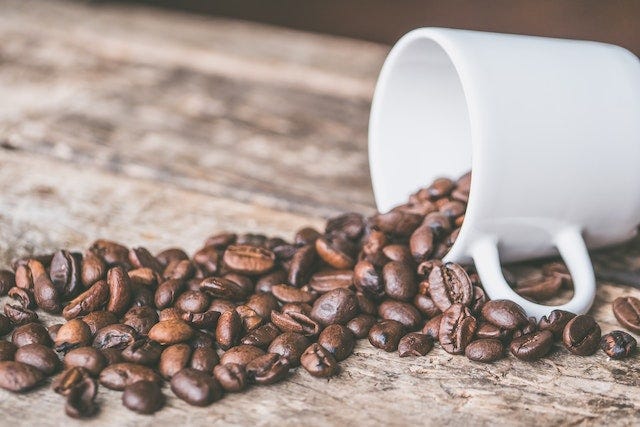
The global supply of coffee consists of two species: Arabica (Coffea arabica, ~55%) and Robusta (Coffea canephora, ~45%).
The last few years have devastated the coffee industry due to global warming and supply chain disruptions.
Weather perturbations stand in direct proportion to the price of coffee.
The bad weather in coffee-producing countries has led to the doubling of the Arabica price in 2022 relative to 2019.
Moreover, the world is seeing an increasing demand for coffee. The global production rose from 93 million in 1990 to 165 million 60 kg bags (measurement unit) in 2019. This is an increase of 77% over three decades.
Coffee producers have to adapt coffee farming to adverse weather conditions through
- Modification of the farming practices
- Relocation to different regions with suitable climates
- Development of novel coffee plants
The last option appears to be the most feasible as it disrupts the cultivation of coffee the least.
Researchers suggest we resurrect a long-forgotten variety, Coffea liberica.
The crop plant Liberica coffee comes from West Africa. It rose to prominence in the 1870s in southern Asia as coffee leaf rust wiped out Arabica in the region.
Between 1880 and 1900, Arabica and Liberica were the main coffee species in global commerce.
However, Liberica fell out of favor in the 20th century.
- It had poor flavor and poor quality.
- Its walnut- to plum-size fruits and tough skin were harder to process.
- After 1900, Robusta came. It was much easier to cultivate and had a better flavor.
There’s still low-level commercial production of Liberica in Africa and Asia. In the 20th century, it accounted for about 1% of global coffee production.
A Coffea liberica subspecies, Excelsa, deserves special attention. It is partially resistant to coffee leaf rust, delivers high yields, and doesn’t need the high elevation conditions required for Arabica.
Excelsa produces strong coffee with a sweet flavor.
Uganda and South Sudan are already growing Liberica. Farmers in both countries have shifted from farming Robusta to Excelsa over the last 20 years. This is a result of production issues with Robusta.
Ultimately, the scale of uptake for Excelsa will depend on the demand for coffee.
Historically, new coffee species gained widespread attention due to massive supply-chain disruptions. This is how Robusta came to be after the coffee leaf rust epidemic at the end of the 19th century.
As global warming continues, we may hear more often of Liberica as coffee farmers diversify their offer.


