avatarDannyOnDemand

Free AI web copilot to create summaries, insights and extended knowledge, download it at here

2086

Abstract

created his own line of tumblers, with proceeds going to support her.</p><p id="a584">Nicole’s case, while ending on a positive note thanks to Combs’ intervention, highlights a critical message for print-on-demand sellers: staying informed and compliant with intellectual property laws is crucial.</p><p id="1b59">Unfortunately, too many sellers think they can create anything on Amazon without consequences.</p><figure id="3e53"><img src="https://cdn-images-1.readmedium.com/v2/resize:fit:800/1*1_D9oi14nnNrwTq35e01dA.png"><figcaption>Screenshot Of Taylor Swift Books On Amazon</figcaption></figure><p id="4527">You must own the publishing rights to any content you upload according to <a href="https://kdp.amazon.com/en_US/help/topic/G200672400">Amazon’s legal and content guidelines</a>.</p><p id="5440">Unfortunately, most people don’t take the time to look through this.</p><p id="2cd3">If you sell products on Amazon or any other print-on-demand site, it’s super important to understand two key legal concepts: Copyright and Trademark.</p><p id="a640">Copyright is a form of intellectual property law that protects original works of authorship such as books, music, film, and art. If you didn’t create it, you shouldn’t use it without permission.</p><p id="b379">For example, if you see an awesome picture online, you can’t just grab it and slap it onto your book cover. That’s a no-no and can get you into legal trouble.</p><p id="2a24">A trademark is a unique word, phrase, symbol, design, or combination of these, that identifies and distinguishes the source of goods or services.</p><p id="6d2f">Trademark laws make sure no one else can use something that looks or sounds too similar to your brand.</p><p id="500e">Let’s say you’re browsing Amazon and see a coloring book with Pokémon on it. Unless the person who made it is the original creator of Pokémon (which is unlikely), that’s a problem. They’re using someone else’s creation (copyright) and a well-known brand (trademark) without permission.</p><figure id="c6ea"><img src="https://cdn-images-1.readmedium.com/v2/resi

Options

ze:fit:800/0*mhVSBG8ZCClODWtP.png"><figcaption>Searching coloring books on Amazon.com | Screenshot By Author</figcaption></figure><p id="5e26">To stay safe before you start creating or selling anything, ask yourself: “Did I come up with this idea myself, or is it from a TV show, movie, or another brand?” If it’s the latter, avoid creating it.</p><p id="afc7">To be extra sure, you can look up trademarks. In the US, use the US Patent and Trademark Office; in the UK, check the Intellectual Property Office.</p><p id="c3fe">Different countries have different rules, so check the right office for where you live.</p><p id="e70d">Pay attention to the “goods and services” section — if you see something like IC016 (for books), and it’s the same type of product you’re making, you should steer clear.</p><p id="bcfe">Remember, even if a trademark is just pending (not fully registered yet), it’s safer to avoid using it. You don’t want to end up in a situation where it gets approved after you’ve started using it.</p><p id="310f">It’s your responsibility to make sure you’re not stepping on any legal toes. Do your homework, and keep your creations original and trouble-free!</p><p id="f036">In the end, Nicole was very fortunate that the country superstar stepped in but it’s a cautionary tale reminding sellers about the potential legal pitfalls in the industry and the importance of ethical business practices.</p><div id="effc" class="link-block"> <a href="https://royaltiesondemand.beehiiv.com/subscribe"> <div> <div> <h2>Subscribe | Royalties On Demand Newsletter</h2> <div><h3>Your guide to the world of passive income. Offering tips and strategies to build a sustainable online income.</h3></div> <div><p>royaltiesondemand.beehiiv.com</p></div> </div> <div> <div style="background-image: url(https://miro.readmedium.com/v2/resize:fit:320/0*YJGOF9IdrhGtJoGp)"></div> </div> </div> </a> </div></article></body>

This Amazon Seller Was Sued $250k
Photo by Bermix Studio on Unsplash

A recent lawsuit has sent shockwaves through the print-on-demand community.

Nicole Harness, a small-scale seller, faced a staggering $250,000 lawsuit for selling tumblers featuring the likeness of country music star Luke Combs.

Nicole’s venture into selling these themed tumblers began after attending a Luke Combs concert.

However, her endeavour quickly turned into a legal nightmare when she was sued for using Combs’ image without permission, infringing on his personality rights and copyright laws.

Despite only selling a handful of items, 18 tumblers with his name and face for $20 each making $360. The lawsuit demanded a sum far exceeding her earnings.

You may think that this is unfair but this case serves as a huge reminder of the legal risks involved in print-on-demand businesses.

The timing could not have been worse for Nicole as she had recently been hospitalized with a chronic heart condition, on top of that she didn’t even know she was being sued having being served via an email that went into a junk folder.

She only noticed when her webstore was out of commision and she looked up the horrible news.

This sad story emphasizes the importance of adhering to intellectual property laws. It highlighted how even small-scale sellers could face severe consequences.

However, in a surprising turn of events, the situation took a positive twist. Luke Combs, upon learning about Nicole’s predicament, responded with a compassionate gesture.

He not only pledged to assist her financially but also created his own line of tumblers, with proceeds going to support her.

Nicole’s case, while ending on a positive note thanks to Combs’ intervention, highlights a critical message for print-on-demand sellers: staying informed and compliant with intellectual property laws is crucial.

Unfortunately, too many sellers think they can create anything on Amazon without consequences.
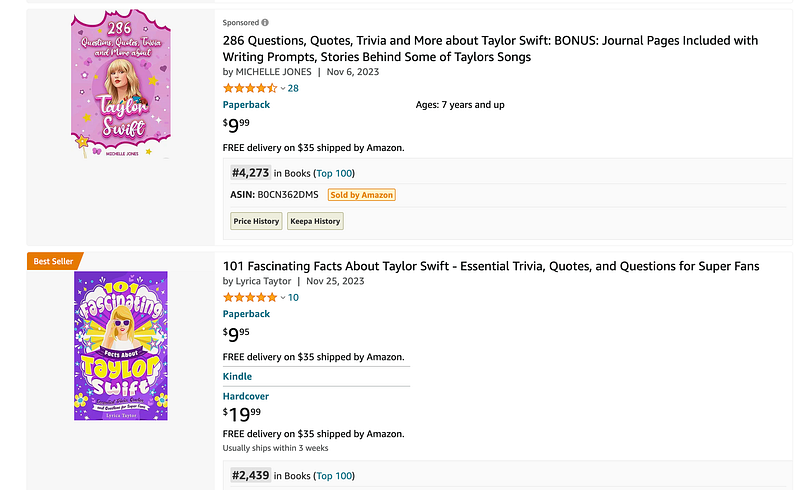
Screenshot Of Taylor Swift Books On Amazon

You must own the publishing rights to any content you upload according to Amazon’s legal and content guidelines.

Unfortunately, most people don’t take the time to look through this.

If you sell products on Amazon or any other print-on-demand site, it’s super important to understand two key legal concepts: Copyright and Trademark.

Copyright is a form of intellectual property law that protects original works of authorship such as books, music, film, and art. If you didn’t create it, you shouldn’t use it without permission.

For example, if you see an awesome picture online, you can’t just grab it and slap it onto your book cover. That’s a no-no and can get you into legal trouble.

A trademark is a unique word, phrase, symbol, design, or combination of these, that identifies and distinguishes the source of goods or services.

Trademark laws make sure no one else can use something that looks or sounds too similar to your brand.

Let’s say you’re browsing Amazon and see a coloring book with Pokémon on it. Unless the person who made it is the original creator of Pokémon (which is unlikely), that’s a problem. They’re using someone else’s creation (copyright) and a well-known brand (trademark) without permission.
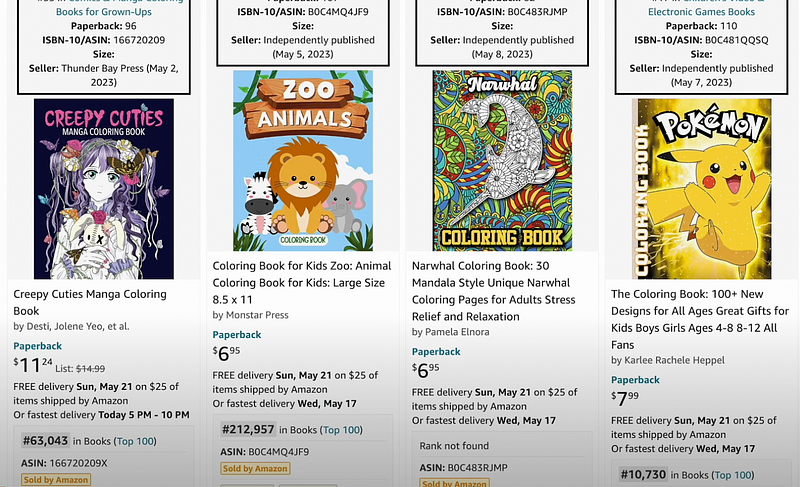
Searching coloring books on Amazon.com | Screenshot By Author

To stay safe before you start creating or selling anything, ask yourself: “Did I come up with this idea myself, or is it from a TV show, movie, or another brand?” If it’s the latter, avoid creating it.

To be extra sure, you can look up trademarks. In the US, use the US Patent and Trademark Office; in the UK, check the Intellectual Property Office.

Different countries have different rules, so check the right office for where you live.

Pay attention to the “goods and services” section — if you see something like IC016 (for books), and it’s the same type of product you’re making, you should steer clear.

Remember, even if a trademark is just pending (not fully registered yet), it’s safer to avoid using it. You don’t want to end up in a situation where it gets approved after you’ve started using it.

It’s your responsibility to make sure you’re not stepping on any legal toes. Do your homework, and keep your creations original and trouble-free!

In the end, Nicole was very fortunate that the country superstar stepped in but it’s a cautionary tale reminding sellers about the potential legal pitfalls in the industry and the importance of ethical business practices.

Amazon
Make Money Online
Copyright Infringement
Online Business
Side Hustle
Recommended from ReadMedium