
Thirty Things To Do After You Die — Chapter 13
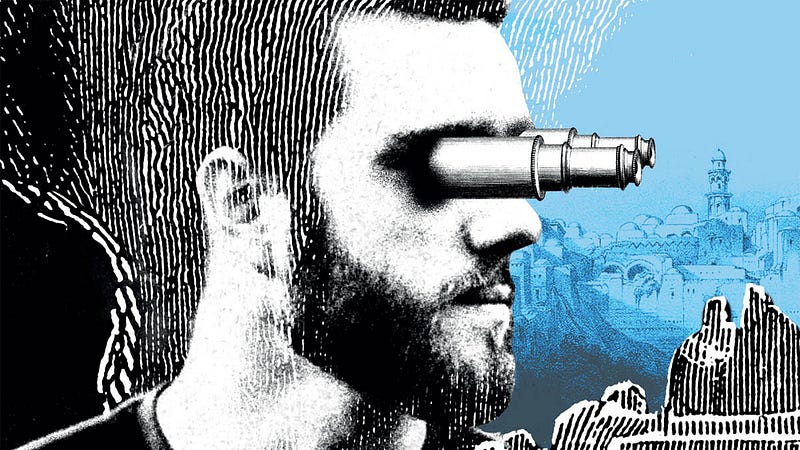
Unusually for Christian, and especially because it was Sunday, he’d got up before Beatrice. For the first time in weeks, he’d felt good about the book, though it did unnerve him as to why, given the abuse he and it had endured from Kevin the previous evening. Furthermore, it had been a restless night, Christian’s dreams having been occupied by an unusually animated Erdygrot, whining on about the cold reality of the slush pile and the futility of writing anything other than sadomasochistic vampire-werewolf teen romance.
This Sunday was slated to be his first probationary attendance at church (another of Bea’s armistice terms). And he would have gone willingly, keen to build bridges as well as study the behaviour of believers in the field, but when Beatrice had got up, she’d informed him she would be going alone. Christian had to stay away ‘until he was ready’. It was only when he relived snippets of the conversations from the previous evening that he realised why.
The upside was a free morning to get the new ideas onto the virtual page. Enthused, he made an earlier-than-usual start to his writing day, restricting himself to only one episode of a Frasier double bill before sitting down at the keyboard.
For once, words flow with ease. Ideas rise before him, expand, deepen and evolve, deduce their place in the jigsaw and slot themselves in. The pieces begin to join forces; themes and concepts emerge; connections form, arcing between the islands. Child ideas sprout everywhere, so many he switches to pen and paper to scribble each one down, writing furiously for fear of losing the others already evaporating in the stack of his short-term memory. He rarely finds himself in this place, but when he does, he knows he has it in him to be a writer. The world outside, people, time, the room around him, and even his own self have faded away, his universe has collapsed to words and ideas, the pen and the paper. All he has to do is give in to it, try not to overthink, try not to think at all. Just let it flow, yes, trust in the flow. Now words form ever more rapidly, quickly filling the pages, one idea flows into another, and another, and another, over and over. It goes on and on. And then a new element appears in the idea-word-pen-paper universe. It is now an idea-word-pen-paper-doorbell universe. And as easily as he had slipped into the zone, he is wrenched out of it.
As always, he feels dazed, for a second his brain seeing everything around him other than ideas, words, pens, paper and doorbells as exotic and unnatural. A further second and he is back in reality.
The doorbell rang again. For once his frustration at being interrupted was genuine, and as he stomped down the stairs he hoped it would be Jehovah’s witnesses, first because he’d be able to quickly get back to his desk and hopefully the zone, and second because he was in the mood to give them a high-velocity, depleted-uranium-tipped piece of his mind. So it was with some surprise, and a little disappointment, that he opened the door to find Nikki standing before him. She was carrying takeaway coffees on a cardboard tray and sporting a smile that would have graced any toothpaste commercial.
She was dressed like a Milan catwalk Lara Croft: cargo pants, spotless trainers, high-cropped black cotton jacket over a white T-shirt. Casual and yet she still looked a million dollars.
He looked about 55p.
‘Hi, Christian,’
‘Nikki … hi.’
‘I was passing and I thought I’d drop in and say good morning. Thought you might like a coffee.’
Instant embarrassment at not being dressed and in particular about being in his dressing gown. It was an older-style garment, made of sky-blue terry towelling, and was more at home in the 1976 Morecombe and Wise Christmas Special than the twenty-first century. It was also rather too short and so tended to foster an air of impending indecency. Perfect for embarrassing extra-wide-eyed Jehovah’s witnesses into a hasty retreat, but rather a breezily vulnerable choice for receiving a former friend’s beautiful wife first thing in the morning.
‘Aren’t you cold?’ asked Christian, the January chill already getting up his gown.
‘I don’t feel the cold,’ said Nikki. ‘Now I wasn’t sure what you liked, so thought I’d play it safe with semi-skimmed milk lattes, no sugar.’
‘Oh, that’s perfect,’ said Christian, ‘most kind.’
He took his coffee.
‘So, can I come in?’
‘Sorry, yes of course.’
Nikki didn’t seem concerned about Christian’s mini gown and bounced in. She was lithe and up on her toes. Her hair was tied back into a ponytail and it bobbed along with her quick movements like it didn’t have a care in the world. In this moment, she seemed more alive than anyone or anything Christian had ever seen, certainly anything in Bracknell at nine fifteen in the morning.
Nikki headed into the living room and parked herself on one of the twin sofas. Christian followed and sat opposite.
‘Bea’s at church, I’m afraid, but she won’t be too long.’
‘That’s okay. I came to see you.’
‘Really?’ said Christian. He closed the gap between his knees.
‘Yes, I had a thought on the book, well, two thoughts really.’
‘Oh, right.’
‘That is if it’s okay? I don’t want to interfere.’
‘No, please go on.’
‘Well I loved your ideas, I really did, I just think you may be on the wrong wavelength.’
‘Wrong wavelength?’
‘Yes. From what you said last night, you’ve got two problems. Which, of course, are really two opportunities in disguise.’
Christian had heard this sort of drivel hundreds of times over the years at work. It was normally his trigger to begin nodding his head and start thinking about what was on TV tonight. This time he paid attention. But then with Nikki, it was hard not to.
‘Your first problem is you’re having trouble marrying up Costa Rica with the afterlife.’
‘Yep, it’s a tricky one.’
‘So I was thinking, why don’t you drop Costa Rica altogether? Have it all in the afterlife.’
‘Well, that’s a possibility,’ said Christian, already regretting the decision to pay attention. But then he found himself acknowledging it might make sense. The advantage of the afterlife as a setting was that he didn’t have to do any location research, because, of course, the location didn’t exist … and so if he set the entire book in the afterlife, that would mean he wouldn’t have to do any research at all. He glanced over to the Jumanji DVD. It would mean writing off that investment, but then it also meant he now had a perfectly good Christmas present for Bea’s sister.
‘And your other opportunity,’ said Nikki, ‘is that you struggle with creating characters.’
‘I do.’
‘So get rid of them.’
Okay, so her first idea was sound, but this was plain daft. How can you have a novel without characters?
‘Interesting,’ he said.
‘Get rid of the characters and turn your book into a rough guide to the afterlife. It would be funny, it would be original.’
This was the second-worst idea he’d ever heard. It was silly, it was stupid, it was … it was … actually, it wasn’t too bad … in fact, yes, it was brilliant.
‘Interesting,’ he said.
They continued to talk further about the book. Christian soon found himself sharing details and ideas he’d not shared with Beatrice, or anyone else, so far. With Nikki, it was easy. She seemed genuinely interested, not just in that he was writing a book, but in what he wanted to write about — she knew not just of the Commedia, Aeneid and Paradise Lost, but of The Screwtape Letters, Good Omens, God is Not Great and The End of Faith. What’s more, she’d even read them. And she was an atheist, a fact she had not disclosed the previous night but shared now. She confessed to the same loathing and mistrust of organised religion he felt and they spent the next half hour joyfully swapping atheist anecdotes and arguments.
‘Christian,’ said Nikki, ‘can I ask you a personal question?’
‘Um, okay.’
‘You were at school with Kevin, but I never saw you in his class photos.’
‘I’m sorry, what?’
‘The annual class photos. I was looking through them. You’re not in a single one.’
‘No, you must be mistaken. It was a long time ago, I’m quite a bit taller now.’
Nikki held eye contact and shook her head.
Christian said nothing.
‘Come on,’ she said, ‘it’s true, isn’t it? You’re not in any of them.’
‘Well. All right. But so what?’
‘Will you tell me why?’
He paused. ‘No one’s ever asked me about this.’
‘Come on, you can tell me.’
He waited, but her eyes got him, once again. ‘Well, okay,’ he said, ‘I suppose it hardly matters now. It’s not like I can get into trouble with the head. Okay, well, as I’m sure you already know, Kevin and I went to a Catholic school. And you also know I’ve been an atheist for as long as I can remember. So it was a kind of protest.’
‘Against what?’
‘The regime. It was so oppressive.’
‘Really? Are we talking abuse?’
‘Oh no, nothing like that, well, apart from Burgess, of course, or so the rumours went.’
‘Of course, but no abuse otherwise?’
‘No.’
‘So in what way was it oppressive? Did they shoehorn religion into every subject? I don’t remember Kevin mentioning anything overt.’
‘Well, there was a cross in every classroom, even in the science labs, even in the changing rooms. But I suppose it stopped short of calculating the volume of Noah’s ark in maths or intelligent design creeping into biology. So no, it wasn’t rammed down our throats, exactly, but you could never fully escape it. No, the problem was the whole mindset of the staff.’
‘Ah, right, so staff were picked for their religious conviction rather than their teaching ability?’
‘Well no, the subjects were taught well enough, I’d say. Well, obviously apart from sex education, which was bordering on the ridiculous. No, we had some very good teachers. Or at least some very competent teachers.’
‘But were they preachy?’
‘No, not really.’
‘But they were all Catholic?’
‘Actually, now you mention it, I’m not sure they were.’
‘Right, right. Not that oppressive, then?’
‘Oh no, no, it was a nightmare. Take my Richard Dawkins Appreciation Society, they tried to make me close it down.’
‘You’re joking?’ she said, through laughter. ‘You set up a Richard Dawkins Appreciation Society in a Catholic school?’
‘Yes. Why not?’
‘Well, all right, fair enough, but you say they tried to stop you? So you won that fight?’
‘Yes, I suppose.’
‘So, again, not quite Stalin’s purges then?’
‘Well, it could have been. You see, they only called off the dogs because they said I hadn’t incited any subversion.’
‘How so?’
‘Because I was the only member.’
Nikki laughed again. ‘You’re not serious?’
‘Yes. They said technically this meant the society only existed inside my head and so it was a matter for me and my conscience.’
‘Hang on, hang on, are you saying you kept going?’
‘Of course. I met every Tuesday.’
More laughter. ‘Oh, Christian, why on earth did you bother?’
‘For the principle,’ he said, irritation in his voice, ‘this stuff really mattered, it got under my skin. It still does.’
Nikki stopped laughing. ‘Yes. Yes, I see that now.’
‘It made me feel pretty isolated though.’
‘Well what about your classmates? Did no one else think like you?’
‘They did and they didn’t. Plenty of them were atheists, just none of them wanted to stand up and say so. Kevin, for example, he’s not a believer, is he?’
‘I don’t know what he believes.’
‘Well he wasn’t a believer back then, I can tell you. I used to see him winking at me as he took the Communion. I think he liked it that I knew he didn’t believe while he shamelessly pretended he did, he knew it riled me.’
‘Yep. That’s my husband.’
‘Anyway, he wasn’t the only one. Lots of them didn’t believe, but none of them, not one, thought it was worth making a stand over. To me, that was worse than the believers. At least the believers had integrity. So that’s maybe why I ended up being a bit of a loner.’
‘I do know what you mean,’ said Nikki. ‘I was a loner at school. A loner full stop. But it never bothered me. No one ever achieves anything great by fitting in.’
‘Wish I’d felt like that,’ said Christian, ‘because it did bother me, at the time. I tried to go with the flow, like the rest of them, but I couldn’t. Again it was the principle of the thing. We were taught the trinity like we were taught maths or history, like it was fact, and showing any doubt or dissent was treated as a disciplinary issue instead of an intellectual one. How patronising is that?’
‘Was there no one you could turn to? No teachers?’
‘None, at least none who’d risk taking on that kind of battle.’
‘What about your parents?’
‘Them? Oh forget it. They were worse than the school, far worse, still are. They’d have had me in one of those ACC schools if they could, but there were none in Britain at the time.’
‘ACC?’
‘Accelerated Christian Conditioning, hardcore fundamentalist stuff.’
‘Oh dear.’
‘And I’m not joking, we were even going to move to America at one point, until my dad heard they look up your library records.’
‘You poor thing.’
Christian shrugged. ‘Ah well, maybe I got off lightly in the end. Didn’t feel like it at the time though.’
‘So, what’s all this got to do with the school photo?’ asked Nikki.
‘Oh yeah. Well, for me the photo was one of the symbols of our acceptance, tacit agreement that all this was okay. Everyone in their uniform, nice neat rows, all lined up under the statue of the Madonna at the main entrance. So this was my silent protest.’
‘So, what, you bunked off each time?’
‘Oh no, wasn’t my style. I just faked illness.’
‘What, seven years in a row?’
‘Yes.’
‘Wow. Quite a commitment.’
‘Well it wasn’t hard. We had a different form tutor each year, and despite having a reputation as being theologically difficult, I was never a problem child in the conventional sense, so it wasn’t like anyone was going to notice. A kid being off school for the same day of each academic year — who would ever look for that kind of pattern?’
‘And is that why you don’t appear in the school’s records either?’
A moment of silence before Christian spoke. ‘How, how could you possibly–’
‘Sorry, it’s my curious nature. Gets the better of me sometimes. Did I do wrong?’
‘Well I don’t know. What exactly did you do?’
‘It just followed on from you not being in the photos. It was intriguing, I had to know more. Before I knew it, I was on the phone to the school to ask them a few questions, and they said they had no record of you ever attending.’
‘Well, that’s a bit of an invasion,’ said Christian, wondering if she’d uncovered any of his larger skeletons.
‘But this isn’t news to you, is it? That you’re not in their system?’
‘No.’
She smiled. ‘You wiped the records?’
‘Yes.’
‘How?’
‘I hacked in a few months after I left. It was easy. It wasn’t like they had much in the way of security. They were early adopters of computerised records, so hypocritical when you think about it, but they didn’t really know what they were doing.’
‘So why did you do it? Same reason as not being in the photos?’
‘Yes, but this also gave me absolution. It was my way of affirming to myself that even after seven years, they hadn’t got to me, hadn’t made me religious, let alone Catholic. I just had to do something like this, like an exorcism, you know, lay the ghost, make the ground pure again. You know how many kids from Catholic schools don’t believe but still end up as guilty adults?’
‘How many?’
‘Well, I don’t know, but … a lot.’
‘So why didn’t you wipe everything? Take the whole system down, make a statement?’
‘That wasn’t the point. Then they would have found out.’
‘And fixed it, restored the data, put you back?’
‘Exactly. But also it was that I’d put one over on them, proved they didn’t know everything. And they never did find out. They still don’t, I suppose. There’ve been lots of times since where I’ve thought back to that, and it always puts a smile on my face. Kind of reaffirms my faith in not having faith, if you get my meaning.’
It felt good to share this history. It wasn’t exactly Watergate or Robert Maxwell stealing from the pension fund, but even so, he’d never told a soul about this, not even Beatrice. Then it occurred to him that she’d never asked — okay, so she could never be expected to ask about whether he’d ever thought about deleting his school data files, but surely she could have asked why he had no school class photos. ‘Nikki,’ he said, ‘I’d like to take on your ideas. I think you’re right. An afterlife guide book could really work.’
‘Really? Don’t joke about this, Christian.’
‘I’m not, I’m serious, this is what’s been missing.’
‘Oh that’s amazing,’ she said, her eyes wide, ‘I’m so glad you liked them. I wasn’t sure at first.’
He was surprised she’d picked up on his earlier reticence. ‘Yes, sorry about that,’ he said. ‘I always get a bit defensive when people make suggestions. Normally it’s because–’
‘Because they’re terrible, right?’
He smiled. ‘Yes. But yours are, well, brilliant. But, um, I’m not sure what I can offer you in return. I can’t just take your ideas.’
‘Of course you can. It’s your book, Christian, I don’t want anything in return, really.’
‘Oh. Well, thank you, then.’
‘All I want is to see it in print, to see the disgust on the faces of the righteous. I think it could make a real difference, you know.’
‘Really?’
She nodded.
‘Don’t get me wrong,’ he said, ‘I’m sold on this, but it will still just be a book.’
‘Never say that, Christian. This will be no ordinary book.’
It was a throw-away line, hyperbole, and yet he could tell she meant it. There was sudden tension in his neck and shoulders.
But the discomfort passed as they chatted on, making jokes about the absurdity of belief, discussing their favourite atheist books and films, and generally starting to get on rather well.
* * *
Beatrice opened the front door to the sound of laughter from the living room and then the voice of Terry Jones as Mandy Cohen.
Now look, he’s not the Messiah, he’s a very naughty boy.
‘Hi, I’m back.’
I’m his mother, that’s who.
‘Hello?’
‘We’re in here,’ shouted Christian, before muting the TV.
‘We?’ said Beatrice to herself as she made her way into the living room.
‘Hi there,’ said Nikki.
‘Oh. Hi.’
‘Hey, Beasy-Bea,’ said Christian, ‘we were just watching a bit of Life of Brian. How was church?’
‘Fine.’
‘Nikki’s brought us some coffees. There’s one for you in the kitchen. It’ll be cold so pop it in the mic.’
‘Perhaps later.’
‘Nikki’s been helping me with the book. We’ve got some fantastic ideas, some exciting new directions.’
‘Oh. How delightful for you.’
Silence.
‘Well, anyway,’ said Nikki, ‘I’d better make tracks. Thanks again for last night, you must come to us next. We’ll do it soon, I promise.’
‘Sounds great,’ said Christian.
Beatrice said nothing.
‘Right,’ said Nikki, ‘well, I’ll show myself out.’
She skipped past Beatrice, flashed a seemingly sincere smile, and left.
Beatrice waited for the sound of the front door closing.
‘What was she doing here?’
‘She came round to say good morning. And she had a couple of ideas for the book — good ones.’
‘What’s that?’ said Beatrice, pointing to some printouts.
‘Oh just a few pages, nothing really.’
‘You showed her?’
‘Yes.’
‘You showed her your writing. You haven’t shown me your writing.’
Beatrice took the takeaway cups into the kitchen, poured her coffee down the sink and threw the cups in the bin.
‘Well it was only a couple of pages,’ said Christian, following after her. ‘You can read them now if you like.’
‘I’m not in the mood. And perhaps it’s time you put some clothes on. I’m going out.’
‘Out? But you’ve only just got in.’
‘Well now I’m going out again.’
Beatrice left, slamming the front door behind her.
You have been reading an extract from the novel Thirty Things To Do After You Die, by Colton Lazars. Available from existentially astute retailers everywhere.
Continue the story with chapter 14.


