
Thirty Is The New Fifty
Flowers choose when to bloom, humans obsess at peaking early
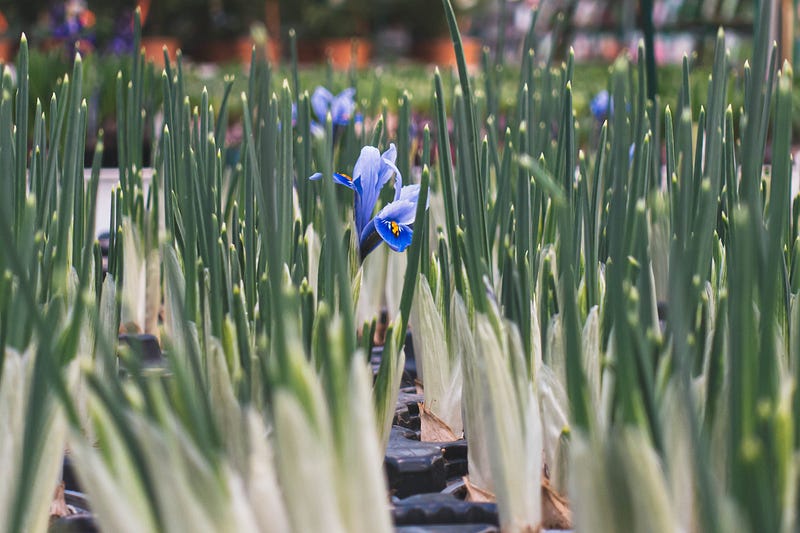
Every flower blooms at a different pace. – Suzy Kassem, Poet and Philosopher
There was a time, not long ago, when people achieved their potential at their own pace. Life was less frenetic and more measured as people progressed in their lives step by step. They found their passions when their brains were ready to activate their latent talents.
It was normal to see people reaching the summit of their success in their forties and fifties. Child prodigies existed then too, but society shrugged off their successes as exceptions rather than the norm.
People admired child prodigies but did not expect the rest of us to emulate them. They treated precociousness as a biological quirk and a freak accident of birth.
Fast forward to the twenty-first century, and you will land in a wonderland where people expect life accomplishments to take a meteoric trajectory.
In the modern age, there is a whole industry to produce wunderkinds or wonder children — coaches who charge $1000 for one-to-one training of rich kids to get high SAT scores. The testing industry is a billion-dollar business.
In India, there is a mad rush to get into premier engineering and medical institutions. Children face enormous parental pressure to prepare for the admission tests. Coaching begins in class eight.
Asian cultures adopt the West’s undesirable practices while ignoring the latter’s best practices.
Rich Karlgaard, in his book, “Late Bloomers: The Power of Patience in a World Obsessed With Early Achievements,” describes a late bloomer as:
A person who fulfills their potential later than expected; they often have talents that aren’t visible to others initially…… And they fulfill their potential frequently in novel and unexpected ways, surprising even those closest to them.
Karlgaard himself was a late bloomer. After a mediocre academic career at Stanford, he worked as a dishwasher, night watchman, and a typist before he found his drive. He started a high-tech magazine in Silicon Valley and later became the publisher of Forbes magazine.
Many who made significant contributions to scientific advancement like Charles Darwin and Alexander Fleming were late bloomers. So too were authors, J. K. Rowling and Ian Fleming.
With an increasing life span, we get extended time to realize our potential.
The last century added 30 years of opportunity to our lives, conferring what’s been called a second middle age. Especially in light of our extended life span, it’s worth confronting the very notion of late blooming to ask: late for what? (Scott Barry Kaufman)
Many like Anna Mary Robertson Moses, nicknamed as Grandma Moses. bloomed as late as the late 70s as a brilliant painter. She continued to paint into her 90s.
Kaufman is also a late bloomer. In school, he struggled with a learning disability and bullying. He overcame his liability, gained a Ph.D., and became a famous psychologist. He recently published a bestseller, “Transcend: The New Science of Self-Actualization.”
Neuroscience validates late blooming as the normal human condition
The brain’s executive functions only ripe around age twenty-five. A twenty-year-old CEO lacks the benefit of experiences that teach vital lessons.
In a Psychology Today article, Scott Barry Kaufman says:
Young brains may be faster at memorizing Backstreet Boys lyrics, but older brains have some clever tricks up their neuronal sleeve that put all the years of ripening to good use. In the brain, information gets passed through wires called axons. Helping the wires deliver the information is a fatty coating called the myelin sheath. Research by neurologist George Bartzokis and his colleagues at UCLA suggests that as we develop, we lay down more of these sheaths, transforming the brain into a high-speed, wide-bandwidth Internet-like system.
Humans do not reach their peak myelin levels until age 50. The ability to access and process information and convert it into deep perspectives increases with age.
Early bloomers versus late bloomers
Early bloomers lack two vital traits that underpin long-term success — curiosity and resilience. Late bloomers possess these traits in abundance.
Early bloomers focus narrowly on their skills. They lose the ability to be curious. Curiosity drives us out of our comfort zones to seek fresh paths to explore.
Early bloomers are used to receiving praise and respect from others. But they struggle to cope with failures and lose the ability to bounce back from adversity.
Experience and experimentation hone creativity and leadership skills. Late bloomers learn faster than others once their genes fire all their cylinders by interacting with the environment optimally.
Mainstream education is a late bloomer’s nightmare
Formal schooling is a one-size-fit-all circus. Teaching follows rigid curricular structures that do not provide any margin for slow learners. Late bloomers struggle to cope with the pressures of conforming to the expected milestones of progress.
Learning is a subjective exercise. Human brains are not cast in the same mould. Teachers are under pressure to produce results. They neither have the time nor the patience to mentor the measured learners.
Institutional apathy and cruelty demoralize the late bloomers who start questioning their own abilities. They lose confidence in themselves.
Mainstream education measures quality in test scores. The fixation with academic performance distracts public attention away from the need to make education more inclusive.
Merely because the problem of late bloomers in invisible doesn’t mean we can sweep it under the carpet and pretend it doesn’t exist. Society must cast aside its blinkers and realize the folly and danger of isolating potential achievers and nation-builders.
Mainstream education’s marginalization of late bloomers is an invisible human rights violation and makes a mockery of human progress.
Conclusion
Biologically and neurologically, late-blooming is the normal human condition. The society’s adulation of early achievers projects a wrong role model to our children and adolescents.
It takes time to find one’s ‘sweet spot’ — the ability to actualize one’s potential at the right time and circumstances.
We build the topsy-turvy world of 20-year-old millionaires and 30-year-old billionaires on a shaky foundation.
Making the 30s the new 50s has terrible costs in terms of our children’s mental health.
Like flowers that bloom at their own pace, let us allow our children to develop their talents and pursue their passions without imposing burdensome timelines on them.
The cult of early success pushes early bloomers into striving more to meet cultural expectations. Early achievements come with a price — burnouts, mental breakdowns, and suicides.
The demonization of late bloomers demoralizes late learners who lose their confidence and cannot actualize their potential. Who knows how many outstanding scientists, sportspersons, and artists we might have lost because society did not allow them to develop at their own pace?
For society, the worship of premature peaking is a lose-lose proposition.
In Nature, all flowers do not bloom alike. If we respect Nature’s tolerance for and predisposition towards diversity, let’s banish the cult of early blooming and discover the wonderful world of late bloomers.
Thanks for reading!


