
Thinking of Self Publishing a Book? Sobering Marketing Truths You Should Understand First
Self Publishing: Don't Quit Your Day Job (Yet)
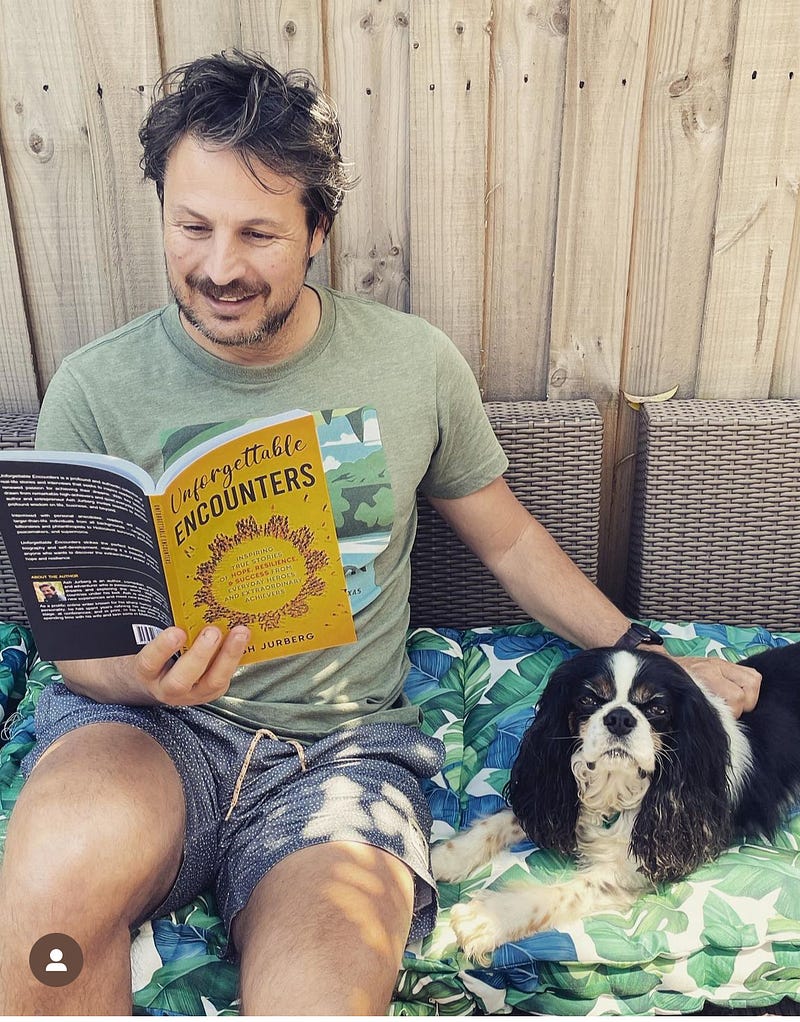
Standing by the door for the Amazon driver for the first box of books, I was like a pre-schooler waiting for their parents to wake up on Christmas morning. This time, the unwrapping would reveal my new book, Unforgettable Encounters, the second I had written.
It took several months to write, followed by weeks of editing, cover design, blurb writing, keyword research, creating an Amazon page, and creating a launch plan. But the real work was only beginning.
It was time to market the book.
Before becoming a full-time writer, I worked in marketing for fifteen years and thought I could easily apply the principles I had learned and 'the grey hairs I had earned' to market my book.
It was easy, right? Get word of mouth established, push on social media, run an AdWords campaign, develop creative ideas, and get early customer reviews. I'd done this a million times before — marketing was my superpower.
Then reality hit.
The facts
It's never been easier to publish a book; it's also never been more challenging to obtain book sales.
Consider these sobering statistics.
- 33% of self-published authors make less than $500 per year.
- 90% of self-published books sell less than 100 copies.
- 20% of self-published authors report making no income from their books.
- Nearly 7,500 books are published on Amazon every single day.
There is a lot of competition, and standing out amongst the noise takes a lot of work. I'll show you what I did and what I learned by self-publishing my book Unforgettable Encounters.
The Four F's
When I studied marketing in college, the first principle I learned was the 5 Ps of marketing: product, price, promotion, place, and people. If you have just written a book, you should adopt the 4 F's of self-publishing marketing — Fans, Followers, Friends, and Family.
In the lead-up to the launch date, I used all my channels to promote my book — Facebook, Instagram, LinkedIn, Substack, Medium, and other writing platforms. Across these platforms, I have close to 200,000 followers, and I can promote my book to them for free.
If 1% of them buy a book at launch, I'd receive 2,000 sales. It is estimated a book needs to sell from 1,000 to 10,000 copies per week to make the New York Times Bestseller List. Could I make it onto this prestigious list?
I posted several times, and all received hundreds of likes and comments.
'Can't wait to buy this.'
"Putting this on my Christmas list.'
I soon learned that likes and comments don't equal sales. I had enough comments and likes to nudge me close to the NYT list, but very few bought the book. The more I posted, the more likes I got — great for my social media stats, not for Amazon sales.
Takeaway
While people will offer support, only a tiny fraction follow through with a purchase. Less than 5% of the people who commented they would buy my book followed through with a purchase. You can't rely purely on social media to boost sales.
Five-star gold
Getting reviews is vital on Amazon as it's a critical factor in displaying search results — a large number of positive reviews is a sign of a high-performing item and helps Amazon rank an item.
I generated decent early sales, so I reached out to every friend who purchased the book and asked them to leave an honest (as long as it was positive!) review. Again, relying on friends isn't a reliable strategy. I had to follow up with contacts to request a review constantly. To minimize efforts, I created a step-by-step guide to leaving a review.
One obstacle is that to leave a review on Amazon, a customer must have spent at least $50 on the platform over the previous 12 months. While this seems a low bar, many of my friends avoid Amazon and, aside from purchasing my book, hadn't met the criteria and could not leave reviews.
Takeaway
Make it easy for people to leave reviews by providing detailed instructions.
Pay per (re)view
There are plenty of websites offering to get book reviews for authors. I prefer to avoid paying per review, but I wanted to test a few to see if it would help.
A Google search for 'get your book reviewed' returns hundreds of options. They all promise the world, so I reviewed the reviews. I went onto book forums, looked at chats on Reddit, and messaged other writers to see which ones were better.
There are a lot of horror stories and apparent review scams, so this is a crucial step. It's also essential to refrain from paying people to write positive reviews.
I settled on two review offers — Book Sirens and Pubby as they were low-cost and low-risk.
Pubby had a free trial for the first three reviews, so there was no cost to trial. I uploaded my book and marketing spiel on November 14 and got two readers agreeing to do reviews in the first few days. While they both gave 5-star reviews, three months have passed, and I have yet to get a third book reviewer.
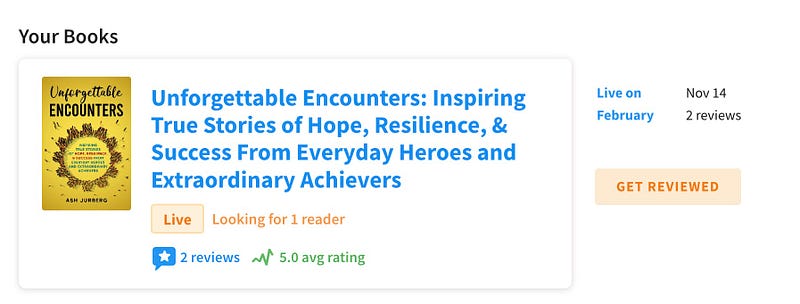
I'm glad I didn't pay.
Book Sirens costs $10 to set up an account and $2 per review. Three months have passed, and the results are even worse.
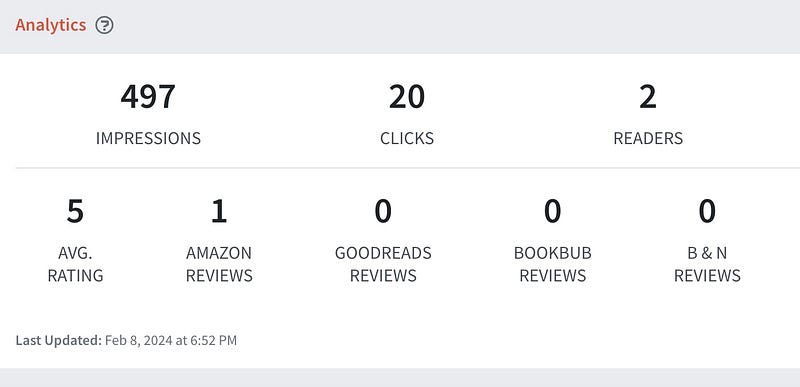
I like that they provide some statistics and send promotional emails to their database, but it has ended in just one review.
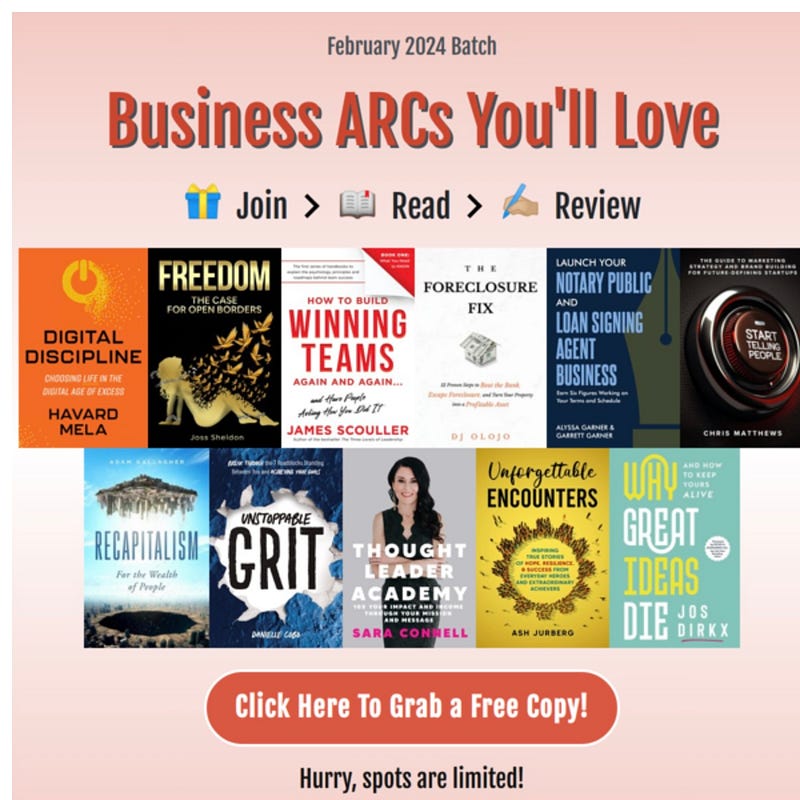
The main people who look at book review websites are those who run other book review websites. As soon as I advertised my book on Book Sirens and Pubby, I was inundated with emails and DMs from other sites, promising many reviews.
The takeaway:
Getting reviews via review platforms takes a lot of work. Providing a free copy isn't enough to incentivize readers to spend hours reading your book.
Also, be aware that reviews left by people who haven't purchased your book on Amazon aren't listed as a Verified Purchase — this means they won't appear across all Amazon websites. For example, if a person receives a free copy and then leaves a review on Amazon India, their review won't appear on the Amazon US, UK, Australia etc websites.
I spent $14 — not a huge outlay, but I only got three reviews. None of them were verified purchases, so Amazon doesn’t value them.
Leveraging others
One advantage I had with my book is that it features interviews with several people with big audiences. Marc Randolph, the founder of Netflix; bestselling author James Patterson; former United States Secretary of Housing and Urban Development Dr Ben Carson; Julius Dein, who has the most viewed video on Facebook in history; and so on.
I had relationships with all these people, so I contacted them and asked them to post about my book to their audiences. I sent copies to some, asking them for reviews. I tagged them in my post. Again, I got messages wishing me luck with the book, including one from James Patterson's Development Director stating, "I have read the book, and I must say, I do enjoy your writing style."
It was the closest I got to a celebrity endorsement. I could add it to the cover of the next edition.
"Enjoyable writing style." James Patterson*
(* Well, a member of his team)
Takeaway
Of the fourteen ‘celebrities’ I interviewed and reached out to with my request, nine replied, offering to assist. Unfortunately, none followed through. This was perhaps my biggest disappointment as I had banked on this being a key strategy to get a broad audience.
Bezos's Bank Balance
Another significant way to drive traffic is using paid advertising, so I researched the effectiveness of Amazon ads. There were many horror stories of people spending thousands of dollars on Amazon ads and getting no sales. So, I decided to turn to an expert. I went to Fiverr, where there are many Amazon ad specialists, and after messaging several, I found one I liked.
We agreed he would set up my campaigns, run keyword testing, do a competitor analysis, and then manage my campaign for 21 days. He would charge $70 — a fair cost and save me time.
We set a conservative budget of $5 per day and checked on the results daily. The first few days looked promising — I was getting sales, the conversion rate was reasonable, and the average cost of sale (ACOS) was below our target, so the campaign was profitable.
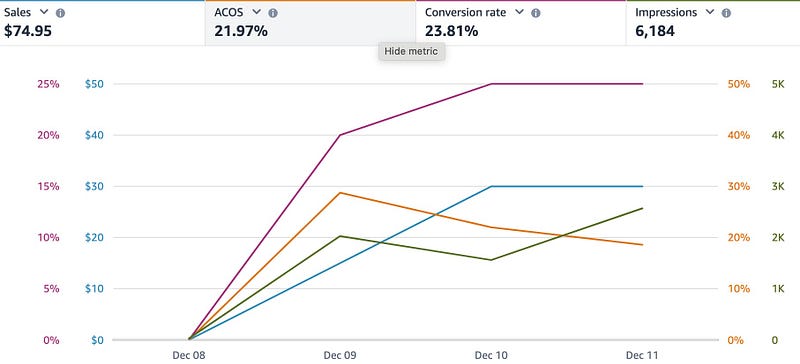
There is a reason that Jeff Bezos is one of the wealthiest people in the world, and it's not because he helps self-published writers. As the campaign progressed, sales increased, but so did the ACOS. By the end of three weeks, the ACOS had jumped to 48%, meaning for every $1 sale, I had spent 48c. My total investment was $500 in paid advertising, resulting in just over $1000 in sales.
While this rate may be acceptable for a high-margin item, it wasn't for a book. And there was no benefit in additional reviews as none of these new sales were leaving reviews. Overall, the return on investment wasn't worth it.
The takeaway:
Amazon adwords require a lot of time and testing. For books, it isn't a worthwhile investment. However, if you want to test it, I'd recommend using an expert with deep knowledge of Amazon pay-per-click campaigns.
Creative
Wanting to be different, I looked at more creative options to gather word of mouth on my book.
I had never done a TikTok but produced some videos and used the popular #booktok hashtag. I'll spare you the embarrassing links, but there is a reason I am a writer and not a TikTok creator. It could work for some people with a large following but not for a middle-aged man awkwardly dancing while holding his book.
LinkedIn, Instagram, and Facebook are better platforms for me, and I created a series of posts, trying to be different. I secretly placed my books in popular bookstores and announced a global book signing tour.
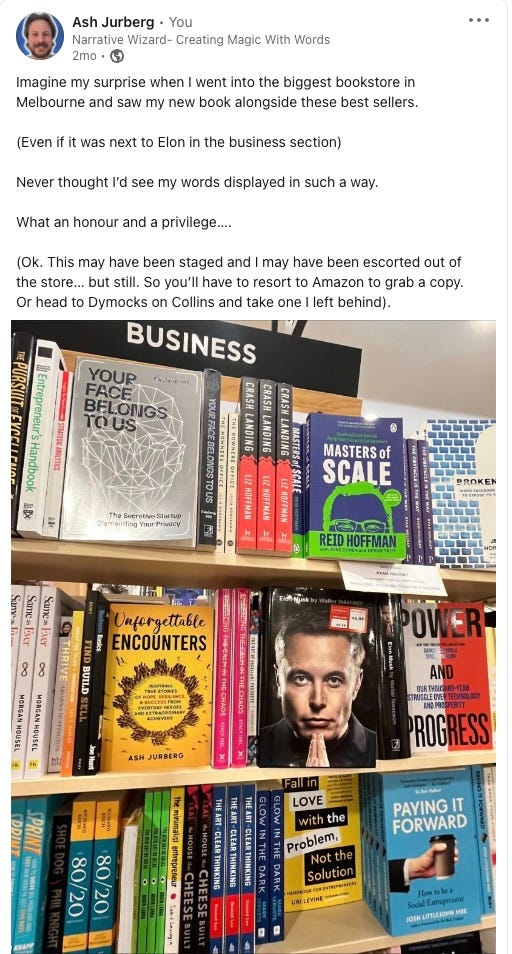
The posts led to a slight surge in sales.
It also led to many congratulatory messages from people who thought I had generally secured a spot on the bookshelf next to Elon and was embarking on a book tour.
The takeaway
Being creative generates more interest than merely posting about your book. Also, it seems 50% of people don't read posts properly — despite my fake posts, people believed them.
The creative posts got more likes and comments on my socials but had little impact on sales.
What is your Why? The big takeaway
This article may paint a bleak — but realistic — picture of marketing a self-published book, but there is another way to look at self-publishing.
Before I launched my book, I followed the tutorials listed by Scribe Media, a book publishing company founded by former best-selling author Tucker Max. Within the advice they gave, one point stood out to me:
“Instead of asking how many books they should expect to sell, Authors are better served by asking themselves how much opportunity, revenue, and personal fulfillment they can generate by putting the right book in front of the right people.”
If there is nothing else you take away from this article — well, I will be disappointed as I clearly labeled takeaways in every section — please keep this in mind.
Unless you are famous and have millions of followers, you probably won't have a bestseller. But if you have other goals for your book, you can be successful. One of my close friends is an HR consultant who has written two books that push her credentials. She gives her book away for free, but it positions her as a thought leader and drives large corporations to utilize her services.
I knew going in I wouldn't retire on the earnings of my book. But it is great for my profile and writing resume. It adds more credibility to my writing brand. And for that, it is worth it.
By all means, go ahead and self-publish a book and take some of the learnings I've given to assist with your marketing. But understand your why, and ensure your primary goal isn’t just sales.
Thanks for reading. If you liked this, check out my newly released book, Unforgettable Encounters. It's full of great business, marketing, and human interest stories. And has sold more than 90% of self-published books :)
Want more marketing tips and tricks? Subscribe to the Better Marketing newsletter The Marketing Memo here.