
Thinking is the Richest Currency
Why investing in thinking is your best investment
ECP Page
Remember that study of kindergarten-aged kids who were offered a choice of eating a marshmallow now vs. having two in 15 minutes? Turns out it might have been more significant than we first thought.

With no one watching, the majority of the study subjects ate their marshmallow right then. Perhaps 15 minutes was an infinity for a 5-year-old. Maybe the temptation was too great. Why do we care when a kid eats their marshmallow? Because the same subjects followed four decades later were found to be the more successful adults who learned to delay the impulse for instant gratification and wait for a bigger payoff.
That answers why we care about the power of delayed gratification. It is a matter of scale or put another way, a measure of our future success — marshmallow now or marshmallows later — getting the right answer is critical for success in life.
What if we were wrong?
Daniel Kahnemann won a Nobel prize in part for explaining the irrationality of minimizing vs. optimizing outcomes by making the wrong choice.
Kahneman and his research partner, Amos Tversky, Israeli social scientists living in America, developed the field of behavioral economics. By validating the irrational nature of decision-making and disrupting multiple fields including economics, psychology, medicine, and professional sports among others, Kahneman was awarded the Nobel Prize in Economics. What he did was to essentially emancipate our subconscious minds of cognitive biases by bringing them into the conscious realm … should we give it a thought.
Do we have broken brains?
It seems that the bifurcation in thinking occurred between our left and right cerebral hemispheres dominated by fast survival responses over slow and sound decision-making.
Kahneman’s prize-winning theory is explained in his popular book called, Thinking Fast and Slow, where he argues that both minds and cerebral hemispheres are urgently required for a decision-making framework needed to think our way through global survivability challenges (for example, like impulsively rejecting arduous climate science, cataloged since the 1960s and debated over 60 years, for the hope that the climate crisis either goes away or the roulette wheel of fortune spins us just-in-time towards a technological solution.)
How much does investing in thought pay off?
So, what if we thought about thinking the way we think about money? In this case, Kahneman’s System 1, or fast thinking is like impulse spending. Slower System 2 thinking is like dividend-bearing investments. A healthy economy needs both, and how we participate in the economy of thinking remains a matter of choice.
Humans, as it turns out, are designed to avoid pain or loss more than we desire the guaranteed gain of a bigger reward later … human nature is economical, as it turns out. Being economical means minimizing costs while generating equal or greater benefits and given the shedding of cells and genes that don’t adapt to the most economical forms of survival via natural selection (not survival of the fittest) nature is the mother of lean.
Where nature is economical, humans are neither economical nor rational.
The proof is that humans make a preponderance of emotional decisions (triggered by a gut feeling/intuition) rationalized after the fact.
For a dime a time someone claimed to be rational, the national debt could be reduced by half. Just because Adam Smith’s rational choice theory of economics has been appropriated into our common vernacular it doesn’t translate into common practice. Choosing the optimal rate of return is a no-brainer like, “buying low and selling high” is a no-brainer.
Reality check — stock trades occur when prices soar and investors buy because they fear missing out (FOMO). They sell on the downside because they’re buying on the rebound or investors resist admitting when they’ve made a poor bet (sunk cost cognitive bias).
Knowing better doesn’t make us better at decision-making.
It seems that when we change our mind and commit to rational decision-making we crash head-on into cognitive dissonance or cognitive biases. We select certain facts that align with our beliefs and reject those that contradict them so our subconscious biases re-emerge and act as tripwires to our decisions. Any ambiguity adds to the uncertainty. And like the stock market, humans react poorly to volatility, uncertainty, chaos, and ambiguity.
Ambiguity is discomforting and triggers tension. We calm tension by reacting fast to solve symptoms and not root causes — which is as effective as treating heart attacks with band-aids.
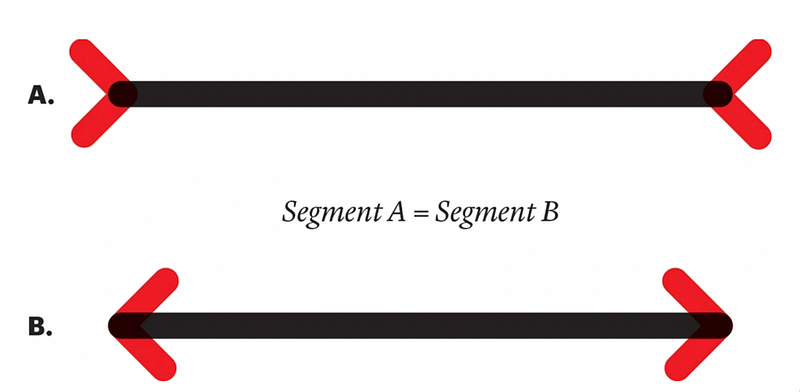
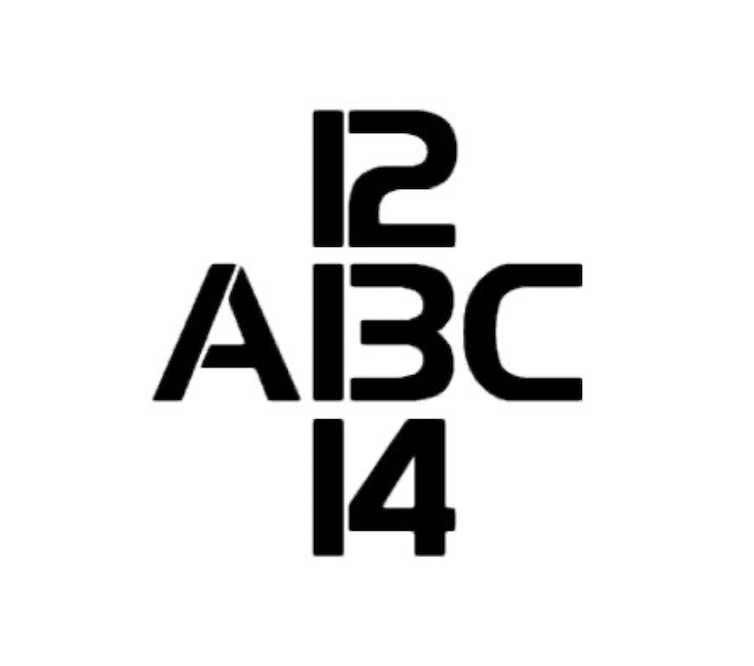
As Kahneman explains, ambiguity is not a problem of choice but rather a problem of optical illusion. Vision is a structural issue and functions by focusing on one thing at a time. Vision isn’t ambiguous. Though we are capable of holding two opposing thoughts at one time we’re incapable of seeing two different perspectives simultaneously.
Here are two examples of optical illusions that demonstrate switching focal points to see how context changes our perspective. The alternative point of view is suppressed, which is the analog to thinking habits.
So what makes us better decision-makers?
F. Scott Fitzgerald famously wrote: “The test of a first-rate intelligence is the ability to hold two opposing ideas in mind at the same time and still retain the ability to function.”
How do we develop a first-rate intelligence? The same way we get to Carnegie Hall … practice, practice, practice. Thinking is a learnable skill and like investing, the more we practice and increase patience with uncertainty to examine and “hodl” (nod to cryptocurrencies) ideas for longer and deeper consideration, the greater the probability for increased reward and wealth.
Instead of front-loading slow thinking, humans default to intuition, assumptions, reactions, or jumping to conclusions. We seldom even factor in the cost of mulligans. We’d rather take our chances on a lottery and hope it pays off — the equivalent of a Hail Mary pass in football or betting on the longshot and praying for a big payday.
So if thinking were currency, where does wealth creation come from?
Buffet echoed Einstein reminding us that compound interest should be classed as the eighth wonder of the world. Exponential growth is like passive income. It’s powerful and Buffet says that those who don’t understand it, work for those who do. If thinking were money and humans were rational, we’d be investing in our System 2 thinking.
The two-sided “coin of thought”
System 1: All you see is all there is –AYSIATI: ($ Impulse buying)
System 2: There is more to it than what I see. MTITWIS ($$ Investing)
System 1: Impulse buying is characterized by snap judgments made spontaneously, addictively, and are instantly gratifying. The math is simple, subtraction and deficit spending.
System 2: Consistent micro-investments accrue compounding interest over long periods of time. The math is geometric providing exponential growth and passive income.
System 1: Is shallow and prone to distraction.
System 2: Is about focused concentration and deep work. (Nod to Cal Newport’s book, Deep Work).
System 1: Heuristics favors efficiency and economy, i.e., a quick decision with the least effort delivering a probability for a positive outcome — typical of a Hail Mary pass. Examples of mental shortcuts include; comparative thinking, pattern recognition, and past experience for quick judgments and gut checks.
System 2: Arduous analytics require hard work and bears a heavy cognitive load with potential for decision fatigue — too tired to think straight resulting in poorer decisions. Focus on important decisions of consequence.
System 1: A high degree of subconscious triggers.
System 2: A high degree of conscious consideration.
System 1: Fear triggers 98% loss avoidance with a 2 % chance of risk-taking.
System 2: Provokes personal vulnerability trusting that 98% of the outcomes are favorable with a 2% chance of failure, and betting that the odds ARE in your favor as well as on the rule of positive intent.
System 1: Characteristically has a single, short-term focus with a high degree of optimism and losses. (If the risk is small enough we’re deluded into believing that we can absorb the small loss given the potentially high payoff despite poor odds.
System 2: Characteristically has a broad, long-term focus with distributed losses and gains (distributed portfolio investments that contribute to capitalism by increasing probabilities for success across an array of investments and industries.)
The Money Shot is in Integrating System 1 and System 2 Thinking
What this suggests is that not only is it incumbent upon us to bring our two brains into balance despite having a preference for either system 1 or 2 thinking, it's imperative to integrate the two brains. Aim for the sweet spot of a Venn Diagram between System 1 and System 2 thinking. Invest in an integrated brain for a systematic decision-making process that produces dividends over a lifetime to profit from thinking as a new currency.
The next article will be on how cognitive biases are the guardrails of the status quo and the ball breakers of original or innovative thinking. Don’t take my word for it — we’ll check out some case studies.
Reach out if you have questions or comments and thank you for cheering this article if you found it worth investing your time.
ECP Page @[email protected]


