
Thinking About Trying A Dry January?
The annual sobriety challenge can be a kickstart to adopt a healthier lifestyle
Will you take part in a dry January 2024?
The formal Dry January has been around for a decade to encourage people who abuse alcohol to commit to a health reset. And if you give up alcohol, why not do a complete reset and abstain from sugar, too?
But does the prospect of that contort your face into the dry and sour countenance of Saturday Night Live’s Church Lady?
Dry January caught hold when Emily Robinson of England was training for a 1/2 marathon and decided to stop drinking to prepare. She felt so good afterward and shared her experience to encourage others to try.
Alcohol Change UK then became the sponsor of the annual public service initiative to educate people about the devastating effects that can be halted and even reversed when people give up alcohol.
In the U.S., in what seemed to be synchronicity, Nicole Brodeur of the Seattle Times brought attention to the yearly challenge when she wrote about it simultaneously with Robinson’s promotion. Brodeur became intrigued after observing a friend benefit from quitting drinking.
Those people felt better. Honestly, though, with the world as it is, I’m not pretending that it’s attractive to give up booze. So, why am I even taking valuable writing time to discuss the “sober curious?”
Except to say, I managed to make it through the pandemic years without booze or sugar. And not to brag, but I’ve been sober from alcohol for over 30 years.
I’m not going to say some gaslighting expression like: “If I can do it, then you can do it, too.”
I don’t know you, and I don’t see what you’re going through.
You might be going through a lot without any other satisfactory replacement tools to manage stress and anxiety right now.
I understand if you are hesitant to even think about it.
Now, I share with you what living through a pandemic without booze or sugar was like for me. Yet, my experiences may not be the magnet of curiosity you need to draw you to eliminate these two substances.
And I’m sorry about that. I wish I had some fantastical comeback story that arose from giving up booze more than 30 years ago and sugar 15 years ago.
But I don’t. If you saw my comings and goings, you might even think I am like the dry and sour Church Lady.
My life isn’t that spectacular, with jet-setting here and there. It’s routine and predictable. Everyone knows where I am on any given day.
The only thing I can say that makes sobriety and abstinence a miracle is it probably shouldn’t even be occurring if you used my family history as an evaluation tool.
The genetic predisposition to an early grave was certainly stacked in favor of my dying from comorbid conditions provoked by overeating and drinking.
That’s not the route it took, though. So, here I am writing this piece to you and for you, hoping that one person will read it and want to experiment for just one month with sugar and alcohol abstinence.
Just out of curiosity.
However, a sober and sugar-free experience can only be lived, and it is nearly impossible to explain to someone else what it’s like to be that toxin-free.
Overeating and overdrinking might be your method to shorten your life on the installment plan. The future’s bleakness would convince us that a shortened life span could be a gift.
Or it may not be anything as morbid as that. It could be you really, really like the way those substances taste.
And you are right; alcohol and sugar make the world a little sweeter and a little less brutal by assisting in disconnecting us from reality.
Cupcakes are a beautiful work of art.
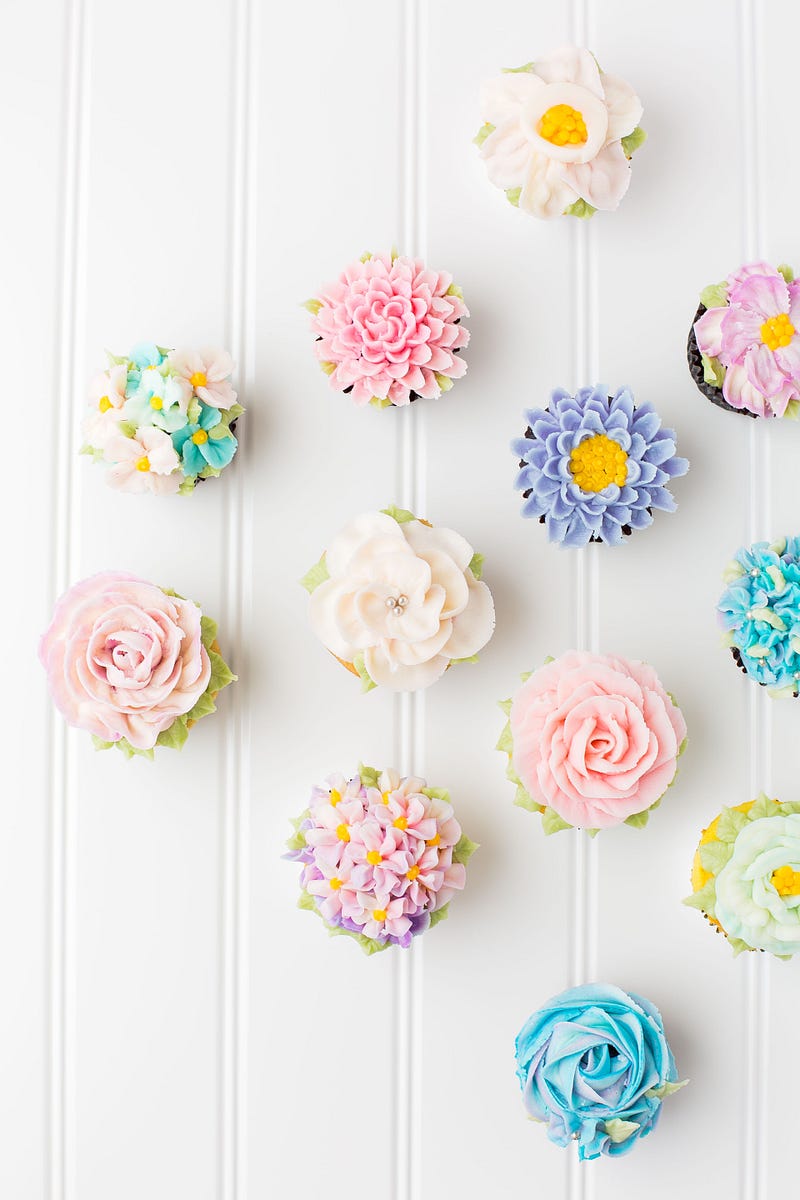
That is, until a certain level of cupcake and red wine saturation hits your body, the consequences become brutal.
Okay, here’s the obligatory bullet list educating you on the severe health problems overeating and drinking can cause. As if you didn’t know these already:
- heart-related and cardiovascular problems,
- diabetes and other endocrine-related malfunctions,
- many cancers, such as breast, colon, liver, mouth, and esophagus,
- increased inflammation,
- mental health concerns, such as depression and anxiety
- decreased social functioning and work performance,
- Obesity.
And as we’ve heard ad infinitum the last few years, fatness is an almost automatic death sentence if an unvaccinated person contracts COVID-19.
There, you knew all of those anyway, right? You could rationalize all those health conditions and that you have pills to deal with them. So, if you get diabetes, you’ll take diabetes pills. If you get high blood pressure, you’ll take the high blood pressure pills — no big deal.
Until those conditions emerge, what joy could be left without those magical chemicals of alcohol and sugar?
A life without alcohol and sugar does seem dark and bleak. The American Psychological Association sent out surveys in March of 2022, and one in four of you admitted to drinking more in 2021 than at any other time in your life.
So, I can’t blame you if you decide to wait a decade or two from now to try a dry January.
How else will you endure Bible study with your church’s Sunday school class?
Or return to your offices at the command of the CEOs making billions more in income than you?
And for moms who drank the most in the last few years, according to the survey, how else will you live with your children except to eat and drink your way through co-existing with the product of your loins?
How else will you get through the rest of this G*d forsaken life?
I can only tell you about what it’s been like for me to get through this G*d forsaken pandemic and life without alcohol and sugar.
It’s been okay. My family and I have done everything right together. We’ve not had to call the police one time to break up a domestic dispute flamed by clouded alcoholic thinking.
That’s a big deal, too, considering intimate partner violence has risen since the start of the pandemic.
It’s been consistently peaceful. We’ve experienced ongoing development in improved intimacy all the way around. That has been a miracle in and of itself. We are just regular, middle-class people like you trying to make our way. And it’s been okay.
It’s been great, especially when I hear stories from people who lost their minds through the pandemic. A significant source of the acting out can be traced to using food and alcohol to cope with their emotions. I’m checking my experience with theirs, and I believe I’ve handled the last few years pretty well.
It could be a miracle of our choices that we survived COVID-19 because we went into the illness with an already robust health report.
Thank you, G*d, for helping me get through this G*d-forsaken pandemic.
Abruptly stopping alcohol use can be deadly.
Suppose you’ve gotten super dependent on your evening toddy to unwind. In that case, dry January may not be suitable for you.
Your body will adapt to whatever you put it through. If you choose to drink alcohol regularly, your brain will adjust the nerve cell communication system to accommodate the extra strain you have placed on it.
Abruptly stopping your heavy drinking is too much of a change for your body to accept readily. You place yourself at risk for alcohol withdrawal syndrome, which can include life-threatening seizures.
Your organs cannot handle the sudden elimination of this deadly beverage. Your nervous system has been artificially suppressed with alcohol, and stopping this depressant puts everything into sudden overdrive. Your body automatically works overtime to adapt to this additional chemical. So, stopping suddenly places too much stress and floods the brain’s chemical balancing system.
How do you know if your drinking is high-risk? According to the National Institutes of Health, low-risk drinking is considered four drinks for men and no more than three drinks on any day for women. Drinking limits for the week are no more than 14 drinks per week for men and seven drinks per week for women. You must keep single-day and weekly limits to stay within the low-risk range.
Suppose you believe you are drinking beyond these limits regularly. In that case, you must request a full assessment from a local drug and alcohol treatment provider. Your withdrawal and abstinence will need to be medically supervised.
However, if you’re a casual drinker and want to try to improve your health for the new year and join the growing population of “sober curious,” then Dry January may be an introduction to a lifetime of actively choosing your health.
These tips could make alcohol abstinence more comfortable:
- Drink more water. This will help eliminate the toxins from your body. You know if you are drinking enough water if your pee is clear. If you are peeing yellow, then you are not drinking enough water. Also, it’s important to drink ACTUAL water, not coffee, tea, or soda made with water. The sodium content in the soda will dehydrate you, making it more difficult to flush out your system.
- Get plenty of rest. As much as possible, go to bed at the same time every night, and if you can make yourself do it, see if you can go to bed 30 minutes earlier than usual.
- Make yourself put up your electronics at least an hour before your bedtime. It’s essential to do this so your brain doesn’t get its circadian rhythms disrupted by confusing it with artificial lights.
- At mealtimes, do your best to eat as healthy as possible. When you overeat sugar, you do a number on your blood sugar, which can spike and dip, causing you to feel jittery and shaky and develop severe mood swings, including anger and sadness.
- Deal with your emotions in healthier ways, such as writing in a journal, talking to a friend, or visiting a counselor. If you’re hungover, even if it’s only one or two drinks hungover, well, so is the other guy. And it gets annoying dealing with cranky, hungover people every day. So, acknowledge that other people may be getting on your nerves because their nerves are shot, too. Decide not to take anything personally during this time because the person flipping you off in traffic may just be having a pre-diabetic mood swing from all the sugar he’s been eating and alcohol he’s been drinking. It has nothing to do with you.
I’m not one of those do as I say not as I do people. I do all those things listed above. Those tips aren’t that hard, complicated, or even profound to follow. Those general guidelines have stood the test of time for millions of people.
They followed those simple living rules, which helped them manage the uncertainty of their times, which included warfare and crisis. Great thinkers throughout history learned if they could develop inner emotional stability, outside disruptions would affect them less.
And January was less dry and sour for them.


