
Thinking About How You Think: Dispositional Mindfulness
Dispositional mindfulness is a relatively new area of study and is showing to have amazing effects for people high in the trait

Would you like to quit smoking?
How about lowering your body mass index?
Perhaps you’d like to have a better chance of keeping up with that new exercise routine you’re trying.
Maybe you’re really into intermittent fasting and would love to see better results from that.
If any of these above points ring true with you, then you might want to look into the newly coined human trait of dispositional mindfulness.
Dispo-what?
Dispositional mindfulness is defined as someone’s awareness and attention to what they are thinking and feeling in the moment.
Mindfulness score
DM is a relatively new area of study resulting from the past few decades of research into the effects of meditation. It’s an attempt at measuring the ability of a person’s mindfulness at a given point in time.
Why is DM needed?
Well, recent research (linked at the end of this) is starting to show that this trait isn’t set in stone from birth. Sure, some people may be naturally better at being mindful just like some people are better at tossing a basketball into a hoop 20 feet away.
But just like basketball, DM appears to a skill that can also be developed and improved.
Why would you want to do that?
Because of the huge variety of benefits scoring highly in DM can bring you.
As more and more studies come out on the subject, there appear to be massively positive effects in many aspects of people’s lives, when they score higher in the trait.
- Negative associations with depression, stress, and anxiety.
- Positive improvements in impulse control.
- Higher likelihood of sticking to exercise programs and diets, and as a result, lower BMI levels.
- Better glucose levels when entering a fasted state (like while sleeping at night).
- Higher rates of quitting and not-restarting smoking.
- A generally better psychological well being.
DM is starting to sound like a magic pill doesn’t it. But this magic pill doesn’t cost money, just time. But I guess if the above points are true, then I’m sure you’d gain more time in life just by doing it.
Where to start with DM?
The measurement of DM is performed with a scale called the Mindful Attention Awareness Scale. Luckily for all of us, it’s a free resource online. You can find it here.
The general idea would be to take the test and write down your score. Then plan out a way to slowly start improving your DM, and occasionally measure against your original value.
How do you improve your DM?
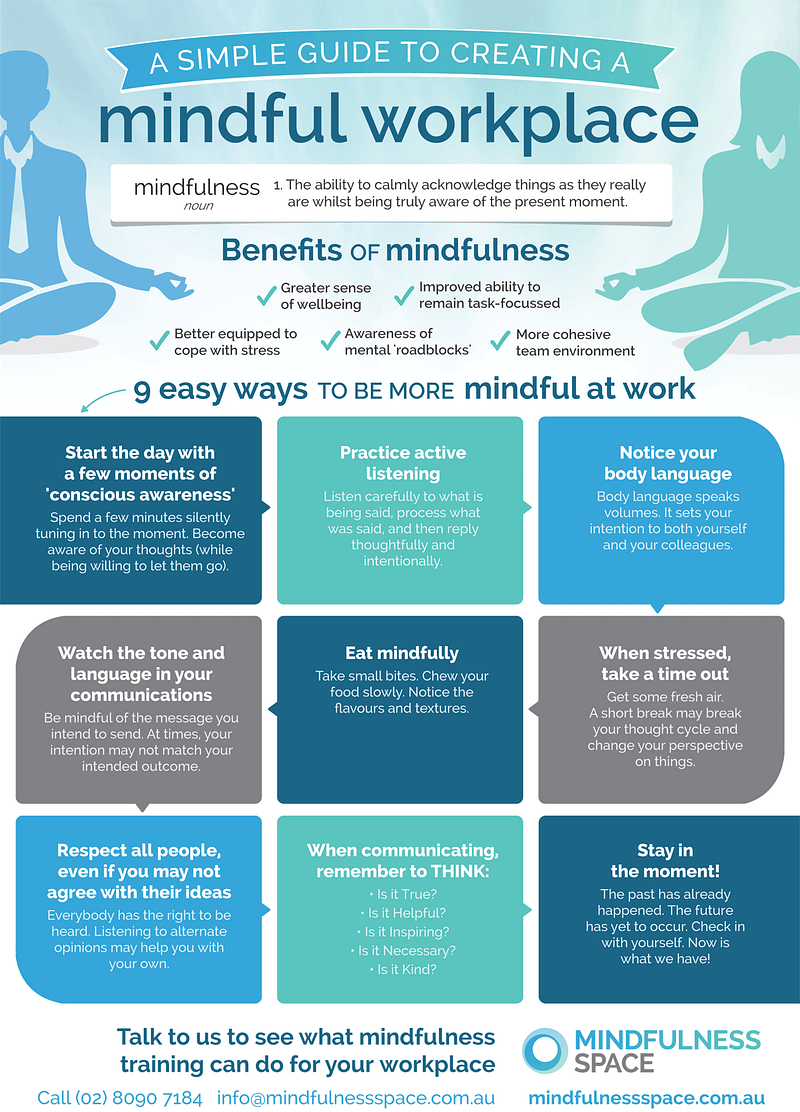
The first step in improving your DM is to set aside a bit of time every day to be mindful. What does it mean to be mindful? This infographic I found gives a pretty good understanding of the different ways you can do it:
My mindfulness journey
For myself, I believe that my walking habit acts as a form of mindfulness. I’ve written about how it has helped me over the last 15 years and if I haven’t done it in a few days I end up missing it.
I realize now that this is likely because the practice of being mindful is a state of being and not an absolute value for life. Long walks at night on my own, just listening to music, gives me time to reflect on the day and calms me down for a long period after.
So to anyone interested in all of the many benefits that can be attained with more mindfulness, good luck and get thoughtful!
‘Rant’ over.

Articles and websites referred to:

Have a wonderful day and check out some of my other stuff here.