
ENTERTAINMENT
Think You’re a Trivia Genius
Engage the brain
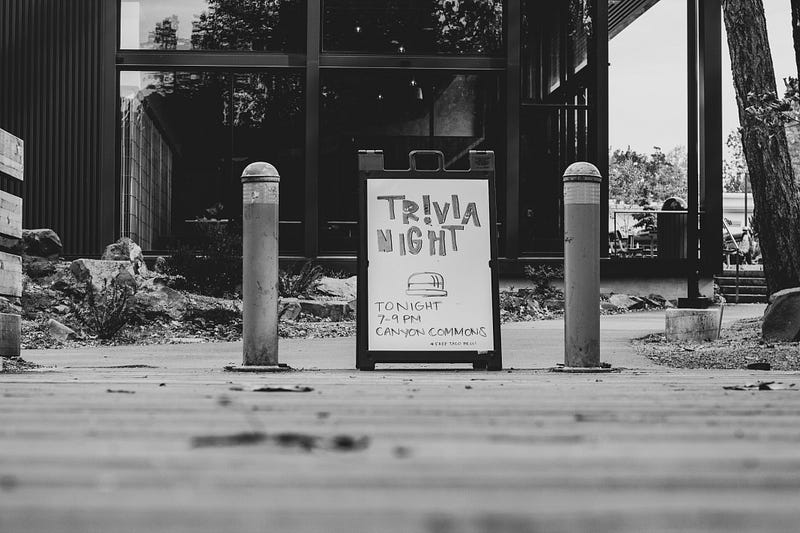
The love for trivia is a worldwide phenomenon.
Some of the most popular games and TV shows that you’ve grown up around are related to trivia. Although trivia has evolved over the generations, one thing has remained constant — trivia has always been about minor facts of information that only a few people know. That’s what makes it so appealing.
Dotto and The $64,000 Question were some of the first startup quiz shows to appear on TV, and people loved them. Currently, there are shows such as Jeopardy! And Do You Want to Be a Millionaire? That has millions of viewers worldwide.
It can only mean one thing — people are never going to stop finding entertainment and excitement in trivia related games and TV shows.
The history of trivia
For a while after the trivia quiz shows shot to fame, there was controversy around how legitimate the contestants were. People soon found out that people on the show assisted some contestants — hence putting an end to television-related trivia, at least for a while.
However, because people were still huge fans and had been avid viewers of these shows, they reemerged in the form of quiz nights that happened live in university and school campuses. The first of these is said to have taken place at Columbia University.
The same organizers of this quiz night eventually wrote a book of random facts, which essentially is trivia. It was the first of many trivia related books that were sold in millions and loved by many.
What’s the most popular form of trivia that we see now? After the massive success of trivia shows and books, there came the trivia-based board games. One of the first of these was called Trivial Pursuit, which sold to an outrageously large number of people. These games included facts related to history, sports, science, art, and much more.
In 1984, the most popular trivia TV show that we’ve all grown up watching launched. Jeopardy!, which is still hosted by the same host, is a family favorite for millions of households.
The exciting thing about trivia is that it isn’t only fun for those involved but spectators as well. As you can see from the audience on the shows or even the family members on your couch at home, trivia gets everyone excited. We’re all so invested in the show; it’s as if we are a part of it ourselves.
It begs the question,” what makes trivia so addictive, anyway?”
The mystery behind trivia
As you go along, what makes trivia so engaging to our brains is that you keep wanting to know more and more. When people have virtual game nights during the pandemic, they often lose track of how much time they have been playing.
I often wonder why we are so engrossed in these random facts, so much that we go on for hours without getting tired? It’s because we learn a little about numerous different topics — which gives us at least a tiny bit of insight into basically any topic from A-Z. After a good game of trivia, we’ll know the name of a famous treaty from 200 years ago, alongside how many teeth a baby shark has.
It keeps you engaged for hours because you never know which area the next question will come from, and the thrill of getting it right keeps our brains stimulated and hooked to both learn more and to outdo our opponents at the same time.
In short, if you want to know what keeps you addicted to trivia — it’s the thrill of winning. As cliché as it sounds, wanting to win and the competitiveness that comes with it doesn’t necessarily have to be wrong. Competition doesn’t define the need to make your opponents lose miserably and feel terrible about themselves. It’s about the thrill of getting an answer right and feeling accomplished with yourself.
You’ll still want to play an exciting aspect of trivia, even if you have lost in the past. Because there’s a specific element of risk involved — you never know if the next time around, there’s a fact that you had just happened to come across the week before that no one else could know.
Because of the mixture of risk, thrill, and information that playing trivia games provides, it keeps your brain engaged, active, and always craving for another chance to guess the correct answer. Of course, the excitement and tension while everyone wracks their brains to come up with the response as quickly as possible ensures that you’ll never get bored, even after hours of playing.
As someone who’s often played until the crack of dawn without realizing how much time has passed, my friends and I are living proof that you can become addicted in a positive way, to games that are all about facts and information as well. It’s all about the experience that it provides, which, in the case of trivia, gives everyone access.
Here’s a little trivia for you
In speaking of trivia, it’s good to know where it all started from as well. Here are a few questions you should know the answer to if you want to learn about the trivia of trivia.
1. Who came up with the first quiz bowl competition at Columbia University?
2. What year was the popular trivia game, Trivial Pursuit, released?
3. Who created the game Trivial Pursuit?
4. Who was behind the reintroduction of Jeopardy!?
5. What was the original name for Jeopardy!
6. What is the singular of trivia? (that’s right, trivia is a plural form of the original word)
7. Who is the current holder of the highest number of wins on Jeopardy!?
8. What is the famous Jeopardy! Host, Alex Trebek’s real name?
Trivia is good for your brain
If you’ve ever played poker, you’ll know that familiar rush of dopamine. In trivia when you get a correct answer, there’s a flood of dopamine that makes you want to keep playing, so you can experience that feeling again.
However, unlike gambling, trivia game nights don’t come with adverse effects. You’re not likely to become addicted to the extent that your health deteriorates, or you become financially unstable. It’s just a feel-good game that encourages you to learn about the trivial things you would otherwise ignore.
How do you get better at trivia?
My friends all think I got better at trivia because I memorized all the cards from Trivial Pursuit. However, that’s far from what I did.
Like the famous Jeopardy! player Ken Jennings, you have to thirst for knowledge.
“ To become a pro at trivia, you have to be a rabidly curious, information-omnivorous person.”-Ken Jennings-
Whether you start that today, or you were born with a random-fact-hungry gene, this is the key to winning at trivia.
Way back in the time of the first trivia TV shows, the contestants would have to rely on books, magazines, newspapers, and whatever information sources they could get their hands on to gather more facts. However, now we have it all in one place — just Google.
One way to use this to your advantage is to search up facts, or read articles featuring tons of tidbits of information about different topics. You can even choose by question or subject, start with memorizing the capitals of every country, and so forth.
However, it’s no fun if all you’re focusing on is memorizing every fact you come across. Try to think of ways to make them enjoyable — which not only makes the learning aspect engaging but helps you retain facts for a more extended period. Use different memorization techniques, like putting essential dates into a song or using memorable events of your life as anchors.

A few more to get your adrenaline going
9. What Prince song spent the most time in the #1 slot on Billboard charts?
10. Which planet has blue sunsets?
11. In which year was Tiger Woods named the PGA Tour Rookie of the Year?
12. How many heads of executive departments are in president’s cabinet?
“Is that your final answer?”-Regis Philbin-
Final words
Searching for a great way to keep you and your friends occupied, connected, entertained, and stimulated at the same time, consider getting an online version of any trivia game. It’s safe to say that there are several that are now available.
You can even order a card game and play with your family. With everyone needing a boost in their spirits, you might start a wonderful family tradition that leads to endless laughter, good-natured debates, and hours of entertainment.
Answers to trivia questions
1. Ed Goodgold and Dan Carlinsky, who then went on to write the bestselling book, Trivia
2. Released in 1982, but invented in 1979
3. Chris Haney and Scott Abbott
4. Merv Griffin decided to reintroduce it in 1982
5. Was originally going to be called what’s the question?
6. Trivium, and it is a Latin word
7. Brad Rutter, who has the most in total Jeopardy! earnings
8. George Alexander Trebek
9. The song that spent the longest time in the top slot was “When Doves Cry.”
10. Sunsets on Mars are radiate blue.
11. In 1996 Tiger Woods was selected PGA tour Rookie of the Year.
12. There are fifteen executive departments in the president’s cabinet.


