
Things You Should Know Before Moving To Italy
An experience from an outsider who lived in Italy.
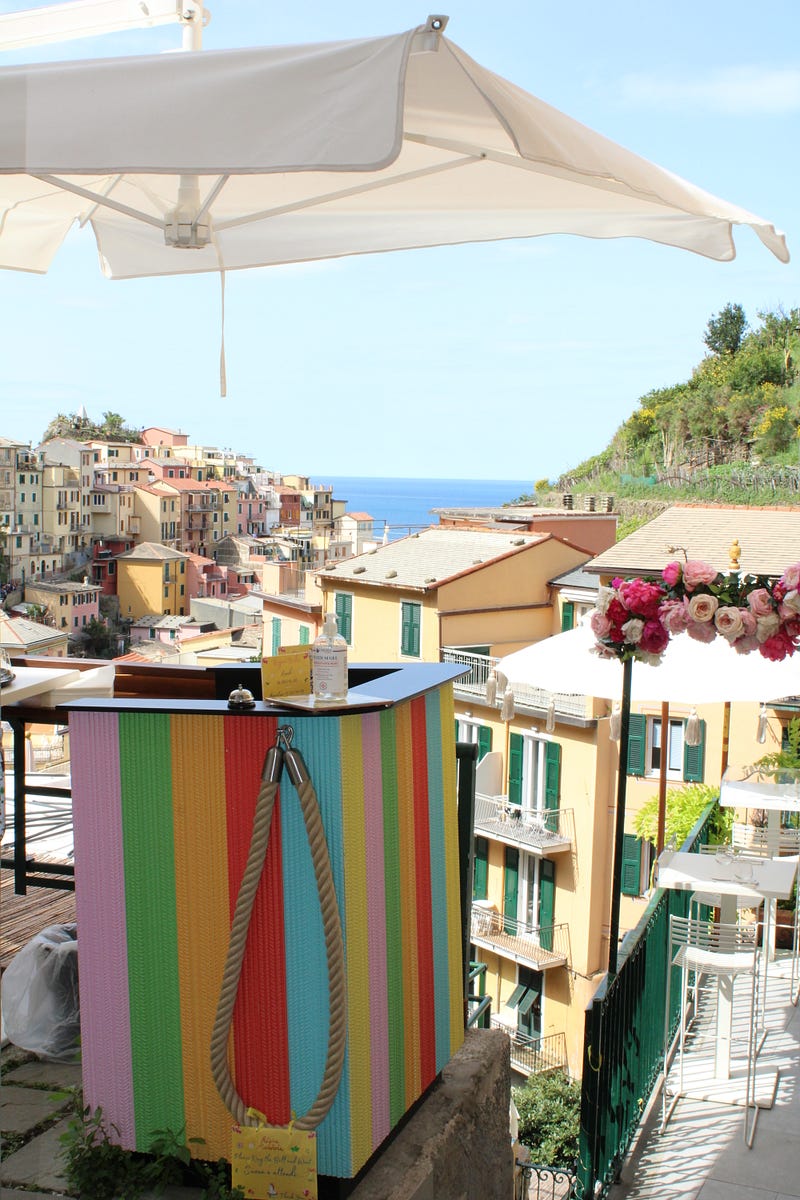
If you have read me, you know I am Portuguese, and I usually write about my own country. However, I can’t help but say that one of the happiest periods of my life was in Italy, the country I always call my second home. Nonetheless, even if there are plenty of similarities between both countries, there was still a cultural shock and differences that I want to highlight for anyone moving there like I once did.
Beforehand, be aware like I was, that there are two “Italies.” The real one and the other one that only exists in people’s imagination. This doesn’t mean that both don’t meet from time to time. But the real one turns out to be more fascinating and distinct from the other.
Of course, when I lived there in 2014 and 2016, I was younger, and with that comes a certain ignorance about the world in general. Today I don’t know if my knowledge comes from my lived experience or if it comes from simply informing myself. Maybe both. But whether it’s one or the other, or the two linked, these are some of the things that have dumbfounded me the most and washed me out of my ignorance. These are some of them:
1- The land of pasta and pizza is much more than that!
Being Portuguese, we also have very typical gastronomy. On the one hand, this is seen as positive, but on the other hand, it leads us to incorporate almost nothing different in our cuisine — something also found in Italy. I could never find anything but Italian food.
The biggest stereotype many people have about Italian food is that we will get stuffed with only pasta and pizzas, which the Portuguese don’t eat that much if you compare it to other countries. But if there’s one country I’ve lived in with enormous gastronomic variety, it’s Italy. Of course, my compatriots don’t like it much when I show my love for Italian cuisine, but I have to hand it to the Italians when they keep telling me that “there’s a reason why Italian food is known all over the world.”
The way of eating is also different. While in Portugal the main course is only one, where we have meat or fish, salad, pasta, rice, etc. … Everything comes in a single meal.
In Italy — as in Spain — the meal is divided into three stages. Antipasti (starters, and no, no one is against pasta); the first course, where we usually eat pasta in all shapes and sizes, and then the second course, usually meat or fish, cooked alone without mixing flavors. If at first, that confused me, I soon incorporated it. And later in 2016, when I became vegetarian, I’ve never seen a country with so many options to be so — unlike Portugal.
Sugar for breakfast
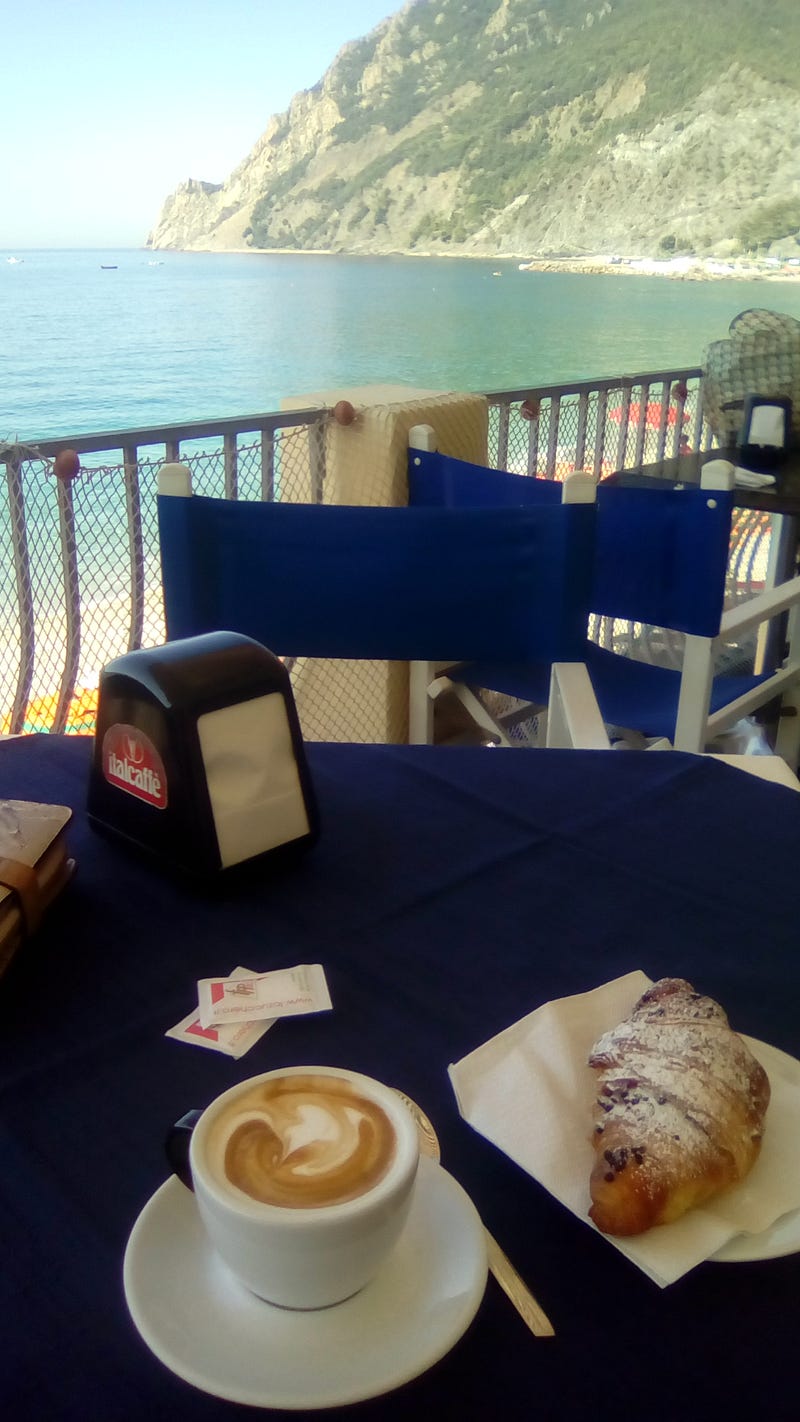
However, the breakfasts are different. Even if the coffee is the same — Portugal and Italy have the best coffee in the world, the breakfasts are distinct. In Portugal, we eat bread with cheese, ham, or butter — or sometimes all together. We can’t do without our “cafezinho” with milk and bread. In Italy, sugar is welcomed in the morning, and the short coffee is accompanied by a jam brioche or Nutella — I could never get used to eating sugar like that in the morning.
2- Internal hatred
As a Portuguese, it was the first time I stopped thinking that Portugal people are close-minded. Living in Italy made me think Portuguese people are pretty receptive to foreigners, and our history has also made us like that, perhaps more open to the world.
In Italy, living near Milan, one of the things that disturbed me most is how there is a massive rivalry between Italians themselves — let alone foreigners. Living in Milan, it was common to hear discrimination against people from the country’s south. These were seen in short as inferior, without etiquette, without class. A sad scenario that immediately made me side with the southerners.
Having dated an Italian man, this was one of the things that shocked me the most, even in a person I thought was friendly. It was so cultural to look sideways or suspicious of someone from the south that even the best of people always seemed to be on the back foot regarding southerners.
3- Nationalism
It shouldn’t have been so strange to me in Mussolini’s country to have found it odd that so many Italians were nationalists. I often had to hear that “Italy is the most beautiful country in the world. Why visit other places when this is the best?”; or “your country doesn’t have any artists? Everybody knows Leonardo Da Vinci; nobody here has heard of Portuguese artists.”
Being a person who hates confrontations, I have always lacked the words to be said on the spot as a form of retaliation. The words only appear a long time later. “I should have answered him like this or like that” is a huge sense of frustration.
If it were today, I would have told them that ignorance is not on our side but theirs. They do not know something beyond their own horizons — so often I thought that speaking of “Pearl Jam,” “Nirvana,” whatever was recognizable in the western world… It was not! And yes, I’m pretty aware of the thousands of musicians in Cesena. But I have never met people remotely similar.
Unfortunately, the country I love is covered with extreme nationalists, who literally worship Mussolini’s tomb.
4- Not gay friendly
Italy remains of the European countries where same-sex marriage is not only illegal but is culturally seen as something abnormal. For me, in Portugal, where same-sex marriage has existed since 2010, it is inconceivable that not all European countries are at the same pace of evolution.
“It’s the church,” many told me, almost as an excuse for the lack of political will in the country to guarantee human rights.
5- The hyper-sexualization of women
Portugal being a country of soft traditions, I ended up in a place that, although similar to mine, has things that would shock any Portuguese.
I remember driving through Italian roads and seeing women prostituting on the side of the road… completely naked! Imagine what it was like to be a babysitter like I was, going for a walk with my little girl, and driving along the roads and seeing naked women, with their whole bodies exposed like that…
But it wasn’t even necessary to go to extreme cases; the television took care of the rest, as the president at the time, Berlusconi, was known for dating women younger than him. On many television channels, the image of the old man and the beautiful, thin, younger woman was an unreal representation that disturbed me.
A documentary that illustrated several problems I have already mentioned, the exacerbated nationalism, the lack of human rights, and this sexualization of the female body is “Italy, love it or leave it.” I highly recommend it.
6- Italian Unification, an old country, a new nation.
There is something familiar to many, if not all, European countries: we are all old.
However, our concept of a nation varies a lot. Take Germany; in 1989, they were still a divided country.
Being from Portugal, I almost take for granted the internal peace we have had since 1143. Nothing within our borders has changed, so Portuguese identity seems more intact than many others.
One of these others was the notion of Italian identity. When I first came across the word Risorgimento, my ignorance of both language and history made me think that the word was the translation of the Renaissance and would make perfect sense since I was in the country where it all happened.
Only later did I learn that I was making a giant anachronism. The Risorgimento was the Italian Unification, where Giuseppe Garibaldi’s name always came with it, which took place in the 19th century and was consolidated in … 1861! For a Portuguese woman, this happened centuries and centuries before.
This diversity spread over different regions, towns, and villages is still felt today. The variety of dialects — dialects are not accents! — across the country proves this. Often, all I had to do was move to another village for the words to be different.
7- Language
Italy, for me, has one of the best education systems in Europe and possibly the world. People study their language intensively, as well as the language that originated it, Latin.
However, it can be argued that while the studies are applauded for this more classical aspect that is increasingly disappearing from the world, on the other hand, the same studies blunt the vision of a more modern world, namely the study of foreign languages — which is in line with nationalism.
When I emigrated to Italy, I didn’t speak any Italian, thinking that if I spoke Spanish or Portuguese, they would be able to understand me. They were not!
So speaking English is not very common— but my last trip to Italy this year made me see that there’s more openness and willingness to speak English. But compared to Portugal, Italy is way behind most Portuguese who speak English.
So it is advisable to learn some basic Italian so that you don’t find yourself in trouble. Once you start learning and speaking the language, it’s one of the most gratifying things, being able to understand and speak the language.
If you are interested. These are other articles I wrote about Italy:
About a rock and Roll festival near the Adriatic Coast:
About doing the Cinque Terre trails in Liguria:
On my recent vacation in Italy, and how everything was organized:
A romance story about love in Italy:
Hello, I’m Araci, a female writer from Portugal. I like to write about my country, Portugal. But I also enjoy pop culture, American culture, and cultural differences. I hope you’ve enjoyed this article and that it helped you out!
You can also find more about me here:
If you have enjoyed this article, maybe you would like to buy me a coffee here https://ko-fi.com/joanaaraci. I don’t drink coffee that much, but food is getting ridiculously expensive, and I need to put it on the table.
There are other ways to help me out:
Are you considering joining Medium for only 5$ a month? Your membership fee directly supports me. This way, you are helping me out while you’ll also get full access to every story on Medium.
If so, consider doing it through my referral link.
Thank you for reading me.


