
Your past: American manifest destiny
Things You Don’t Know — But Should Know
Is ongoing American world domination and erasure of natural systems in your future?

Who will be held accountable?
Despite the lofty idealism of explicit destiny, rapid territorial expansion in the first half of the 19th century led not only to war with Mexico, but also to the displacement and mistreatment of Native Americans, Hispanics, and other non-European occupiers of territories now under United States occupation. The Destiny Manifesto, a phrase that appeared in 1845, is the idea that the United States was destined ”by God, as its supporters believed…€” to expand its dominance and spread democracy and capitalism across the North American continent.
This philosophy guided the territorial expansion of the United States in the 19th century and was used to justify the forcible expulsion of Native Americans and other groups from their homes. The clear destiny in the history of the United States is the perceived inevitability of the continued territorial expansion of the United States’ borders westward to the Pacific Ocean and beyond. [Sources: 3, 4]
The Declaration of Destiny was a universal cultural belief in the United States in the 19th century. It believed that American colonists were destined to spread throughout North America. This sentence is not “fabricated”, but is buried in the third paragraph of a long article in the July/August issue of “American Magazine” and “Democracy Review”.
The inevitability of expansion
The content is about the necessity of annexing Texas and the United States. The purchase of Alaska after the Civil War briefly revived the concept of pure fate, but it became more obvious when it became a new force in American foreign policy in the 1890s, when the country went to war with Spain, annexed Hawaii, and designed an isthmus canal through Central America.
In the late 19th and late 20th centuries, as the territorial expansion was no longer considered part of the “destiny” of the United States, the term “obvious destiny” came into use. This view of the United States as the leader of the “free world” was loudly proclaimed as a fait accompli with the consolidation of the dominance of American global power in the 20th century after World War II, although at by that time it was rarely described as an “obvious destiny”. [Sources: 1, 3]
The dark side of the Manifesto of Destiny

In the second half of the nineteenth century, the concept of “Clear Fate” argued that it was the divinely established right of the United States to expand its borders to the Pacific Ocean and beyond. The Manifesto of Destiny had serious consequences for Native Americans, as continental expansion indirectly included the occupation and annexation of Native American lands, sometimes with the aim of expanding slavery. [Sources: 1, 3]
The westward expansion of the United States also triggered an increasingly heated debate on slavery, raising an urgent question of whether slavery would be allowed in the new states that joined the Union. This conflict, of course, escalated to the point that it would lead to civil war.
The perpetuation of genocide and the repression of indigenous peoples and cultures
As an echo of the patriotic and colonial appropriation of the story of American victory and civil rights, the appropriation of the George Floyd movement (a movement associated with many efforts) is seen as being both destructive and hopeful at the same time. [Sources: 2, 3, 4, 5]
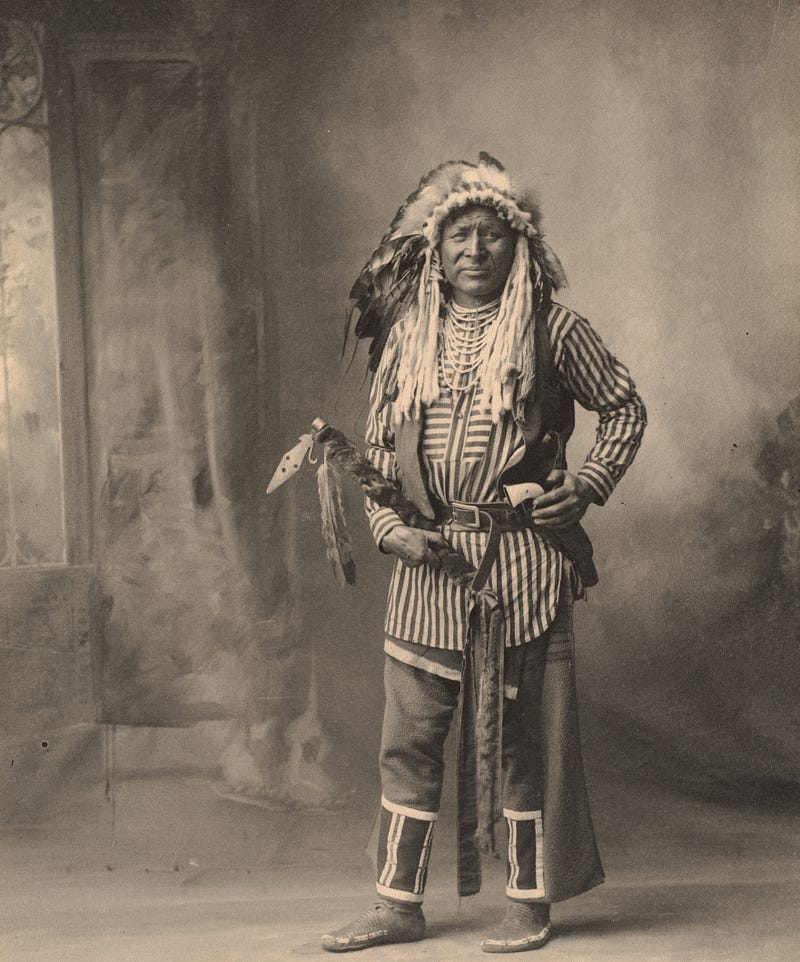
Undoubtedly, the 19th century idea of an “American destiny” was partly a rationalization of greed, but the subsequent dispossession of the Native Americans was as irresistible as other major population movements in the past. Then as now, the introduction of “colonialism” represents a permanent system of power that perpetuates genocide and repression against indigenous peoples and cultures.
There is no doubt that the lands and populations of Native Americans were destroyed by white European settlers. Essentially hegemonic in scope, colonial colonialism normalizes the continuing occupation by colonists by exploiting lands and resources with which indigenous peoples have a genealogical relationship. [Sources: 0, 2]
The expropriation of the native Americans’ lands and the erasure of their cultures
It is clear that Native Americans do not enjoy the same protection now and in the past (from the politically correct perspective) as African Americans, Hispanics, and other peoples around the world. The “new Americans” that moved westward to expropriate the lands of the indigenous people, convinced of their cultural and racial superiority, did not want to give up the vast land plots that were deemed necessary to sustain the indigenous people’s traditional way of life. (Paul A Drouillard — 6/12/2010 )
The actions and methods of the European conquest of America can only be described as ethnic cleansing with genocide against the indigenous peoples of America. Fortunately, the attempts to erase all evidence of the native Americans’ culture were not completely successful. Nonetheless, even to this day, the lasting effects of the treatment of the indigenous peoples by the conquering Europeans have left a not altogether pleasant memory in those of Native American lineage! [Source: 2]
Critical race theory predicts that the colonial legal system of the United States will unfortunately not be a source of positive systemic change and racial justice. Specifically, I have found that both “racial tourism” and “racial mobility” reveal a “…state of movement at the essence of the racial takings and accumulation of racial value enacted by white scholars committed to racial appropriation and fraudulently coding as Black, brown, and Indigenous….” [Source 5]
I don’t necessarily agree with this, but I believe it serves its purpose for those individuals who grapple with Race within academia, for example as it pertains to the ongoing search for “…healing from the specific racialized and racist nature of epistemic violence of settler colonial and neoliberal institutions of learning? [Sources: 2, 5]
In the broader context of society at large, it remains to be seen in what way and how the Racial landscape will evolve over the coming generations, given the past (as recounted in this article), the present (as in the early 2020s) and the future.
Source 5 raises questions that will help illuminate and guide you, the reader, on a journey of discovery. What discovery, you ask?
You simply must refer to source 5 to begin your journey in order to:
“…map and navigate the confounding and often fatal terrains of race, racism, and racializations. Ultimately, these questions help to mobilize these terms as tools we may use to clear ground between, as James Baldwin wrote, “what we would like to be, and what we actually are.” (Peck 2017).
The Takeaway
There you have it. The past, the present, and most importantly, the future of what might be, what ought to be, and what will be.
It is up to you dear reader to be a part of the solution and not the problem, as we move ever onward in the 21st Century. The time to end the myopic perspectives and actions of America’s past is now! If not you, then who?
My thanks and appreciation to #DrMehmetYildez for publishing my articles like this one in Synergy. Please share your sentiments in the comments section. Thank you!
The Source List is at the very bottom of this post!
Thanks for reading! If you liked my article, subscribe to Medium to get more articles that I publish regularly!
Free or $5/month: Check out Medium — a social media platform venue for freelance writers like me
If you want to support me as a writer, consider signing up to become a Medium member. It’s $5/month, giving you unlimited access to stories on Medium. If you sign up using my link, I’ll earn a small commission.
Join Medium with my referral link:
Get an email whenever Patrick OConnell publishes:
You can find me on LinkedIn (ID: azpat0)
If you like my article, check out my other stories on my Medium Profile page!
I am a freelance writer- available to write YOUR blog posts or articles -
Samples of my work are on my Medium Profile page:
And also on my website -
Full Disclosure — This link will take you offsite outside of Medium:
I also publish a weekly newsletter on Substack: The Market Algo Newsletter — It forecasts the direction of the S&P 500 market — index for the upcoming week -
Full Disclosure — This link will take you offsite outside of Medium:
Sources
[0]: https://www.oxfordbibliographies.com/view/document/obo-9780190221911/obo-9780190221911-0029.xml
[1]: https://en.wikipedia.org/wiki/Manifest_destiny
[2]: https://historynewsnetwork.org/article/7302
[3]: https://www.britannica.com/event/Manifest-Destiny
[4]: https://www.history.com/topics/westward-expansion/manifest-destiny


