
Things I Miss About the U.S. As an American Living in Paris
Exploring the Heart of Paris: An Expat’s Tale of Fashion, Enthusiasm, and Cultural Dichotomies

Even though I’ve been living in Paris for years, I’m always amazed. Each morning, I wake up, grab my coffee, open my windows, and am greeted by the Parisian rooftops that I’d dreamt about for years. Living here has changed me in more ways than one. Still, though I love it here, as an expat, there are always little things you end up missing about your home country.
Wearing whatever I like without worrying about it
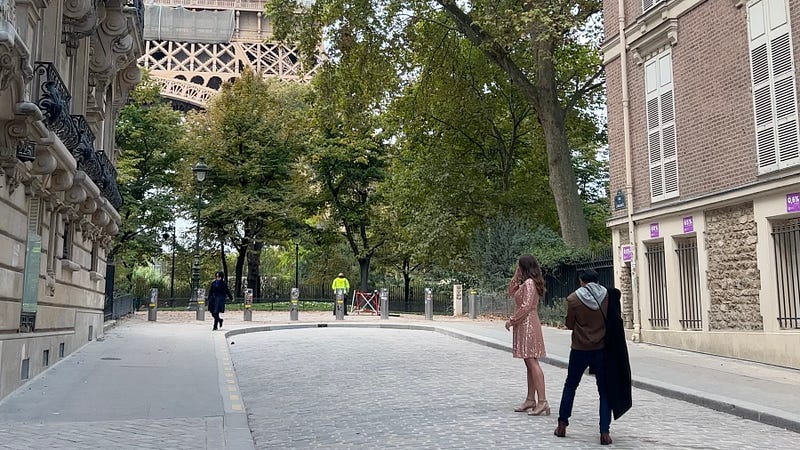
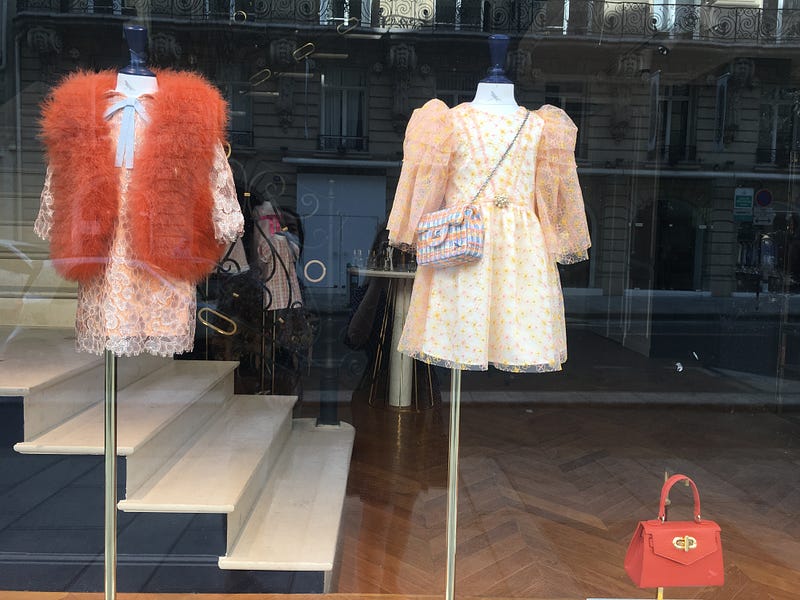
Paris is the fashion capital of the world. It doesn’t matter where you are in the city: the grocery store, the cinema, or a cafe… the people here are dressed to the nines! As a creative who adores using fashion to express myself, I loved this when I first came here!
I wanted to take pictures of all the ornate Parisian architecture, but even more so, I wanted to take photos of the Parisians who so perfectly matched the elaborate outfits they created on the daily to the backdrop of the city. Parisians' fashion habits make going out to do even simple things a real treat.
Fashion faux pas are more easily forgiven in the U.S.
Nevertheless, “dressing up” like you have somewhere important to be when you’re just going out to the local convenience store or to pick up a package can, sometimes, be a bit tedious. On days when I’m feeling homesick, I long to go to a grocery store in the U.S. where I’m free to go as I please in a T-shirt, Mickey Mouse sweatpants, mismatching knee-high socks, and rain boots! Anything goes! I can go anywhere and also be content with the fact that probably no one will bat an eye at my ridiculous outfit.
Everyday fashion expectations in Paris
In Paris, I put on a nice outfit even to go down to the curb by my apartment to greet my Uber Eats delivery driver. And yes, admittedly, I’ve learned through comments made by my neighbors how ridiculous I look picking up Uber Eats in sweatpants. That’s how important fashion is in Paris. In an article by French native and French language teacher Géraldine Lepère, she writes,
“If there is no direct French translation for the word judgmental, it might be because it’s the expected way of life here…”
I thought this was a funny way of explaining Parisian fashion expectations to someone who’s never lived here before. Luckily, because there are standards to be met here with one’s fashion choices in Paris, it does force me to make much more of an effort.
The New York Times also notes how the French language may play a role in influencing fashion culture.
“There is no word for “athleisure” in French. Honestly, that term shouldn’t even exist in English. It is the new fanny pack.”
I would love to be dressed head to toe in Channel, and I am certainly not an admirer of the fanny pack! However, admittedly, I do miss, from time to time, how relaxed people are when it comes to everyday fashion in the U.S.
For the majority of my time here, I appreciate getting dressed up. Sometimes, I even find myself accidentally coordinating with other Parisians. All of us leave our apartments and serendipitously match with the aesthetics of the city. Though, at times, I miss the carefree days I lived in the U.S., where I didn’t have to worry as much about how others perceived me.
Enthusiasm is expressed differently.

Coming from the U.S., where you will constantly hear choruses of “that’s amazing!” for even ordinary news, getting used to how French people express their excitement was an adjustment. Parisians are very cool, and I think the French language definitely might have an influence on how people see things as well.
Seeing the world differently depending on the language I use
My husband, who is French, will often say “C’est pas mal.” (“It’s not bad”) for things he thinks are really quite wonderful!
Needless to say, we had a few misunderstandings until I finally got accustomed to the French language and culture.
Lately, I’ve even caught myself saying the phrase “It’s not bad” in English while talking about things I absolutely adore. It’s out of habit because I hear and say “C’est pas mal.” (“It’s not bad”) so often in French.
American vs. the French way of life
In an article by the BBC, author Emily Monaco, a fellow American living in France, shares my sentiment. She recounts an “aha!” moment of cultural understanding she had after receiving a comment when a French teacher of hers compared American and French mentality.
“You Americans,” he said, “live in the faire [to do]. The avoir [to have]. In France, we live in the être [to be].”
I, too, feel myself living more in the present moment while in France. When my high-spirited American self expresses herself, I’ve found it can even be confusing to the French. In those moments, I realized it might be because people do tend to live more in the “être” (to be) in France.
Now that I’ve been living in France for years and am bilingual, I find myself seeing the world with two different sets of lenses. I take off one set and put on the other depending on the language I’m speaking. I like the new composed and nonchalant manner I’ve acquired thanks to spending time with the French. (Though I find that I’m continuously working on it in order to better integrate into the culture! That American enthusiasm dies hard.)
Still, I do sometimes miss how passionate Americans can be, even about mundane things. Now, when I come back to the U.S. to visit my family, I’m reminded of how warm and inviting the people there are. I love how Americans can gush over their favorite TV shows, what they’re doing for the weekend, or their most loved dessert while conversing with a random stranger in the checkout line.
From a French person’s perspective
My husband, who is French, loves to share the story of his first time visiting the U.S. because he got to experience the enthusiasm Americans have very quickly. We were actually still on the plane on a flight from Paris to Chicago when it happened. One of the American flight attendants said in a booming voice, “Look at you!” with her arms outstretched as she made her way over to my husband.
She pointed to my husband’s jet-black hair in a man-bun, “Amazing hair!” she said with a beaming smile and a wink. My husband laughed nervously, and she carried on attending to other passengers.
I turned to my husband, “Wow, wasn’t that so nice? She took the time to give you a compliment. It’s nice to have such an open and kind interaction with a stranger.” To my surprise, my husband replied, “I didn’t like that. No, that didn’t feel nice to me. I don’t like how she put me in the spotlight.”
My husband then went on to explain to me that stopping to compliment strangers isn’t common in France because French people value their privacy. Giving a compliment to someone can also be seen as too much of an intimate interaction for strangers to have.
Therefore, to the French, receiving such chummy words from a stranger can come off as fake. They might even think the person giving the compliment has ulterior motives. Of course, this was not the flight attendant’s intention. But many seemingly “universal” understandings can change vastly from culture to culture.
This kind of exchange of words, however, is a very common occurrence in the U.S. You’ll hear people giving little compliments to anybody whenever a nice thought pops into people’s minds. We, as Americans, certainly aren’t shy about giving or receiving compliments.

Conclusions and Takeaways
What is socially expected can vary from country to country. Whether that expectation is about how you dress or how courteous you are to others — it’s best to be open to learning new norms when living in different countries.
When we learn to welcome newness, we grow.
Funnily enough, the more time someone spends away from their country getting to know new cultures and points of view, the more they actually end up learning about where they’re from.
New perspectives help us understand not only others but also ourselves more.
Even during bouts of homesickness, when you find yourself longing to be comforted by what’s familiar — eventually, one day, you’ll be grateful for what is now uncomfortable.
Even the strange or unfamiliar experiences we go through can shape us for the better.
I feel so grateful for all the lessons France taught me during my time here. Even the embarrassing experiences I’ve had while abroad, I embrace them and thank them for the lesson wholeheartedly.
Thank you so much for your support, and happy reading!