
TRAVEL | COSTA RICA | FASHION INDUSTRY
Thick Black Smoke Was Billowing Out of the Costa Rican Jungle
A true(ly disturbing) story
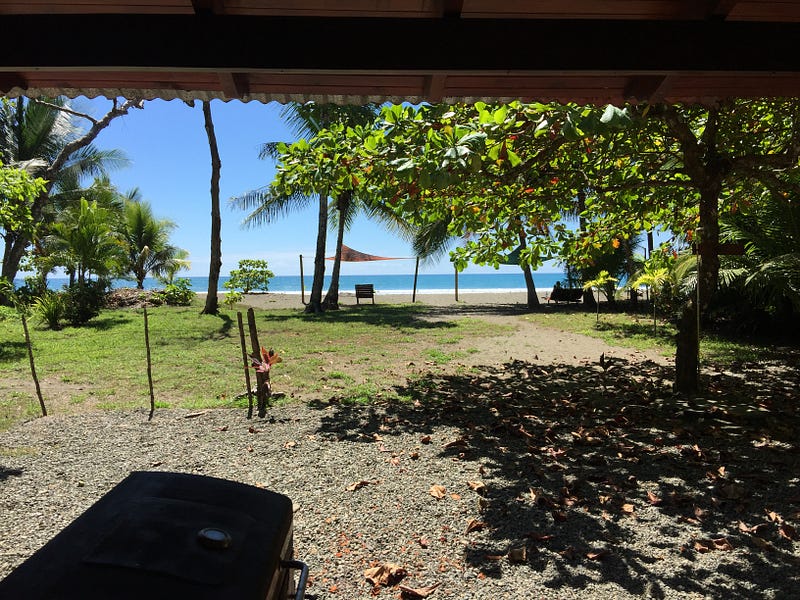
We started our nomadic journey in Costa Rica and were fortunate enough to get two housesitting jobs on the same beach that lasted 4.5 months. A vegetable truck would drive by two times per week and we chopped our own coconuts down to eat. Sloths, Monkeys, Snakes and Iguanas were our neighbors, and we left as little as possible to go into the nearby city to get supplies.
It was pure bliss.
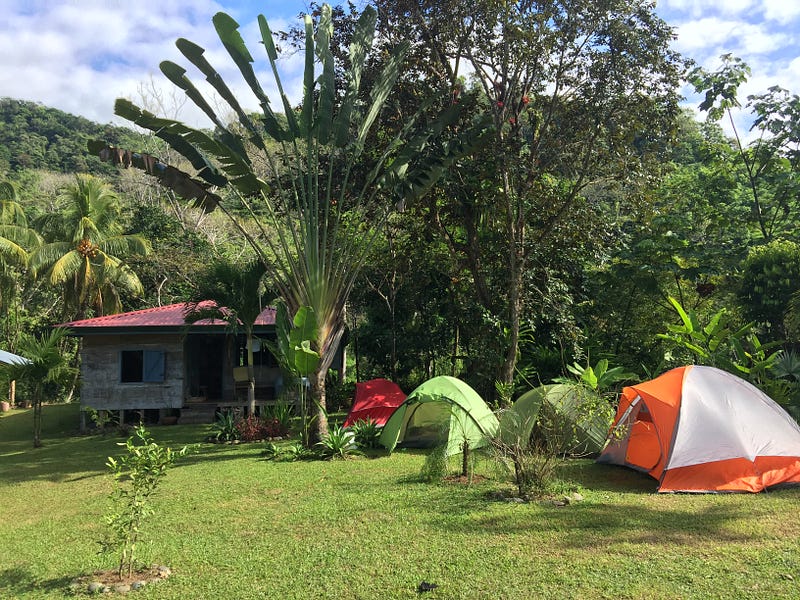
During our time there, we made a friend. He was Canadian but had lived back in the jungle near Quepos for the past two years. He would frequent our beach for sunset, and we got to know each other well enough that he invited us back to his property to stay on a couple of occasions.
Visiting the jungle
Most tourists don’t realize that the big, wide and perfect highways in Costa Rica are mostly there for them. Once you leave those main roads, the side roads that the locals have to use are deplorable.
I sometimes wonder where all the money from tourism goes, but that is a discussion for another day.
Our friend's property is back on one of these deplorable roads. Your teeth and bones rattle for 5 km as you leave the main highway on a constant washboard and potholed road. Then, once you reach the next village, you turn onto a road that, in some cases, could be simply be called a BMX track.
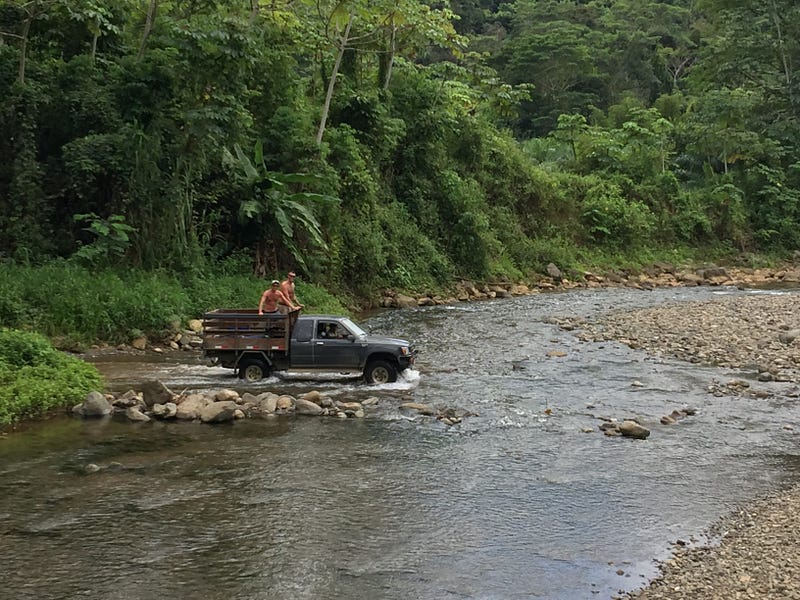
He is far enough back that his road crosses a riverbed and there is no bridge. After big storms, it is impossible to drive the road because the river gets too high. Thankfully there is a small bridge that accommodates people walking and riding motorbikes, so he doesn’t get stranded.
It is remote but it is absolutely beautiful.
His perfect little casita is perched up on a hilltop that is surrounded by a clean and clear river on three sides. Across the river are almost vertical jungle walls. Lush, dense tropical vegetation hangs down and vines lick the surface of the river as it rushes by.
It truly is paradise.
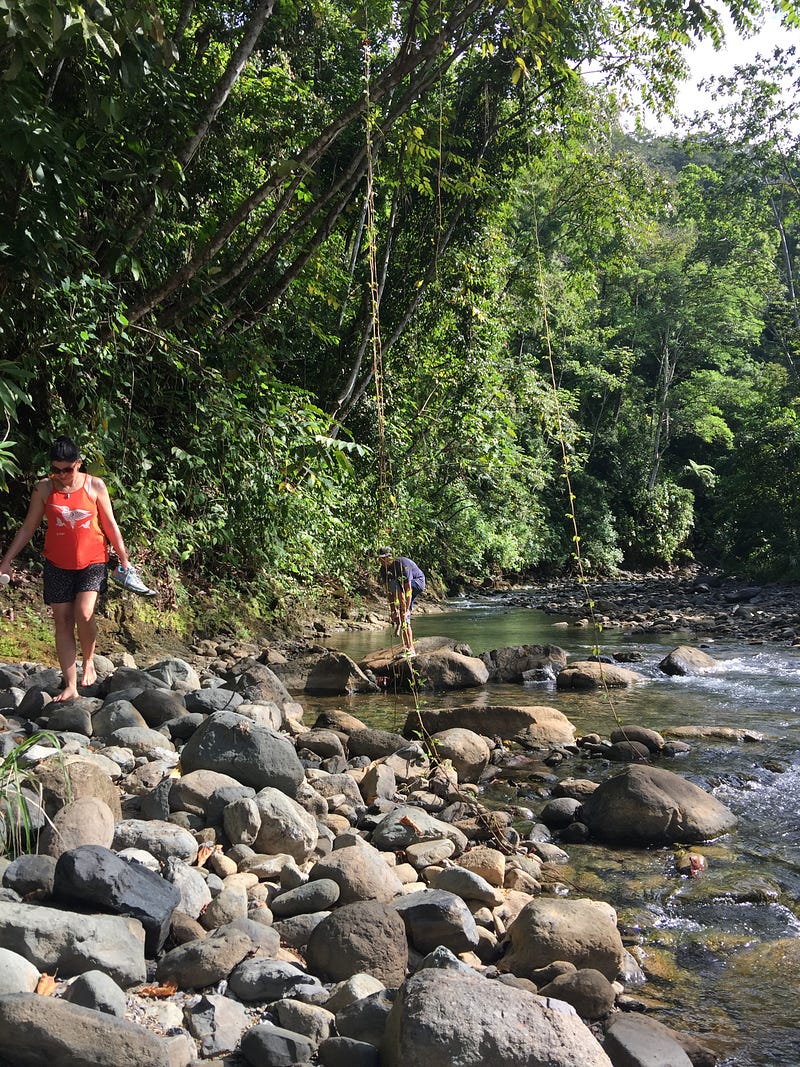
It’s impossible to describe how it feels to be in a jungle that thick. You wake up in the morning and you are already covered in dampness. The humidity is so thick in the air that you can almost wipe it off your brow before you even drink your morning coffee.
There is never one moment of silence. Not one. Insects hum constantly and birds make their tweets and twitters. Scarlett Macaws dart from tree to tree, their piercing cries echoing through the valley.
Ants, bugs, flies, and insects of all kinds hum and buzz around you. Butterflies hop from flower to flower carrying out their pollinating business. You can hardly look anywhere without seeing something moving.
It is alive. Day and night.
Moving to the jungle
As our housesit was coming to an end, we asked our friend if we could come back to the jungle and stay with him for a bit. He had lots of projects that he wanted done on his property and we were willing to help. But he really didn’t have room for us in his house long-term, and we didn’t want to sleep in our tent for more than a few nights.
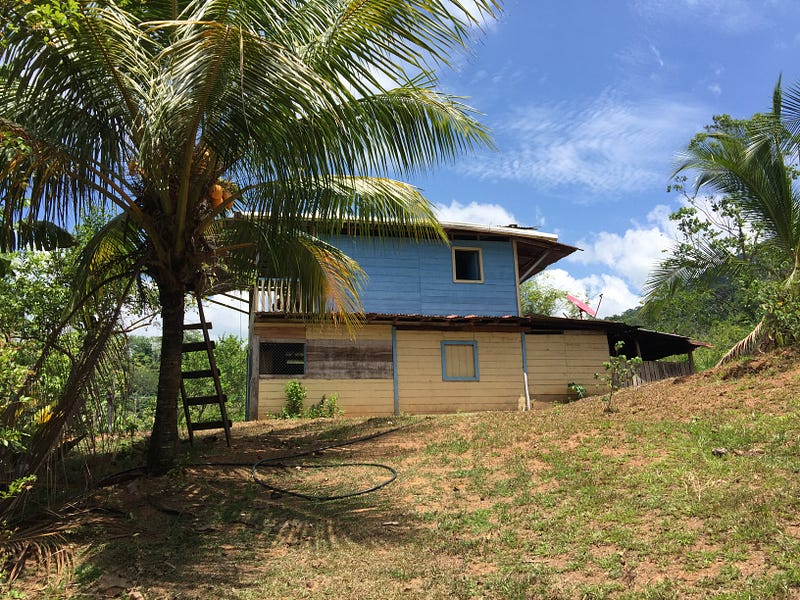
So we rented a tico (Costa Rican) house just a km down the road for $60/week. It was from a family that he knew well, and we had spoken to other people who had stayed there before. This gave us our own space, plus we were close to his place to come and hang out and help him through the days when he wanted.
A harrowing sight
One day we decided to walk into the village because we needed to purchase some supplies. It is about a 2–3 km walk along the dirt road and through a spattering of small tico houses and farms. Normally we would greet the locals as they came and went by foot or on their bikes. They were friendly and all of them knew about the white guy that lived up the road where we were coming from.
About one km along the way, we started to see thick, black smoke billowing above the trees. We couldn’t imagine what the heck would be causing that. It certainly wasn’t smoke from a brush fire or a burn pile, it was too black for that.
We kept walking while watching this plume get closer and closer.
Finally, we rounded a corner to see a man dragging clothing out of a shipping container and throwing it on a burn pile in the middle of the dirt road. It was the clothing that was causing the black smoke. Of course, most clothes are polyester these days.
He was basically just burning plastic.
Being totally disgusted and not knowing what to do, we held our breath, put our heads down, and scurried by. Neither of us so much as looked at the man because of our awkward feelings about the matter. But I did note that the shipping container was packed with clothing, top to bottom.
As we got out of sight I said, “What the hell was that?”
Chris replied with a sigh, “I have no idea but it’s horrifying.”
Because of the awkwardness of the situation, I didn’t take any photos. On one hand, I’m annoyed that I didn’t record the terrible event so I could share it with others, on the other, I don’t really want to see it again. It’s bad enough that I have the memory etched into my brain. Sadly, I don’t think it is an image that I will ever forget.
What was going on?
What was going on? Why on earth was this man burning all this clothing? And where the heck did it all come from?
These are all questions that ran through our minds as we walked in silence to the village. On our way back home, thankfully the container had been closed again and the fire was smoldering ashes on the road. A smart way to cover up the evidence, now that I think about it.
At the time we could never have understood what that man was doing with all of those clothes and where they had come from. But our answers would come after we spent another year living in various parts of Central America and speaking to a few locals about this.
To put it simply, the excess clothing comes mostly from Canada and the US. The man was likely paid to dispose of it. This is how he choose to do it.
The Dark Side of Fast Fashion
This story, and thousands more like it, are playing out every day on our planet.
Earth.org and their article The Dark Side of Fast Fashion tells us:
According to an analysis by Business Insider, fashion production comprises 10% of total global carbon emissions, as much as the European Union. It dries up water sources and pollutes rivers and streams, while 85% of all textiles go to dumps each year. Even washing clothes releases 500,000 tons of microfibres into the ocean each year, the equivalent of 50 billion plastic bottles.
EIGHTY-FIVE PERCENT OF ALL TEXTILES GO TO DUMPS EACH YEAR!
This is ridiculous.
Here is a simple timeline of our clothing production:
First, our excess clothing, as it is being produced, is contributing to carbon emissions and is polluting rivers and streams (not to mention using precious water to do so).
Then there are terrible emissions from transport that is needed to get it to the place where the consumer will buy it.
Then the clothes are washed and are polluting our oceans at astounding rates, as stated above.
Then it is thrown into dumps or donated to thrift stores.
When thrift stores are done with it, they ship it off to another country to deal with. Some places will set up their own thrift stores and try to sell it, others will burn it in the jungle.
Out of sight, out of mind.
The fashion industry should be ashamed of itself.
But black smoke in the jungle is not necessarily the fault of the fashion industry. It is the fault of the consumers. It is us that decide what we need and don’t need.
Do we really need a new dress for that show we will see on the weekend?
Do we really need new sandals that will match our new shorts?
Do we really need a new T-shirt because the old one is out of date?
Do we really need to change our clothing to suit whatever style or trend is popular these days?
Mostly, the answer is no.
Sadly, we now live in a world where fashion and how we look is more important than how we feel. And certainly more important than how we treat the planet.
Purchasing Second Hand
There are many incredible thrift stores in our midst. This is where I shop. Some may think it is embarrassing, but I think it is responsible.
Rarely do I need to purchase any piece of clothing that is brand new. In fact, some of what I get in the thrift stores is basically brand new anyway. And these days, I only purchase something if I absolutely need it.
I’m saving money and helping the planet. It is a win-win.
We need to take responsibility for our actions
We consumers need to start considering the end game for our purchases because knowing that they may end up being burnt in a perfect tropical paradise, is surely too much to bear.
Ask yourself why you are buying that new piece of clothing, and if you really need it. I’m betting the answer is likely no.
It’s up to us to preserve the beautiful places on our planet, and purchasing less clothing is surely one answer.

If you like my writing and want to read more, follow me and sign up here to get my articles by email. We would also be happy if you considered leaving me a tip by using the link to Patreon or Ko-Fi below:)
We have been nomadic since 2017! Join our journey by hitting these links:
Website | Instagram | Facebook | LinkedIn| Patreon| YouTube | Medium | Twitter | Ko-Fi | Unsplash


