
Thich Nhat Hanh: The Monk Who Breathed Beyond the Boundaries
“I am a continuation, like the rain is a continuation of the cloud.”
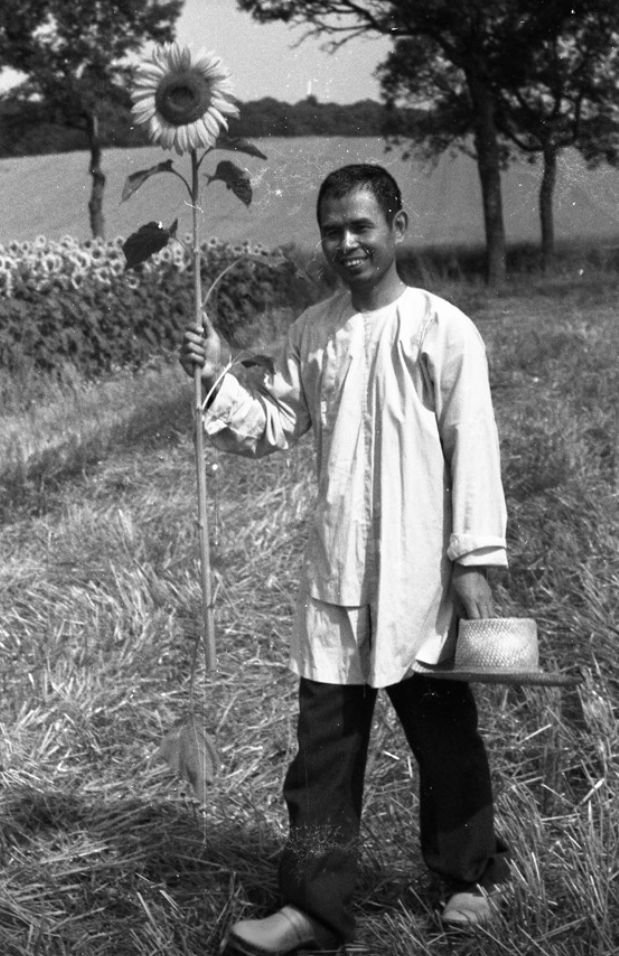
Brother Thây, as his students affectionately called him, was a living, breathing love letter to humankind, and to life itself.
There was no human emotion — love, anger, fear, despair, sadness, contemplation, boredom, joy — that this humble Vietnamese monk was not able to fully penetrate, and transform, through the simple power of his words, and his gentle voice. Those words, so plain and unadorned, yet so powerful in their effect, were informed by a heart as brilliant as a diamond — and by a life that was no stranger to war, poverty, or human suffering.
Nhat Hanh showed us that there is only one way to be free of emotional suffering: through an acute awareness of what is happening inside and outside us at any moment, via the simple vehicle of our thoughts and our senses. He called that exquisite state of awareness mindfulness — and he would often remind us not to “miss your appointment with the present.”
The beauty of mindfulness is that it’s a state that’s available to anyone, anywhere, at any time. No mumbo-jumbo, no learning sutras or foreign languages, no saffron robes. No pill; just a little will. It’s a state that can bring us, almost instantly, into a sense of aliveness and joy, and to connection with the living things all around us.
“Our own life has to be our message.” Thich Nhat Hanh
It’s usually the case that you have to do some lifting to remove the debris blocking the road. That same power of mindfulness — practiced through simple breathing exercises, accompanied by equally simple affirmations — has the power to defuse and dissolve negative feelings like anger and sadness. Those snarling gargoyles stand in the way of entering our own little Garden of Eden: the simple acceptance of, and gratitude for, what (and who) is here and now. (And may not be later.)
Opening the doors of the heart in this way also opens the doors to the suffering and points of view of others, and to defusing the tensions and misunderstandings that so often lead to estrangement, violence, divorce, loneliness. This is one reason why Nhat Hanh often conducted workshops and retreats with police officers.
Mindfulness also calls us to contemplate our interconnection (which he called interbeing) with absolutely everything around us — from other people to the clouds that bring rain. That extends to death and birth, too, which he saw as twin illusions that separate us from the deeper experience of what being alive really means.
Thây was as far from a New Age personage, or bromide-dispensing guru as you can get. The deep calm that seemed to radiate from within his quiet, measured voice held a hidden power — one that sprang from a lifetime (more likely several) of suffering, devotion, and learning.
Pick up any one of the 100 books that Thich Nhat Han wrote, open it to any page, and you will instantly be drinking from that clear water of love, wisdom and compassion for all living things.
Birth and death are only a game of hide-and-seek. So smile to me and take my hand and wave good-bye. Tomorrow we shall meet again or even before. We shall always be meeting again at the true source. Always meeting again on the myriad paths of life.
― Thich Nhat Hanh, “No Death, No Fear”


