
They Won’t Teach You About Her In Business Schools
Fortune without fame.

It’s not that difficult to become a millionaire in the long term, rather it’s the anxiety of not becoming a millionaire before 30 is what stressing millennial's these days.
The current entrepreneurial environment finds you worthless if you didn’t manage to build a 5 or 6-figure empire before 30. That’s kind of depressive.
There is something weird about this “30” age mark.
Anyways.
Let’s look at the story of a woman who went on to become a millionaire without gaining any fame and she didn’t give a dime about “30”
“Anne Scheiber” : A brief history(1893–1995)
A jew woman who was born in Brooklyn, New York in 1893 in a big family and had nine siblings. Her dad died while she was quite young and was brought up by her mother alone.
Despite her difficult conditions, she went to acquire a degree in law but decided to work as an auditor for the United States IRS.
She worked for the same company for 23 years till her retirement in 1944, when she was 51. She was never promoted in her entire career. This was because of the antisemitism and discrimination against women in US corporations during those times. She also never made above $4000 a year.
She never married or had any children. Lived frugally in her rented studio apartment on West 56th Street and finally died at the age of 101 in 1995.
This was the story of Anne Scheiber. Like many others.
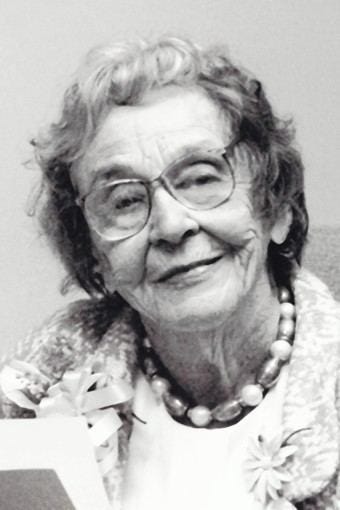
Nothing exciting right, except that she lived till 101. Actually, there is something.
In her will, Anne Scheiber left $22 million ($37 million in today’s money) to Yeshiva University’s Stern College for Women and the Albert Einstein School of Medicine.
She never went to these colleges nor had any relationship with anyone there.
No, she didn’t win any TOTO or 4D(lottery).
Yeah, I know. A punch in the gut.
She is considered as a post-mortem philanthropist and her sole intention behind this donation was to empower the next generation of young jew women. That’s it. No spice.
So how she did this? Continue reading.
Unconventional people with unconventional stories
When Anne retired from IRS, she had savings of 5000 dollars, as per many reports.
This later was proved wrong by one of her acquaintances, Ben Clark, who was her attorney as well. Ben reported that Scheiber’s 1936 tax return shows that she received dividends of $900. Considering the average dividend yield of 4.3% in 1936, Scheiber probably had $21000 in her portfolio.
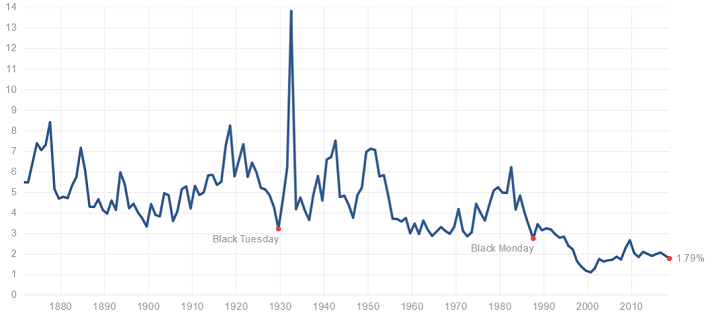
Let’s ignore that there was some input of fresh cash, still, the difference between starting in 1944 with $5,000 and starting in 1936 with $21,000 is tremendous.
Even if she did start with $21000, converting that to $ 22 million is a remarkable feat. That’s 14.6% a year for freaking 51 years.
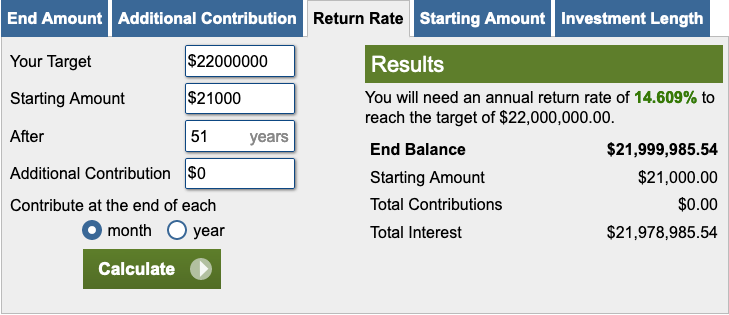
Next 5 decades of her life after her retirement will be spent crafting a portfolio that will turn these $21000 to $22 Mn. She invested astutely. This desire to donate money in order to reduce the discrimination towards Jewish young woman is what she lived for.
“She was never looking for a quick buck,” said William Fay, her broker at Merrill Lynch.
Longevity, frugality, and compound Interest
Yes, it’s a fact that Ms. Anne could have saved a lot more of what she earned than people with families.
Ben Clark, her attorney mentioned that “she was able to save up to 80% of what she earned”. She also invested some part of pension that she was receiving. Having no family doesn’t suffice to it, she also cultivated the lifestyle were kept her demands very low.
Not changing furniture, or sometimes having the same clothes from the 1940s. This is real frugality and can’t be practiced by many of us.
When you buy things that you don’t need, you will end up selling things that you need — Warren Buffet
She also reinvested all her dividends, without fail in high-quality stocks and let the compounding work its magic.
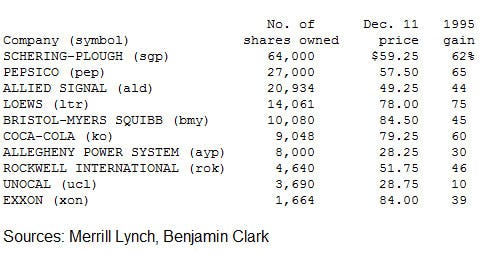
One might be thinking that she must be indulging herself with the top management of companies that she has invested in. This was not the case. She didn’t attend any single shareholder meeting in those 51 years.
Her experience as an auditor provided her enough trust in the fact that the real compounding can only be achieved through stocks. Every decision that she took was based on whether a particular asset it’s a productive cash-generating asset or not. Absolutely no noise was entertained.
At one point in the 1970s, Anne’s stockbroker recalled that her portfolio was down 50% but she still didn’t sell. She rationally believed in what she held. This in turn also reduced the transaction fees and taxes. At every point she made sure that the hidden costs remain as low as possible.
She adopted the “Buy and Hold” strategy. Kept stocks as long as possible and bought more during volatile times. She took advantage of volatility like the one we saw recently. All along the way she was practicing common sense.
She never considered stocks as gambling rather she considered it as buying a partnership in the company. This is one particular insight which is easy to listen but hard to practice.
Lessons
Anne Scheiber is a classic example of how a regular person can make a fortune through investing in stocks.
- She followed what a classic example of decision making says: you need to cultivate a lifestyle in which you can avoid making too many decisions.
- Her frugality is of extreme nature but this pandemic did set an example for every one of us that we crave for extra. We don’t need that extra.
- Starting early is one of the biggest takeaway. Most of the people start in their 40’s. What is the best time? — I would say today. Here are 3 analogies that I use as an investor.
- She completely ignored the market volatility. In today’s time, it’s hard to keep yourself from away from CNBC but is watching it continuously making you a billionaire? Ask yourself? Market volatility is what should you take advantage of when it arrives. It’s here to serve you not make you fearful.
- She didn’t make a lot of friends. Totally cool, I would say. Why do you need so many? Real friends put their skin into the game. All she met with was her attorney and the stockbroker. I didn’t find records of someone else. It’s high time to learn the difference between friends and acquaintance.
- She had a purpose which she didn’t go around sharing with everyone. She worked and came up with results. As per the one of Bluezone’s study, people having a sense of purpose could be living up to seven good years longer.
- She was persistent. She showed up every day and asked herself what decision can I take in regard to my portfolio and majority of the time the answer was “no decision required”. Showing up every day to serve your purpose is like winning half of the battle.
- She not only understood the value compounding in her head, but she also took that idea to her heart. Stephen King has penned over 50 novels writing 6 pages a day for 40 years. That is what compounding is. It’s not always money. Good habits compound over time.
I don’t want to make a moral judgment on the life of Anne Scheiber but she is one person who needs to be taught in every school around the world.
Different people will have different takeaways from her story but surely there is a takeaway for everyone.
Indeed, investing today is filled with algorithms and complex corporate finance models but the crux of investing will remain the same forever:
You are deferring today’s expense in order to earn more in future.
People might criticize that Anne Scheiber’s “Buy and Hold” strategy doesn’t work in today’s time since the life cycle of companies has become shorter but what they forget is that Anne Scheiber’s story is more about temperament.
You can follow whatever strategy suits you but if you can’t hold your horses then it’s just too bad. If a change of 1% is giving you an anxiety attack, it’s just too bad.
To address the issue of 1% change, Nassim N Taleb in his book “Fooled by Randomness” said, “go out and take a look at all those days in history when the market dropped 1% — pundits will have an explanation”.
Think long.