avatarGael Cooper

Free AI web copilot to create summaries, insights and extended knowledge, download it at here

2642

Abstract

om readers. How DARE I call one generation greater than another?</p><p id="9ab9">It didn’t matter that the Greatest Generation has its own entry in <a href="https://www.britannica.com/topic/Greatest-Generation">Encyclopedia Britannica</a>, <a href="https://en.wikipedia.org/wiki/Greatest_Generation">Wikipedia</a>, and is the name of a <a href="https://en.wikipedia.org/wiki/The_Greatest_Generation_(book)">best-selling book</a> by Tom Brokaw. Certain readers were outraged. Surely, their own generation was just as great as those who fought and died in WWII. I suspect most of those people didn’t read past the headline.</p><figure id="5c3d"><img src="https://cdn-images-1.readmedium.com/v2/resize:fit:800/1*-6qDIYdwXmCsfaBbFGKKBg.jpeg"><figcaption>“Missed the Saturday dance…heard they crowded the floor…couldn’t bear it without you, don’t get around much anymore.” Mom and Dad in the 1940s. (Author photo)</figcaption></figure><p id="e8f7">Scolding emails aside, I had a message that I hope did not get lost. Because of what my parents went through, I’ll always be a different person than I might have been.</p><p id="2eb1">They grew up during the Great Depression. My mom lost her beloved dad in 1934, leaving her mom with seven kids to support. Then, the very month my jolly, football-playing, wisecracking dad turned 21, Japan bombed Pearl Harbor. Dad left college, joined the Marines, and married Mom before heading off to the Battle of Okinawa. When he came home, my oldest brother, born while Dad was away, was 15 months old and terrified of this tall stranger in a uniform.</p><p id="d130">WWII created a huge US housing shortage as soldiers returned, started families, and wanted their own places. Homes couldn’t be built fast enough. My parents moved in with Dad’s parents, into an already-tiny house that also hosted three boarders.</p><p id="71f4">What did we kids learn from the difficult lives our parents lived before we came along? I think all seven of us learned not to sweat the small stuff. Were we selling apples on the corner to survive? Was France conquered, England under siege, Hawaii being attacked? No? Then you were probably going to be fine.</p><p id="d654">Mom and Dad didn’t have it easy after the war. More wars inevitably come, and Vietnam came for two of my brothers (one served in the army in Germany, one taught in the poorest parts of Chicago and Gary as part of VISTA).</p><p id="7da3">In my TODAY Show article, I wrote:</p><blockquote id="07b6"><p>“When I was born in 1967, suddenly she was a new mom again at age 45, with six other children aged 9 to 23. During my infancy, she was also helping to rai

Options

se her first granddaughter, all the while worrying about whether her two eldest sons would be drafted to fight in Vietnam. Maybe all children believe there is nothing their mother cannot do, no trouble she has not seen, but in my case, there was empirical evidence.</p></blockquote><blockquote id="4ebf"><p>Her own sad experiences held me up when I survived my own. When a friend’s mother was diagnosed with breast cancer, when my first love dumped me for a freshman, when my best friend died suddenly at age 28 of a pulmonary embolism, I knew I could always call her and unload my worries, knew there was no road of heartbreak she had not already traveled.</p></blockquote><blockquote id="1cf0"><p>When I became a mother myself, I half-heartedly checked out parenting books and investigated online forums, but the only advice I ever really needed came from my mom.”</p></blockquote><p id="446c">None of that is hyperbole. There’s an old saying, “Marry a Texas woman, whatever happens, she has seen worse.” I knew my parents had seen worse and survived it, and I took comfort in that survival.</p><p id="fece">There would never in their lives be a bigger, more life-wrenching event than the war. Because they lived so long, they lived to see global memories of it fade, as the world was repopulated with people who could never understand their sacrifices.</p><figure id="8db4"><img src="https://cdn-images-1.readmedium.com/v2/resize:fit:800/1*Mz7OF-KKksT8HK4ZdcNGiA.jpeg"><figcaption>My dad and his two best high school friends, great athletes, were dubbed the “dead end kids.” Only two of them, dad (shown in baseball uniform) and Jim Foley (with football) made it home from the war. The third of their group, Elmer Philles, was killed in action in France. (Author collection)</figcaption></figure><p id="784c">But none of that bothered them. They weren’t bitter about how things might have worked out for them if the war hadn’t thrown their lives into chaos.</p><p id="5683">They didn’t expect praise or thanks. They had luckily survived when so many hadn’t — my dad’s best friend never came home from the battlefields of France. They considered themselves lucky, owning a little bit of land, raising decent humans, living lives to honor those who didn’t get the chance.</p><p id="1a28">Once, and only once, when an article of mine about Gen X earned some attention, my dad made a joke.</p><p id="9d62">“Why don’t you write about MY generation?” he said. “We saved the world!”</p><p id="68ab">And as always, my mom was right there, to keep him in line.</p><p id="1133">“Oh, Ed,” she said fondly. “You had a little help.”</p></article></body>

They Were GIs, I Was Gen X, and Their Example Was Everything

Eleven years ago today, I lost the world’s best mom. But as her generation slipped away, the world lost even more.
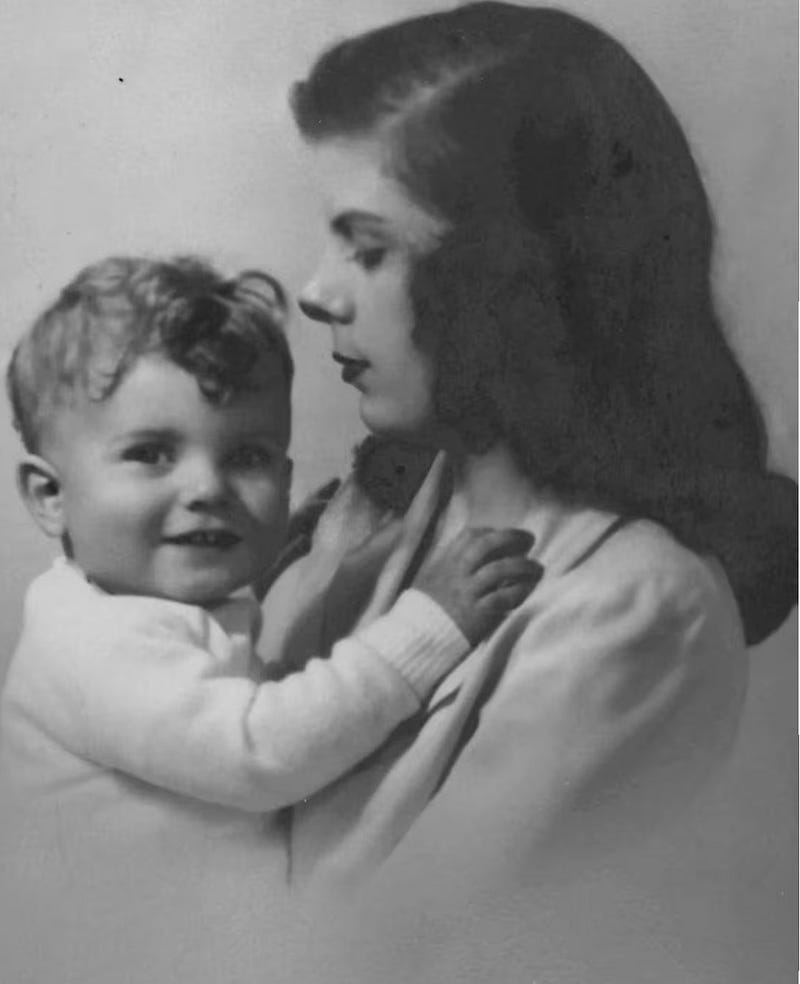
My mom had this photo taken with my eldest brother to send to my dad, who was a US Marine fighting in Okinawa during WWII. My brother was 15 months old before he met his dad. (Author photo)

Today marks 11 years since my mom died. It’s also the Ides of March, the day Julius Caesar was assassinated and an infamous day we’re told to beware. That seems fitting. The world should know what a bad day this is.

Mom was 91 when she died in 2013, a few days after suffering a series of strokes. I was 45. I wasn’t a teenager losing a mom to breast cancer, like friends of mine had done. I didn’t see her suffer for years from dementia. She stayed, with me and healthy, for as long on this earth as is reasonable. She was there for my graduations, my wedding, my daughter’s birth, the publication of my first book. I’ll miss her forever and ever, but I can’t say I got a raw deal.

When I could lift my head out of my own sorrow, I saw my mom’s loss — and my dad’s, just a year later — as a sign that something was passing out of the world. My parents were GIs. They’d survived Great Depression childhoods and WWII young-adulthoods. They’d built the suburbs and the highways, raised the Baby Boom (and a few Gen Xers like me).

I can’t say that everything this massive group of humans did was perfect, but the two people that I knew best were examples to be proud of. A storied generation was slipping away, and we would not see their like again.
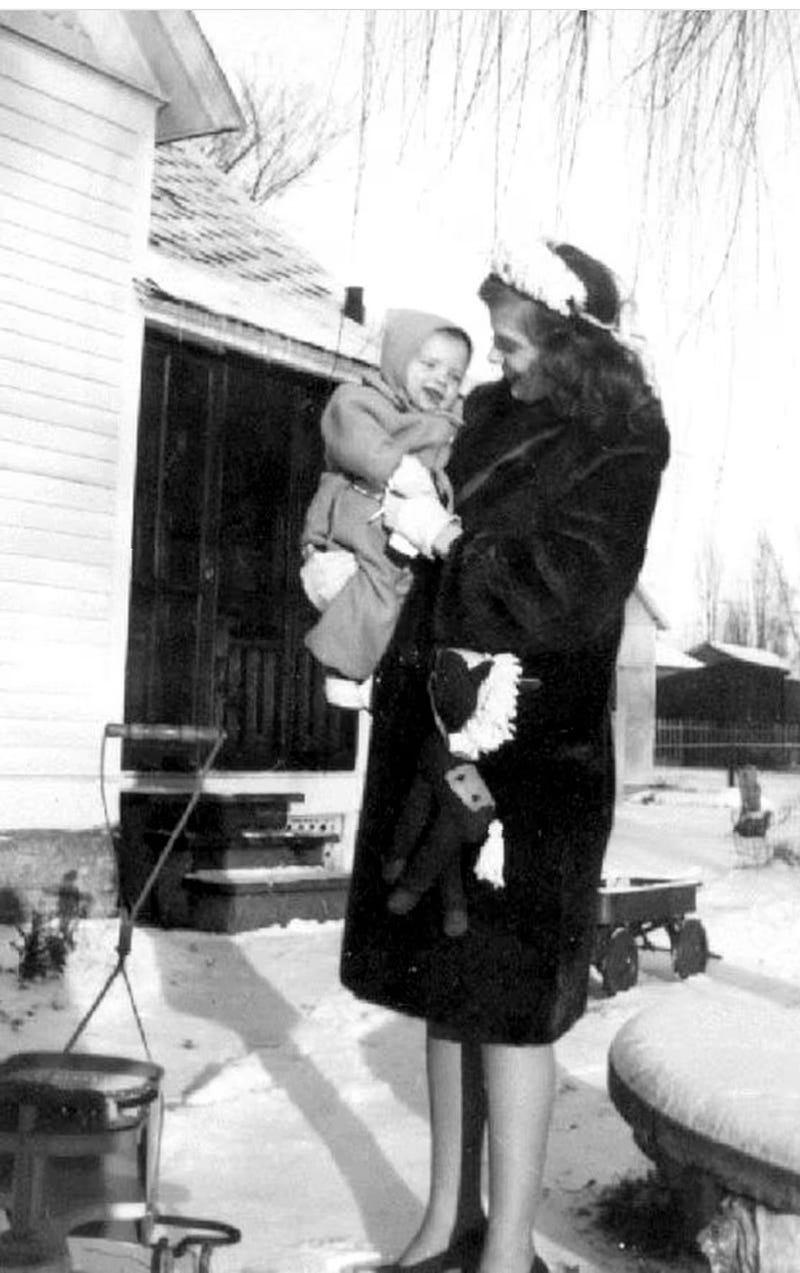
Mom and my oldest brother waited out the war in Minnesota while Dad fought with the Marines. The Battle of Okinawa was legendarily bloody, but he made it home. (Author photo)

The Greatest Generation passes

When my mom died, I was working for NBC News Digital/TODAY Show online. I wrote about her loss in a story titled, “Goodbye to the Greatest Generation of Moms.”

Guess what? I got scoldy email from readers. How DARE I call one generation greater than another?

It didn’t matter that the Greatest Generation has its own entry in Encyclopedia Britannica, Wikipedia, and is the name of a best-selling book by Tom Brokaw. Certain readers were outraged. Surely, their own generation was just as great as those who fought and died in WWII. I suspect most of those people didn’t read past the headline.
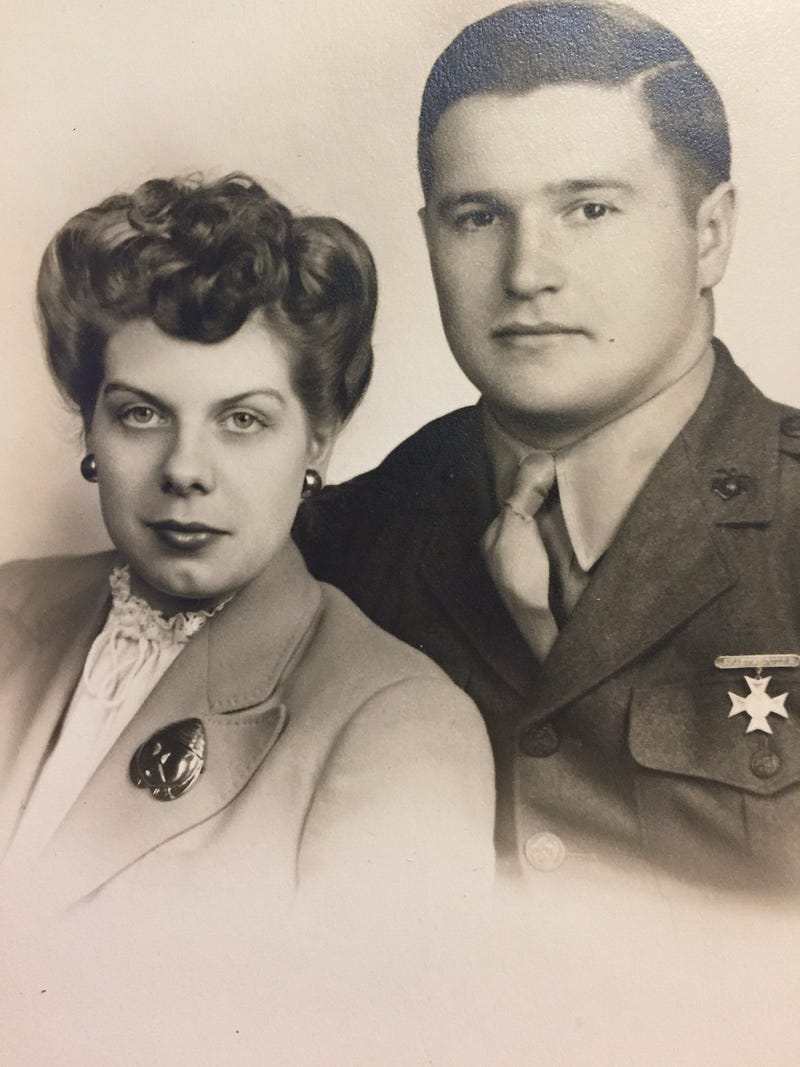
“Missed the Saturday dance…heard they crowded the floor…couldn’t bear it without you, don’t get around much anymore.” Mom and Dad in the 1940s. (Author photo)

Scolding emails aside, I had a message that I hope did not get lost. Because of what my parents went through, I’ll always be a different person than I might have been.

They grew up during the Great Depression. My mom lost her beloved dad in 1934, leaving her mom with seven kids to support. Then, the very month my jolly, football-playing, wisecracking dad turned 21, Japan bombed Pearl Harbor. Dad left college, joined the Marines, and married Mom before heading off to the Battle of Okinawa. When he came home, my oldest brother, born while Dad was away, was 15 months old and terrified of this tall stranger in a uniform.

WWII created a huge US housing shortage as soldiers returned, started families, and wanted their own places. Homes couldn’t be built fast enough. My parents moved in with Dad’s parents, into an already-tiny house that also hosted three boarders.

What did we kids learn from the difficult lives our parents lived before we came along? I think all seven of us learned not to sweat the small stuff. Were we selling apples on the corner to survive? Was France conquered, England under siege, Hawaii being attacked? No? Then you were probably going to be fine.

Mom and Dad didn’t have it easy after the war. More wars inevitably come, and Vietnam came for two of my brothers (one served in the army in Germany, one taught in the poorest parts of Chicago and Gary as part of VISTA).

In my TODAY Show article, I wrote:

“When I was born in 1967, suddenly she was a new mom again at age 45, with six other children aged 9 to 23. During my infancy, she was also helping to raise her first granddaughter, all the while worrying about whether her two eldest sons would be drafted to fight in Vietnam. Maybe all children believe there is nothing their mother cannot do, no trouble she has not seen, but in my case, there was empirical evidence.

Her own sad experiences held me up when I survived my own. When a friend’s mother was diagnosed with breast cancer, when my first love dumped me for a freshman, when my best friend died suddenly at age 28 of a pulmonary embolism, I knew I could always call her and unload my worries, knew there was no road of heartbreak she had not already traveled.

When I became a mother myself, I half-heartedly checked out parenting books and investigated online forums, but the only advice I ever really needed came from my mom.”

None of that is hyperbole. There’s an old saying, “Marry a Texas woman, whatever happens, she has seen worse.” I knew my parents had seen worse and survived it, and I took comfort in that survival.

There would never in their lives be a bigger, more life-wrenching event than the war. Because they lived so long, they lived to see global memories of it fade, as the world was repopulated with people who could never understand their sacrifices.
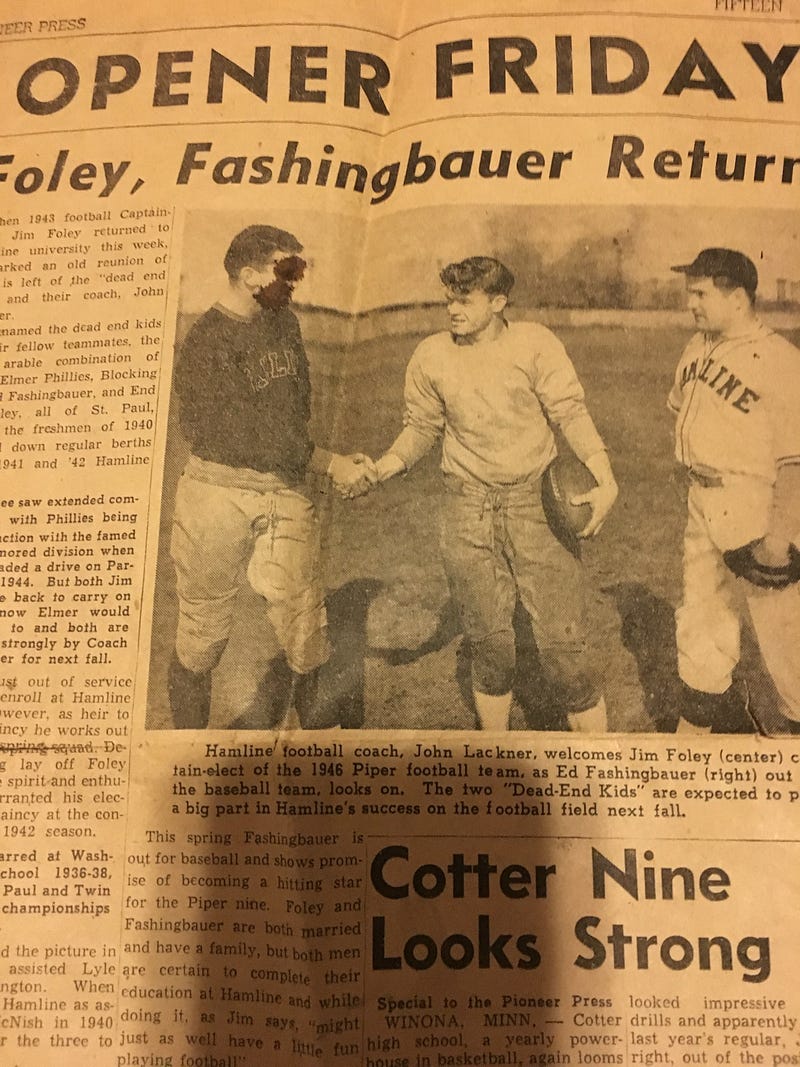
My dad and his two best high school friends, great athletes, were dubbed the “dead end kids.” Only two of them, dad (shown in baseball uniform) and Jim Foley (with football) made it home from the war. The third of their group, Elmer Philles, was killed in action in France. (Author collection)

But none of that bothered them. They weren’t bitter about how things might have worked out for them if the war hadn’t thrown their lives into chaos.

They didn’t expect praise or thanks. They had luckily survived when so many hadn’t — my dad’s best friend never came home from the battlefields of France. They considered themselves lucky, owning a little bit of land, raising decent humans, living lives to honor those who didn’t get the chance.

Once, and only once, when an article of mine about Gen X earned some attention, my dad made a joke.

“Why don’t you write about MY generation?” he said. “We saved the world!”

And as always, my mom was right there, to keep him in line.

“Oh, Ed,” she said fondly. “You had a little help.”

Family
Parenting
Motherhood
Grief
World War II
Recommended from ReadMedium