
They don’t sweat and they poop up to 100 times a day. Learn fun facts about guinea pigs.
Guinea pigs are known almost worldwide. The difference lies in the fact that in Europe, they are domestic animals, while in some South American countries, they end up on plates. Here are some interesting facts about guinea pigs.
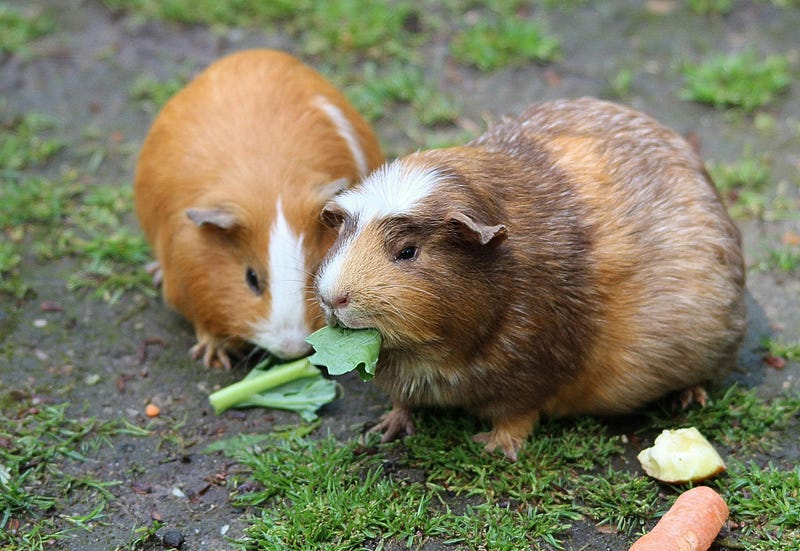
Guinea pigs are one of the most popular pets in Europe. They are larger than hamsters and live much longer. You can pick them up and cuddle them gently. They are less demanding than, for example, dogs or cats. What should you know before expanding your family with guinea pigs? Let’s start with the fact that these rodents actually have a different name. Ladies and gentlemen, meet the cavies. Domestic cavies.
Yet another name has stuck to them. Some jokingly say it’s particularly inappropriate. After all, domestic cavies are neither pigs nor marine creatures. They are rodents that shy away from water. In the wild, they live in South America, mainly in the territories of Peru and Chile. These adorable rodents made their way to Europe at the end of the 16th century. Interestingly, they are not treated the same everywhere in the world.
In most countries, guinea pigs are experimental, breeding, and companion animals. While in Europe, hardly anyone would think of serving cavy for dinner, in their native South America, it’s not such an abstract idea.

Where do people eat guinea pigs?
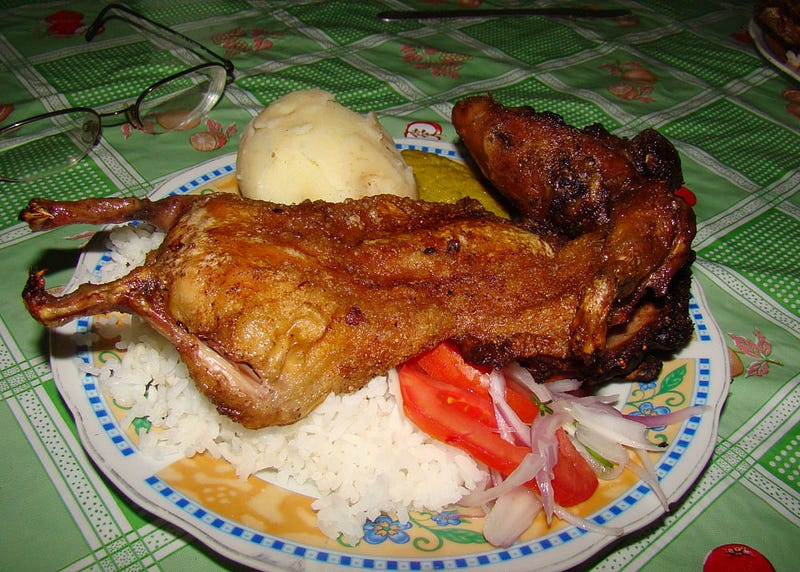
Guinea pig is a traditional Peruvian dish, served on special occasions since the time of the Incas. In modern-day South America, guinea pigs, specifically the species cuy, are still bred for consumption. It is estimated that in Peru alone, about 65,000 of these rodents are eaten annually. However, it’s not only Peruvians who enjoy this delicacy. Cuy is also widely consumed in Ecuador, Bolivia, as well as in southern Colombia, northern Argentina, and Chile.
Their meat has low fat content but is rich in protein. So, it is considered quite healthy food. It contains more protein than most animal-derived products that are part of the daily menu of Western residents. As for the taste, the most common comparison is… chicken.
How does cuy differ from the guinea pigs in our homes? Primarily in size. Adult specimens can weigh even twice as much as domestic cavies, ranging from 2 to 3 kilograms. The largest specimens can reach a length of up to 50 cm. This is much less than domestic guinea pigs. The animals in cages usually measure around 25–30 cm.
These are the only significant differences. Cuy guinea pig is also gentle, comes in many color variations, and can be raised in domestic conditions. Interestingly, larger cousins of cavies are also more susceptible to polydactyly. This is a congenital defect involving the presence of an extra finger or fingers. However, this does not bother cuy in their daily functioning.

Guinea pigs as pets. Worth knowing
Guinea pigs are social animals and in the wild, they live in herds. Therefore, it is important to provide them with companionship even in domestic conditions. Ideally, in the form of another guinea pig. The sociability of cavies is also evident during interactions with human caregivers. These animals usually enjoy being petted. However, they can be shy, especially at first. So, the first thing to do is to learn how to handle them. Not only to avoid stressing them out but also to avoid inadvertently hurting them. After all, we’re talking about small animals here.
They are rather calm animals, although they can get excited at the sight of people and treats. Their joy is unmistakable then. And when are guinea pigs the loudest? Unfortunately, there’s no rule here. Domestic cavies are active both at night and during the day. They derive energy from short naps throughout the day, although they may not sleep for up to 20 hours.
Guinea pigs don’t mind the presence of other pets in the house. However, it’s not advisable to allow them contact with a different species (e.g., dogs) unsupervised. This comes with risks. When taking a guinea pig out of the cage, it’s important for them to feel safe. This feeling can be provided by, for example, a solid surface. So, it’s better for the cavy to walk on the floor than, for example, on a bed.
This also has a practical dimension. Although these rodents are small, they digest a lot and quickly. In short, they defecate up to 100 times a day. Returning to the safety issue. It’s also important for the guinea pig to have a shelter in the cage or another place where it can hide.
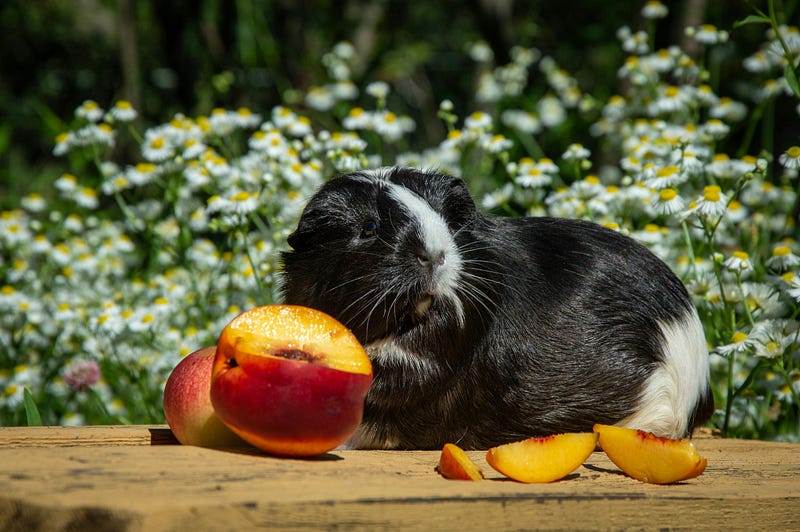
Anyone who has had the pleasure of observing guinea pigs has probably noticed that these rodents are almost constantly chewing something. It’s up to the caregivers to ensure they have constant access to food. What do guinea pigs eat? Special mixtures of vegetables and seeds are sold in pet stores, designed specifically for these rodents. We can also find treats for guinea pigs in our kitchens. These include apples, grapes, cucumbers, carrots, or celery. However, this doesn’t mean they eat all fruits and vegetables. For instance, beans and cabbage can be poisonous to them.
Surprising facts about guinea pigs
As you can see, guinea pigs can be both culinary delicacies and pets. What else is worth knowing about these rodents? Here are some interesting facts about guinea pigs not only for those who want to buy domestic cavies.
- Guinea pigs emit series of characteristic sounds. Sometimes resembling purring, other times subdued squeaking. In their case, these are signs of excitement or contentment.
- Although guinea pigs are often called fluffy rodents, not all of them have long fur. The skinny variety resembles Siamese cats more than furry balls.
- Baby guinea pigs are born with fur and open eyes. Just a few hours after birth, they can already run. This is an important skill considering that in the wild, they are vulnerable to attacks from predators.
- With the right diet and care, guinea pigs can live from five to even seven years. The oldest known domestic cavy, named Snowball, lived to the ripe old age of 14 years and 10 months. This earned her a place in the Guinness World Records.
- Guinea pigs should receive an additional dose of vitamin C daily.
- Guinea pigs don’t sweat.
Attention all readers!
As content creators on Medium.com, we face minimal compensation for our hard work. If you find value in my articles, please consider supporting me on my “Buy Me a Coffee” page. Your small contributions can make a big difference in fueling my passion for creating quality content. Thank you for your support!

