
They Didn’t Want Us on the Plane
Maybe we had the virus.
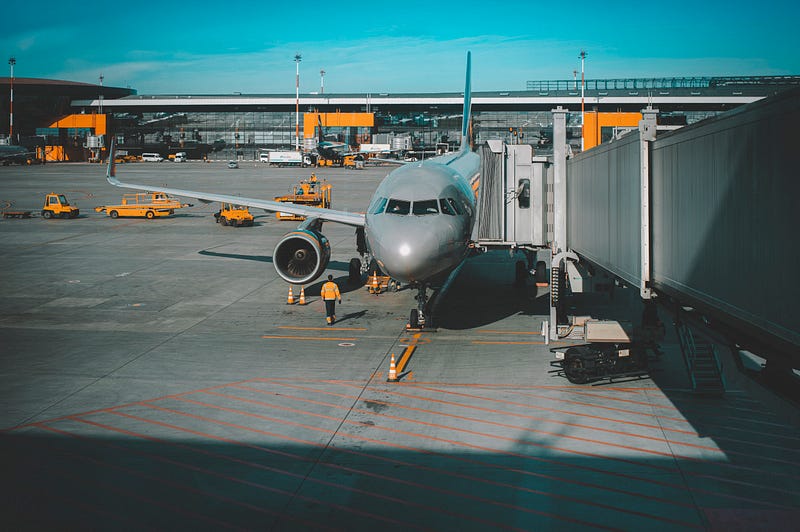
“The captain doesn’t want us to board,” muttered the middle-aged Chinese man after his voluntary scouting mission.
He resumed moping back and forth across the passenger boarding bridge, also known by various other names such as jetway, airbridge, air jetty, skybridge, and — perhaps my favorite — gangway. Not unlike the coronavirus, which is also known by various other names such as COVID-19, SARS-CoV-2, and — definitely not my favorite — the Chinese virus.
Yelling trailed from the cockpit. The passengers didn’t want the four of us to board either.
I would find out several hours later that our voluntary scout had recently flown back to China from Bangladesh, “recently” being fewer than fourteen days ago.
The university-age Chinese girl, who did her fair sharing of moping as she groaned on her cell phone (“Shouldn’t they have figured this out before letting us out of the quarantine hotel?”), had flown in from New York, which would in a few days’ time become the national epicenter of the country that would become the new global epicenter of the pandemic.
My wife leaned into me, gripping my hand more tightly, as if to say, “If these two Chinese nationals are worried, then foreigners like us should panic.”
Her Azerbaijani passport and my American one stayed inside my pants pockets as if hiding out of shame in a country that, despite being where the first cases were found and reported, had apparently cultivated a new belief overnight: Foreigners were more likely to have the virus.
I squeezed her hand in return and kissed her forehead, nuzzling my cheek against her hair. We stood still and breathed quietly.
Some travelers dread plane rides along with the entire airport experience and can’t wait for the steel bird to hit the tarmac so their real journey can begin. Some travelers enjoy spending time in the space where transportation happens. I belonged to the latter group.
Not this time.
If the plane departed without us, we would likely spend eleven more days in hotel quarantine in Guangzhou, where our flight from Vientiane had landed three days ago — or fourteen more if those three days didn’t count — and another fourteen in Suzhou, where my job and our apartment were, where our home was.
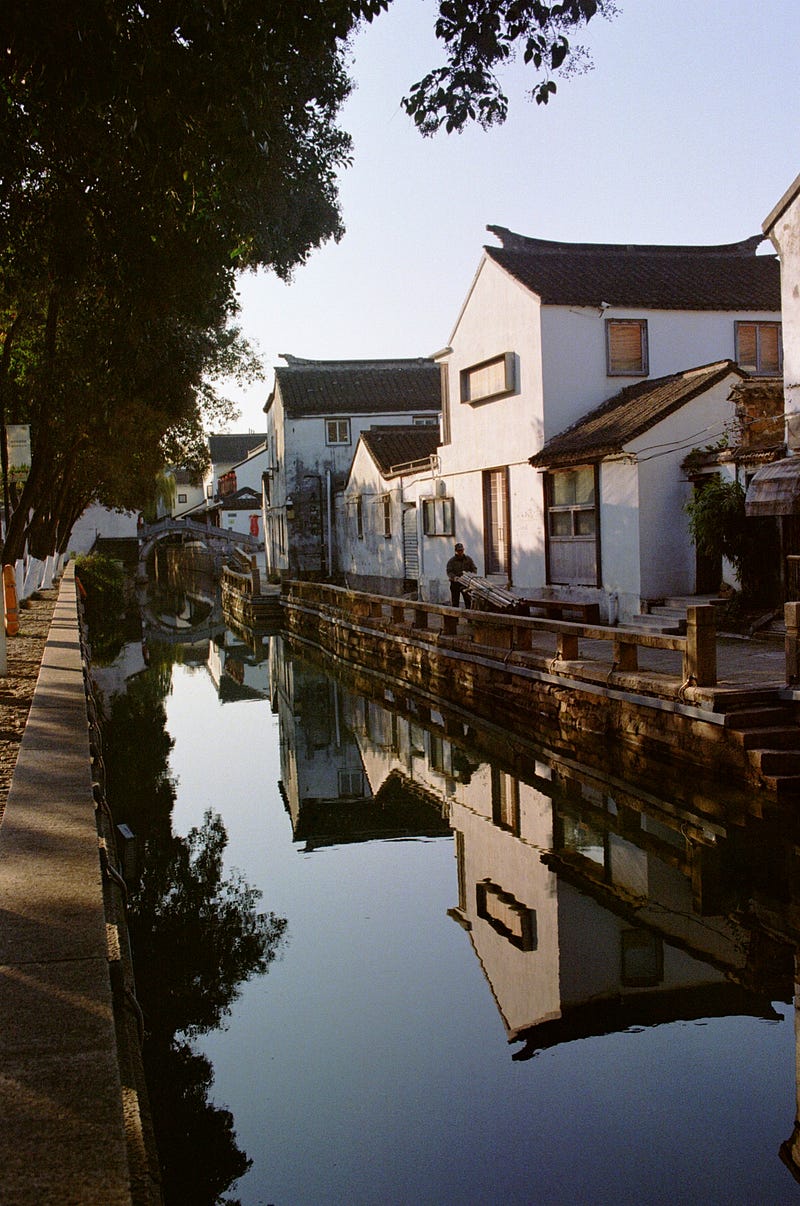
Suzhou, a city near Shanghai famous for its canals and gardens (dubbed “Venice of the East” by those who must assume it’s a compliment), had been our home for nearly the past two years. It was where we got married. Her hometown of Baku, the capital of Azerbaijan, would soon be in lockdown, like the rest of the country. My home state of California was already in lockdown. Chinese cities, on the other hand, were reopening.
A representative from the airline bustled out of the plane.
“Can we board yet?” the scout asked.
“Sorry. Not yet. We’re on the phone with the airline.” He went back the way he’d come.
My wife sent voice messages to her brother, who had lived in Shanghai for seventeen years but recently moved back to Baku. I wrote messages to fellow expat teachers, who when combined had probably lived in China for seventeen years and who had all recently returned from abroad, “recently” in this case meaning within the past month.
The pandemic has taught us that when trapped in a small space, we want to communicate with the outside world more than ever.
We should’ve flown back a week earlier, on the date my employer had requested we return. A week earlier, home quarantine was still an option. Three days before our flight from Laos to China, Malaysia was added to China’s growing list of flagged countries: If you were an international arrival who had been in one of these during the past fourteen days, you had to endure fourteen days of hotel quarantine.
On the morning of our flight out of Laos, China declared that all international arrivals would be subject to fourteen days of hotel quarantine. Six days after our flight landed on Chinese soil, China closed its borders to all foreigners.
On the morning of our flight, it got canceled. And replaced with a later one, which might or might not also get canceled.
Direct flights from Vientiane to Shanghai (Suzhou does not have its own airport — Shanghai and Wuxi are the closest, each an hour away) had long been canceled. We had wanted to transfer in Kunming, China’s gateway to many Southeast Asian nations.
My lovely wife found a flight to Guangzhou, which would depart earlier than our rescheduled flight to Kunming, which would also end up being canceled, which we already suspected but could not yet know with certainty.
Uncharacteristically, I listened to my better half and booked immediately.
At this point, she and I had spent more than two months in each other’s constant company. We were tired of the road, (miraculously) not of each other. (But we agreed that without a pandemic going on, we probably would not have been tired of the road either.)
When my school announced to all its teachers that the new semester would not start on time due to the epidemic (the WHO had not labeled it a pandemic yet), we were in Bali and two weeks into what was supposed to be a three-week trip.
Initially, the school delayed the start date by a week. We would travel for two more months. Some couples might have elected to extend their time in a place that is still (in my humble opinion) erroneously stereotyped as paradise on earth. We decided to move on and got the chance to see Sumatra, which ended up being our favorite island of Indonesia, and Mulu, which is undisputedly the most Borneo part of Borneo that we visited.

But we were ready to go home. What began as an extra week morphed into more than an additional month that bounced from holiday and adventure to drudgery and avoidance. My wife’s sister’s boyfriend in London envied us for the extra vacation time. My wife’s sister disagreed.
“Apologies for the long wait,” the airline representative told us at last. “You may board now.” How long had we been waiting? Twenty minutes? Thirty? Forty-five? Surely not an hour.
Apparently, disagreements onboard had been resolved.
Evidently, the agreement was that, except the crew, everyone onboard would treat us like we had the plague, which, to be fair, was a possibility.
Two rows in the back were reserved for us, as was one of the lavatories, which I perused near the end of the flight. I had never seen such a clean and unused loo on a plane. It was a shame no one else from our quartet took advantage of the opportunity.
The flight itself was uneventful. Deplaning was not.
After the plane landed in Wuxi, a medical staffer in a hazmat suit boarded and approached us in the back, asking us to accompany her. One small problem: She didn’t wait for us. She was already off the plane when business class threatened to start a riot.
“We had to wait for the four of them before takeoff! Now we have to wait for the four of them to get off first too!?”
My wife squeezed my hand. “Don’t do anything. Just wait.” The other two, standing behind her, seemed to follow her advice without understanding her words.
An elbow came close to my face as the owner scuttled out of his row. After failed attempts to placate the holders of the most expensive tickets onboard, the flight attendants let them deplane first.
The medical staffer handed us over to someone who was not in a hazmat suit, who brought us to a bus and drove us to a parking spot that did not seem designated for passengers in quarantine, where we would end up waiting for four hours.
Our bus from Suzhou picked us up late. We were transferred to our quarantine hotel, where we were informed we would only have to stay for eleven days because our three days in Guangzhou would count towards the fourteen-day requirement, which was a welcome piece of good news.
We discovered on the tenth day that those three days would not count after all.
We were home, but we were not home yet.
Dash Ip has worked in several countries, China among them. That’s why Shanghai features heavily in his novels.


