
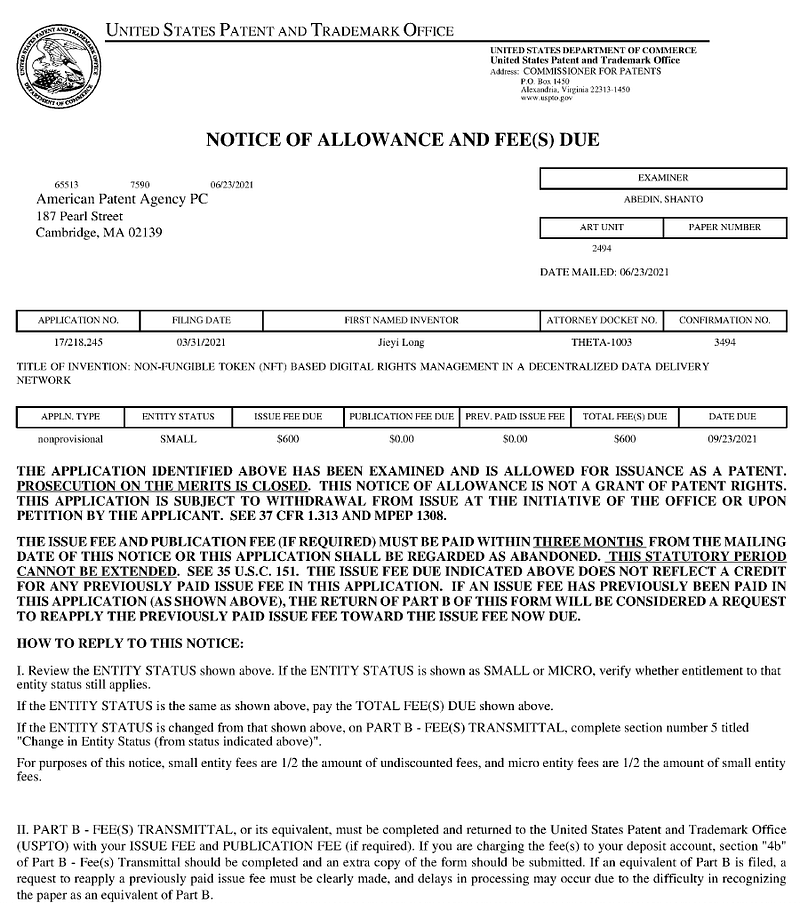
Theta awarded patent application approval for USPTO №17/218,245 (“THETA-1003”) — decentralized DRM via NFTs
Theta Labs has just received patent application approval for USPTO Application №17/218,245 (“THETA-1003”), a technology developed for implementing decentralized digital rights management (DRM) via NFTs in a decentralized network. This technology has massive applications for managing rights across a number of domains including, for example, live performances, concerts, and other ticketed events that require authentication, which can now be managed via an NFT that provides true digital ownership by the user which cannot be taken from them.
More importantly, one major friction point for content rights holders to use decentralized video streaming is concerns over their content rights being violated, as they require strong guarantees that a peer-to-peer network won’t be used to infringe on their content rights or that of their artists. By using NFTs to implement decentralized DRM, Theta Network solves this issue for content rights holders in a way that does not require a centralized party to authenticate users each time data is streamed. This opens the door for global content brands to safely bring their videos, movies, and games to Theta’s decentralized data and video delivery network.
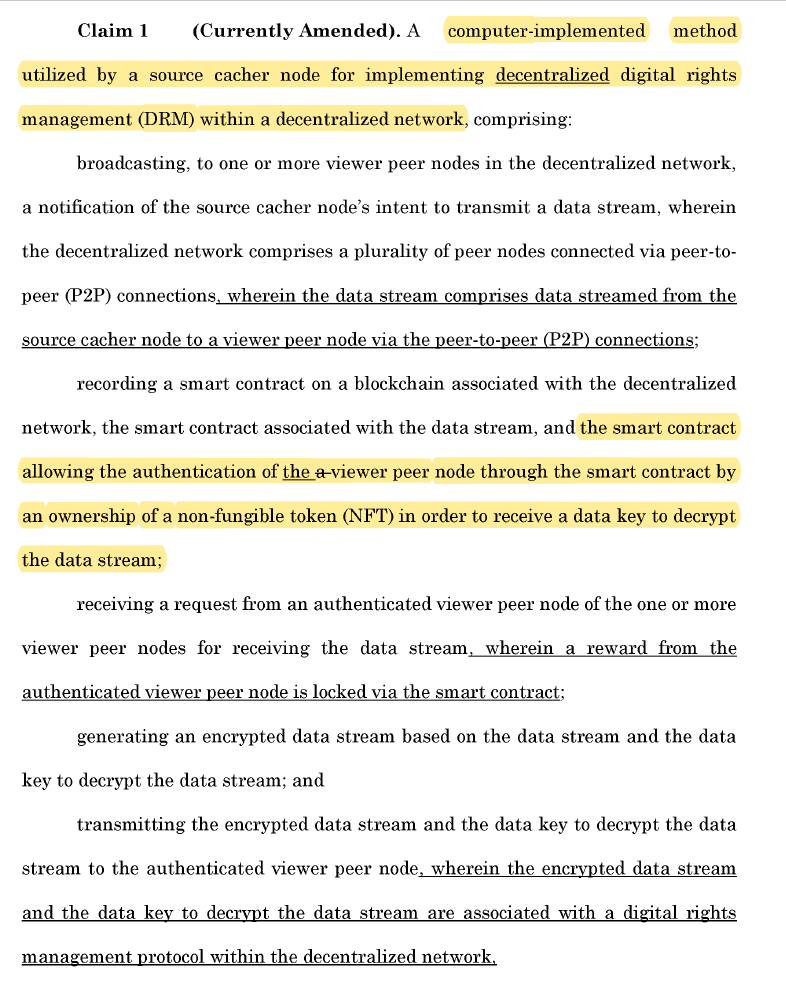
The core of this innovation is the ability for a Theta Edge Node to authenticate peer nodes within the network via ownership of an NFT issued from a smart contract. When a node receives a request from another node, it can use the NFT to verify that it is a valid user/viewer of a particular data stream. If the proper NFT is presented, a data key will be provided that decrypts the data stream. This means that as a provider, you have cryptographic proof that only the right viewers are able to view the stream — even if that data stream is accessed by an unauthorized user, they would not be able to decrypt the stream and see the underlying data without the proper NFT. The patent also covers the use of token rewards locked to the relaying Edge Node, to be unlocked once the value is ‘earned’ by providing the data stream and its decryption key.
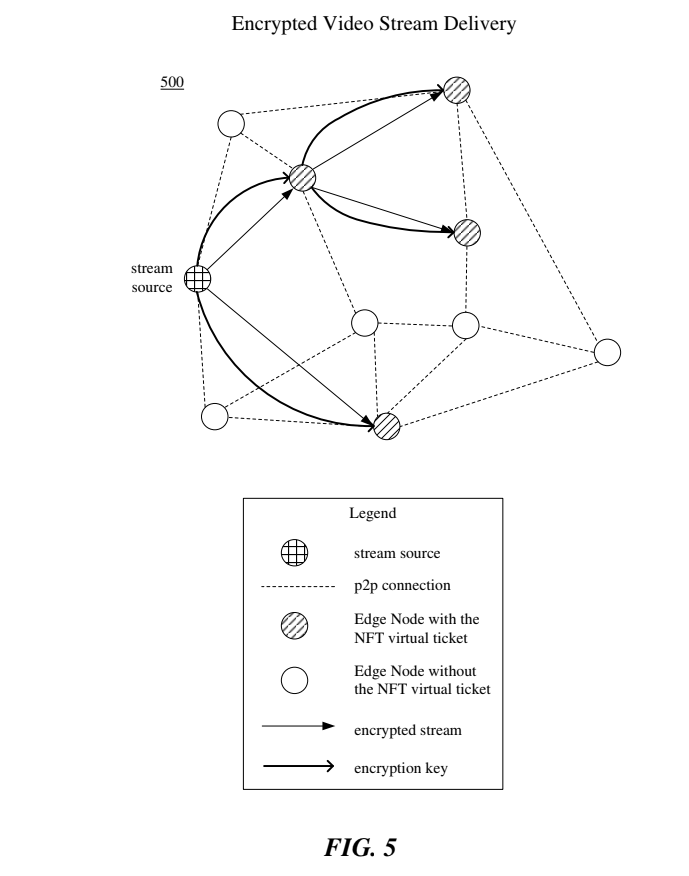
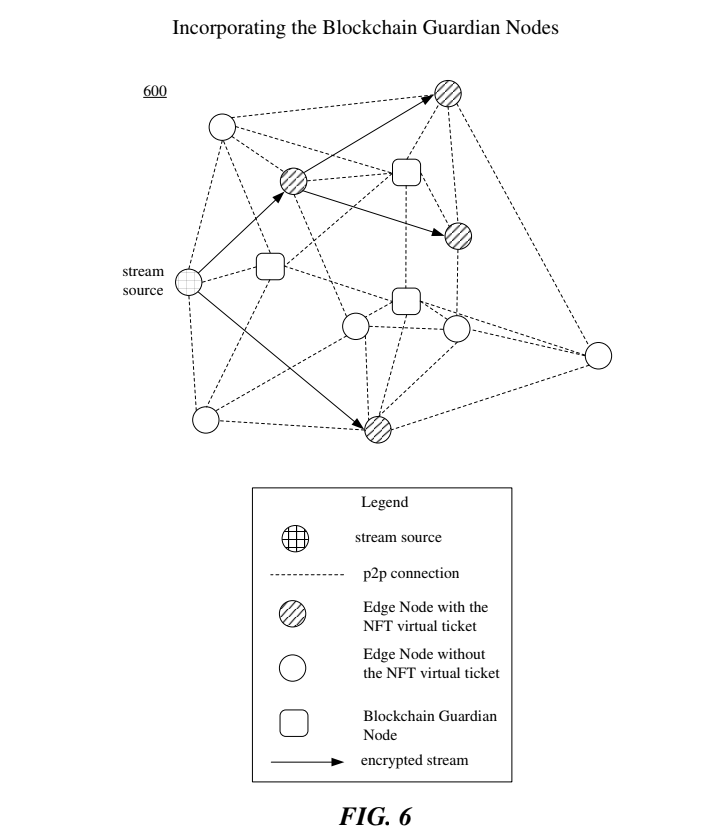
We look forward to implementing decentralized DRM via NFTs in Theta applications this year and beyond, to improve the user experience for both offline and online events for all participants.


