avatarAntonis Iliakis

Free AI web copilot to create summaries, insights and extended knowledge, download it at here

5297

Abstract

no support, no motivation…</b> by far the greatest talent of victims is finding excuses.</p><p id="0bb0" type="7">Doers find a way. Victims find excuses.</p><p id="e58c">The <b>decision-making</b> is so hard for these people at least as admitting weakness. They cannot and don’t want to commit themselves because they <b>shy away from responsibility</b> if they should make the wrong decision.</p><p id="efdb">Additionally, victims are true <b>masters at the misunderstanding</b>. Partly unconsciously, but often quite consciously. No matter how watertight you argue, they only hear what they want to hear. Non-binding conversations suddenly turn into firm promises and factual arguments into personal attacks in no time at all. The experts call this “hearing something with the relationship ear”. Especially people in the role of victim use this scheme constantly to seemingly “strengthen” their position.</p><p id="b7d2"><b>Lies</b> are also part of the victim’s repertoire. It starts with white lies and small whispers and increases to massive webs of lies. Before anyone else, victims lie to themselves the most and are reluctant to grapple with their mistakes.</p><p id="b0b1">Accordingly, victims often tend to <b>exaggerate</b>. Making an elephant out of a mosquito is often used to distract you from the real facts to catch your attention.</p><h1 id="fb49">4. Procrastinating</h1><ul><li><i>“I’ll bring the rubbish down later…”</i></li><li><i>“I’ll start doing sport tomorrow…”</i></li><li><i>“I’ll quit smoking next month, the tobacco-box is still half full anyway…”</i></li></ul><p id="4412"><b>After, later, next year…</b> Victims love to put off uncomfortable things or just let them completely be.</p><p id="4125" type="7">Nothing is too strenuous for sacrifices at the expense of their comfort.</p><p id="f43f">They shine more through <b>indolence</b> than through zest for action and are seen as lazy and unambitious. They like to <b>rest on the performance of others</b> and are also they are often good at finding a “stupid” person to take <b>care of</b> the unpleasant for them.</p><h1 id="30e4">5. Comparing</h1><ul><li><i>“My neighbor’s grass is much greener than mine…”</i></li><li><i>“My colleague works a lot less and gets a higher salary…”</i></li><li><i>“Bob Ross can paint a lot better than me anyway, so why should I even try…”</i></li></ul><p id="280f"><b>His car, his house, his boat…</b> victims love to compare themselves to others.</p><p id="eb21" type="7">People in the role of victim are often pathologically jealous.</p><p id="de3a"><b>Envy and chronic dissatisfaction </b>also result almost automatically from this behavior. They are also usually very careful <b>about what others think of them</b>. Because their own inner strength is lacking, they <b>look for external support</b>.</p><p id="13aa">Another popular tool used by victims is <b>“whataboutism”</b>. That’s when they distract themselves from their own mistakes by asking “But what about XYZ?”</p><h1 id="ce87">6. Self-righteousness</h1><ul><li><i>“You owe me that…”</i></li><li><i>“That is probably the least that can be expected…”</i></li><li><i>“Without me, the whole place would collapse anyway…”</i></li></ul><p id="d64c"><b>I, I, I…</b> victims are all about themselves. They are disadvantaged, they are entitled, they keep everything going anyway.</p><p id="d577" type="7">The greatest victims are usually also the greatest egoists.</p><p id="b937">One of their strengths is also <b>taking everything for granted</b>, making demands and expectations of others, and being outraged when something doesn’t go according to their ideas.</p><p id="e9a2">They are also happy to show others how good and important they are and even prefer to show how inadequate others are. <b>Blasphemy</b> and other bad language is, therefore, a widely used tool by victims.</p><p id="959f"><b>Feeling attacked</b> and taking things personally is also part of the standard repertoire of every victim. It is because their self-esteem is so shaky that they are constantly afraid that it might tip over.</p><p id="83bc"><b>Passive aggressiveness</b> or “bitch alarm” is also a characteristic of the victim role. Victims usually do not have the courage to directly address what they dislike. Instead, they often want to “let others feel” what they are doing wrong.</p><p id="3a26">Victims always like to invoke some rights and are masters at putting words on the gold scales and <b>turning your words around in their mouth</b>.</p><p id="c9a5">Because they feel powerless themselves, they also like to try every opportunity to <b>exercise power over others</b>. The worst politicians and bosses are always those who have spent a lot of time in the role of victims.</p><p id="3e91" type="7">Being a victim is easy. Admitting that to yourself is difficult.</p><p id="d6a8">Here is something else very important to be noticed. The Covid-19 pandemic lured an incredible number of people into the role of victims. And here we are in the core of the victim role: passing the responsibility on…</p><ol><li><i>“Since the pandemic I’ve been feeling sooo bad …”</i></li><li><i>“The government is using the pandemic to control us!”</i></li><li><i>“I wanted to do sports but then the gyms closed.”</i></li><li><i>“I won’t take care

Options

of work again until the pandemic is over …”</i></li><li><i>“Every year there are at least as many deaths from the flu!”</i></li><li><i>“The masking requirement violates my natural right to breathe freely!”</i></li></ol><p id="de6b">Voila! The profile of a pure Covid-19 victim!</p><p id="b7d5">I don’t mean that all of this is fake. The gyms really closed, for example. But there are always two ways to deal with challenges and these six statements mark the path of the victim.</p><p id="be27">The Covid-19 pandemic does not create any victims. Rather, it is a super catalyst. It reinforces the role of the victim where there is already a tendency to do so. Covid-19 is just a great excuse for everyone…</p><p id="fc38">I have the feeling that many are even secretly grateful for this crisis because it either takes the pressure off them and serves as an excuse or because they can use it as an excuse, for example for right-wing agitation and hate speech...</p><p id="b652">And that’s also the reason why people generally voluntarily choose the role of victim… because they see advantages in it…</p><p id="3ee8">It’s like drug addicts. The reasons why someone becomes a victim are — just like the reasons why someone becomes a drug addict — as different as the people and their stories.</p><p id="314d">However, you can say:</p><p id="f0f3" type="7">Victims and junkies see at least short-term benefits in their behavior…</p><p id="086a">…which are actually not advantages at all. Often they even feel a kind of elation.</p><p id="c278"><b><i>Read below which are the advantages and disadvantages of playing the “Victim Role”</i></b></p><div id="8e79" class="link-block"> <a href="https://antonisiliakis.medium.com/victim-role-you-can-never-win-this-game-8fc7cffa7ac9"> <div> <div> <h2>Victim Role — You Can Never Win This Game!</h2> <div><h3>Advantages and disadvantages of playing the “Victim Role”</h3></div> <div><p>antonisiliakis.medium.com</p></div> </div> <div> <div style="background-image: url(https://miro.readmedium.com/v2/resize:fit:320/1*bSdkgDrV17MzmH19vENh-g.jpeg)"></div> </div> </div> </a> </div><blockquote id="9775"><p>Read every story from Antonis Iliakis (and thousands of other writers on Medium). Your membership fee directly supports Antonis Iliakis and other writers you read. You’ll also get full access to every story on Medium. Become a member: <a href="https://antonisiliakis.medium.com/membership">https://antonisiliakis.medium.com/membership</a></p></blockquote><h2 id="fd05">Suggested Reading</h2><div id="9f64" class="link-block"> <a href="https://antonisiliakis.medium.com/how-do-i-get-out-of-the-victim-role-ccb769888ef8"> <div> <div> <h2>How Do I Get Out Of The Victim Role?</h2> <div><h3>Circumstances don’t shape people, they just show them who they really are</h3></div> <div><p>antonisiliakis.medium.com</p></div> </div> <div> <div style="background-image: url(https://miro.readmedium.com/v2/resize:fit:320/1*hTULxvPLEQTGtsG7gaS49w.jpeg)"></div> </div> </div> </a> </div><div id="d2a9" class="link-block"> <a href="https://antonisiliakis.medium.com/finding-happiness-is-not-a-coincidence-9211489ca443"> <div> <div> <h2>Finding Happiness Is Not A Coincidence</h2> <div><h3>5 ways leading to the path of your personal happiness</h3></div> <div><p>antonisiliakis.medium.com</p></div> </div> <div> <div style="background-image: url(https://miro.readmedium.com/v2/resize:fit:320/1*xK7V1WsNmS503-5NP13Btg.jpeg)"></div> </div> </div> </a> </div><div id="4812" class="link-block"> <a href="https://antonisiliakis.medium.com/life-lessons-from-a-child-5ec4a68369eb"> <div> <div> <h2>Life Lessons From A Child</h2> <div><h3>What a child can teach us about the true meaning of life</h3></div> <div><p>antonisiliakis.medium.com</p></div> </div> <div> <div style="background-image: url(https://miro.readmedium.com/v2/resize:fit:320/1*EIztvKSdYm5Z2T84SvR1Ew.jpeg)"></div> </div> </div> </a> </div><div id="fa18" class="link-block"> <a href="https://antonisiliakis.medium.com/here-is-what-you-must-do-when-establishing-good-habits-40e9b5cb36c5"> <div> <div> <h2>What You MUST Do When Establishing Good Habits</h2> <div><h3>7 magic tricks that will help you establish positive habits</h3></div> <div><p>antonisiliakis.medium.com</p></div> </div> <div> <div style="background-image: url(https://miro.readmedium.com/v2/resize:fit:320/1*cd4ZaAIaFXaLwmD-ntYNZA.jpeg)"></div> </div> </div> </a> </div></article></body>

These Signs Will Tell You If You Have A Victim Mentality

Which are the 6 distinct typical features of the victim role
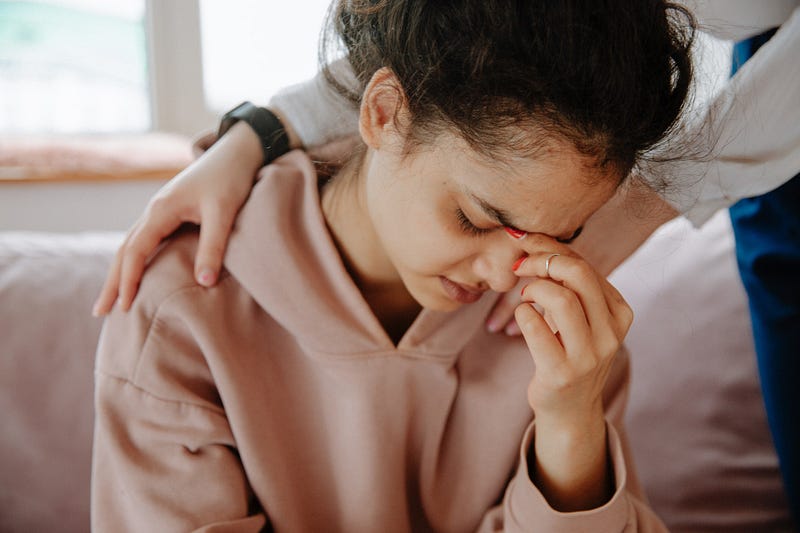
Photo by Polina Zimmerman from Pexels

The role of the victim…

  • “Why always me?”
  • “What have I done to deserve this?”
  • “Everyone’s after me!”

The role of victim is like a drug. It’s quickly addictive, gives a brief “feeling of wellbeing” and ruins your whole life.

Am I a victim?

The short answer is yes you are! If you are asking yourself this question, the chances are very high that you are actually a victim. Why?

Because it’s a typical victim question.

Being a victim is a decision and whoever chooses not to be a victim simply does not ask this question.

Yes, you read that right. You choose to be a victim of your own free will.

But since the subject is very complex, let’s take a look at 6 distinct characteristics that a typical victim role has.

1. Self-pity

  • “It always hits me…”
  • “I am haunted by bad luck…”
  • “What have I done to deserve this…”
  • “Everything I do goes wrong…”

Whining, complaining, howling… Self-pity is a sure sign that someone is in a victim role.

Victims focus on their suffering and forget about all positive things.

Victims only see the negative and feel helpless and at the mercy of fate. Since they appreciate so little, they are usually ungrateful too.

Such people often feel “abandoned” by everyone and everything. It would never occur to them in a dream that they would drive away their surroundings themselves with their complacent manner.

“Always” and “never” therefore also belong to the basic vocabulary of victims, in the sense of “you always ignore me” or “you never listen to me”.

Victims are also usually quickly taken over by their feelings. Female victims generally tend to grieve and male victims to anger. To relate everything to themselves, to quickly feel personally attacked, and to continue putting themselves down is what distinguishes many victims.

Victims like to blame “a higher power”, “the one up there” or generally everyone else who’s responsible for their misfortune, which leads us to the next clear characteristic of the victim’s attitude, assigning blame…

2. Assigning blame

  • “The children ruined my day…”
  • “Because of these bunglers, I don’t get any further in my job…”
  • “If I had had a better childhood, I could have achieved something too…”

The government, the neighbors, the weather… everyone is to blame for their own misfortune, just not oneself.

Victims always find a culprit.

  • You are representing a colleague at work and have an accident on the way there. If you hadn’t had to stand in for your colleague, it wouldn’t have come to that, would it?
  • You get a serious illness and end up in the hospital.

Playing around on your cell phone while driving and having been chain smoking for 40 years certainly have nothing to do with any of this.

People who like to blame others for their situation often feel disadvantaged, are quickly disappointed, and let others feel this at every opportunity. Nagging and knowing are therefore also popular leisure activities of victims.

They are also masters at letting their own responsibility roll off like drops of water on a lotus leaf. Have you ever noticed that some people always speak of themselves in the first person when something positive is at stake?

But if they are asked about their overweight, their bad graduation, the chain-smoking or something other negatives for which they are responsible of, they change the perspective to the second person “you”.

  • “You are seduced everywhere.”
  • “You just had bad company.”
  • “You quickly become dependent on it.”

There are always circumstances that you can seek and blame. And that is the next clear characteristic that a victim uses which is excuses…

3. Excuses

  • “If it weren’t for my illness, then I could finally…”
  • “I should leave the bastard, but then I would be on my own…”
  • “I really want to do sports, but the weather has just been too bad in the last few weeks…”

No time, no support, no motivation… by far the greatest talent of victims is finding excuses.

Doers find a way. Victims find excuses.

The decision-making is so hard for these people at least as admitting weakness. They cannot and don’t want to commit themselves because they shy away from responsibility if they should make the wrong decision.

Additionally, victims are true masters at the misunderstanding. Partly unconsciously, but often quite consciously. No matter how watertight you argue, they only hear what they want to hear. Non-binding conversations suddenly turn into firm promises and factual arguments into personal attacks in no time at all. The experts call this “hearing something with the relationship ear”. Especially people in the role of victim use this scheme constantly to seemingly “strengthen” their position.

Lies are also part of the victim’s repertoire. It starts with white lies and small whispers and increases to massive webs of lies. Before anyone else, victims lie to themselves the most and are reluctant to grapple with their mistakes.

Accordingly, victims often tend to exaggerate. Making an elephant out of a mosquito is often used to distract you from the real facts to catch your attention.

4. Procrastinating

  • “I’ll bring the rubbish down later…”
  • “I’ll start doing sport tomorrow…”
  • “I’ll quit smoking next month, the tobacco-box is still half full anyway…”

After, later, next year… Victims love to put off uncomfortable things or just let them completely be.

Nothing is too strenuous for sacrifices at the expense of their comfort.

They shine more through indolence than through zest for action and are seen as lazy and unambitious. They like to rest on the performance of others and are also they are often good at finding a “stupid” person to take care of the unpleasant for them.

5. Comparing

  • “My neighbor’s grass is much greener than mine…”
  • “My colleague works a lot less and gets a higher salary…”
  • “Bob Ross can paint a lot better than me anyway, so why should I even try…”

His car, his house, his boat… victims love to compare themselves to others.

People in the role of victim are often pathologically jealous.

Envy and chronic dissatisfaction also result almost automatically from this behavior. They are also usually very careful about what others think of them. Because their own inner strength is lacking, they look for external support.

Another popular tool used by victims is “whataboutism”. That’s when they distract themselves from their own mistakes by asking “But what about XYZ?”

6. Self-righteousness

  • “You owe me that…”
  • “That is probably the least that can be expected…”
  • “Without me, the whole place would collapse anyway…”

I, I, I… victims are all about themselves. They are disadvantaged, they are entitled, they keep everything going anyway.

The greatest victims are usually also the greatest egoists.

One of their strengths is also taking everything for granted, making demands and expectations of others, and being outraged when something doesn’t go according to their ideas.

They are also happy to show others how good and important they are and even prefer to show how inadequate others are. Blasphemy and other bad language is, therefore, a widely used tool by victims.

Feeling attacked and taking things personally is also part of the standard repertoire of every victim. It is because their self-esteem is so shaky that they are constantly afraid that it might tip over.

Passive aggressiveness or “bitch alarm” is also a characteristic of the victim role. Victims usually do not have the courage to directly address what they dislike. Instead, they often want to “let others feel” what they are doing wrong.

Victims always like to invoke some rights and are masters at putting words on the gold scales and turning your words around in their mouth.

Because they feel powerless themselves, they also like to try every opportunity to exercise power over others. The worst politicians and bosses are always those who have spent a lot of time in the role of victims.

Being a victim is easy. Admitting that to yourself is difficult.

Here is something else very important to be noticed. The Covid-19 pandemic lured an incredible number of people into the role of victims. And here we are in the core of the victim role: passing the responsibility on…

  1. “Since the pandemic I’ve been feeling sooo bad …”
  2. “The government is using the pandemic to control us!”
  3. “I wanted to do sports but then the gyms closed.”
  4. “I won’t take care of work again until the pandemic is over …”
  5. “Every year there are at least as many deaths from the flu!”
  6. “The masking requirement violates my natural right to breathe freely!”

Voila! The profile of a pure Covid-19 victim!

I don’t mean that all of this is fake. The gyms really closed, for example. But there are always two ways to deal with challenges and these six statements mark the path of the victim.

The Covid-19 pandemic does not create any victims. Rather, it is a super catalyst. It reinforces the role of the victim where there is already a tendency to do so. Covid-19 is just a great excuse for everyone…

I have the feeling that many are even secretly grateful for this crisis because it either takes the pressure off them and serves as an excuse or because they can use it as an excuse, for example for right-wing agitation and hate speech...

And that’s also the reason why people generally voluntarily choose the role of victim… because they see advantages in it…

It’s like drug addicts. The reasons why someone becomes a victim are — just like the reasons why someone becomes a drug addict — as different as the people and their stories.

However, you can say:

Victims and junkies see at least short-term benefits in their behavior…

…which are actually not advantages at all. Often they even feel a kind of elation.

Read below which are the advantages and disadvantages of playing the “Victim Role”

Read every story from Antonis Iliakis (and thousands of other writers on Medium). Your membership fee directly supports Antonis Iliakis and other writers you read. You’ll also get full access to every story on Medium. Become a member: https://antonisiliakis.medium.com/membership

Suggested Reading

Self Improvement
Life Lessons
Inspiration
Self Love
Self-awareness
Recommended from ReadMedium