
The Nuance
These 3 Food Choices Matter Most
New research identifies the most beneficial changes you can make for your own and the planet’s health.
For most of my life, eating meals meant eating some meat. A proper breakfast came with bacon or sausage. Lunch was meat between slices of bread. Dinner was meat with other stuff on the side. If there wasn’t beef, chicken, or pork on my plate, it wasn’t a meal — it was a snack.
Old habits die hard, and it took time for me to reform.
At first I did so for health reasons; despite specious arguments from the Paleo crowd, eating a lot of meat is almost certainly bad for your heart and bad for your gut. It’s also terrible for the planet, and this latter recognition further motivated me to make changes. First I cut back, then I cut out. I still eat meat, but my consumption — especially when it comes to beef — is a fraction of what it was a decade ago.
I could do more, but Quentin Read says I’m doing my part. “Any reduction is good, but if everyone ate red meat once a week or less, that would be incredibly beneficial,” he says.
Read, PhD, is a data scientist at the United States Department of Agriculture. It’s a new gig for him. Before he joined the USDA, he was at the National Socio-Environmental Synthesis Center (SESYNC), a research institution supported by the University of Maryland that “brings together the science of the natural world with the science of human behavior” to solve environmental problems.
At SESYNC, Read analyzed the effects of America’s eating habits on global land use and biodiversity. He and his colleagues described their findings in a paper published last month in the Proceedings of the National Academy of Sciences. Helpfully, their paper also examined how eating patterns that help the planet align with those that support optimal human health.
“The purpose of this paper was to look at American food consumption behaviors — so basically, to think of America as one giant stomach — and to see how changing the way we eat could benefit biodiversity,” he says.
Change is necessary because the way we eat today is quite literally unsustainable — as in, models of population growth and resource allocation show we can’t keep this up. If we don’t make changes, Read says at least 200 species of plants and animals will go extinct in the near term, a loss that would not only be tragic for the world’s ecosystems but maybe also for human health.
Based on his group’s work, he outlines three changes you can make that will help the planet most and that don’t clash with the research on healthy eating.
Number one: Cut back on animal products — and red meat in particular.
The average American eats 265 pounds of meat per year, which works out to roughly three-quarters of a pound per day. According to historical data, that’s almost double the amount of meat each of us ate a century ago, and there are now 200 million more of us. While there are some encouraging trends — for instance, Americans consume more chicken and less beef than they used to, and chicken has a smaller environmental footprint — there’s still a lot of room for improvement.
You don’t have to give up meat entirely, Read says. (He eats meat himself.) But if the average American could eat just a little less, especially when it comes to red meat, that would make a meaningful difference.
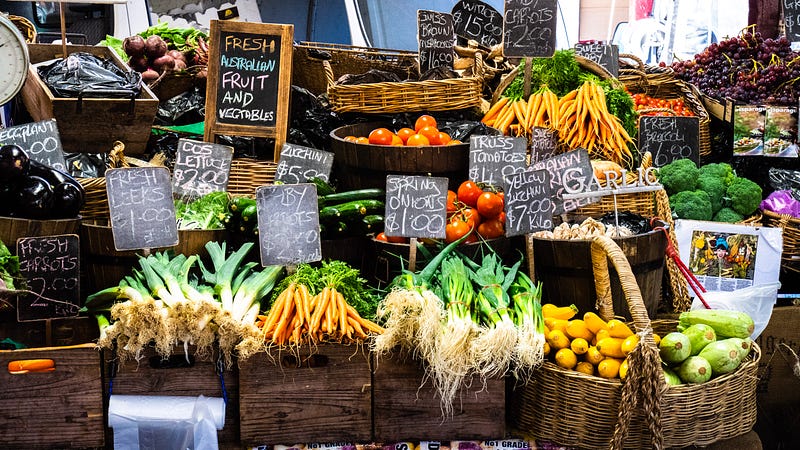
Number two: “Consider where your food is coming from — how far it’s travelled to get to you,” Read says. The shorter the distance, the better. That means buying locally grown or raised products whenever possible, and limiting your consumption of out-of-season produce or specialty foods from faraway lands.
While full commitment to an eat-local ethos could entail some very big sacrifices — Read mentions coffee and chocolate as two personal favorites that really can’t be grown in the U.S. — many of us could reduce our consumption of imported goods without significant cost or effort.
Number three: Eat what you buy.
According to estimates from the Environmental Protection Agency, approximately one-third of all the food produced in the U.S. goes to waste. If we could cut this in half — or, put another way, if we only wasted 15–20% of our food — we would offset the biodiversity threats posed by all our current eating habits. “As a country, we could avoid all these painful changes if we just cut down on food waste,” Read says.
Of course, there’s a lot more each of us could do. But that’s always the case. Beating yourself up over not doing “more” can lead to apathy, despair, and other forms of psychological fallout that won’t do you or the planet any good.
In other words, don’t let the perfect be the enemy of the good. Small changes add up. If you focus on the stuff Read highlighted here, you’re part of the solution — not the problem.


