
These 3 Books Radically Changed The Way I Worked, Lived & Made Money In 2023
Book #1: The Almanack of Naval Ravikant
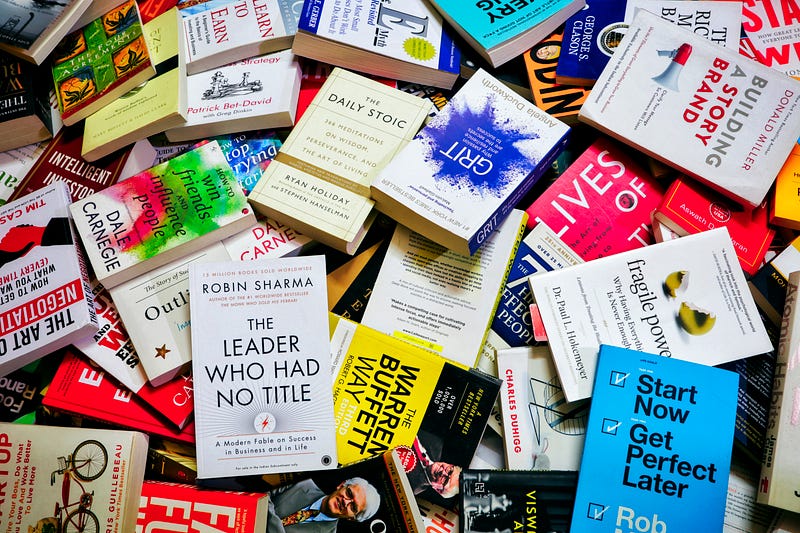
I’ve read over thirty books in 2023.
And although I’ve learned something from all of them, only a few truly changed my perspective on life and business.
In this article, I’ll share which three books were most impactful, and the main lessons I learned from each book.
10x Your Output With High-Leverage Activities
While reading The Almanack of Naval Ravikant, I stumbled upon a quote that completely changed my approach to work:
“Forget rich versus poor, white-collar versus blue. It’s now leveraged versus un-leveraged.”
High-leverage activities are those that create a disproportionate output compared to their input.
For example, creating a digital product is a form of leverage.
Yes, it requires a lot of upfront work, but once it’s finished, it can generate revenue for years — without any extra effort.
The ripple effect lasts for far longer (years) than the time required to build the product (weeks/months).
In other words, high-leverage activities provide a far higher ROI on your time and energy than most other tasks.
You get far more in return versus the effort you put in. The output far outweighs the input.
As Naval Ravikant writes:
“We live in an age of leverage. As a worker, you want to be as leveraged as possible so you have a huge impact without as much time or physical effort.”
In the past, the only forms of leverage were labor (hiring other people to work for you) and capital (letting money work for you).
These forms of leverage were only accessible to the elite.
But nowadays, the internet has made it more accessible than ever before to create leverage for yourself.
This new way of leverage comes in the form of code and media.
For example, you can spend a few hours writing a blog post and it can reach thousands or millions of people for months/years after writing it.
That’s leverage.
You can record a YouTube video and it keeps generating thousands of views (and ad revenue) months or years after publishing it.
That’s leverage.
You can create a digital product like a course or an e-book, and it continues to generate revenue on autopilot for months/years at no extra cost or effort per sale.
That’s leverage.
Other common examples of leverage are software, apps, podcasts, Tweets, email newsletters, audience building, etc.
The bottom line is; focus more on high-leverage activities if you want to achieve disproportionate returns on your time/energy.
It’s the fastest way to thrive in today’s knowledge economy.
As Naval Ravikant wrote, “A leveraged worker can out-produce a non-leveraged worker by a factor of one thousand or ten thousand.”
Simplify Your Life With “Essentialism”
We often say we have goals and priorities, but if we look at how much time we actually dedicate to them, it’s often less than we want.
This is where the book ‘Essentialism’ by Greg McKeown comes in.
The philosophy of Essentialism is to:
“Live by design, not by default. Distinguish the vital few from the trivial many. Clarify what’s most important in your life and eliminate the non-essentials.”
Easier said than done, I know. But there’s an important lesson in the philosophy of Essentialism.
Because how many times do you say yes to commitments too quickly, only to regret it later?
How much time do you waste on stuff that has little to do with your goals and priorities?
How often do you feel stretched too thin — with too much to do and not enough time to do it all?
It seems as if daily life is only getting busier, with more demands and obligations pulling for our attention.
But as Greg McKeown writes:
“Only once you give yourself permission to stop trying to do it all, to stop saying yes to everyone, can you make your highest contribution towards the things that really matter.”
And that’s true.
Every time you say yes to something non-essential, you automatically say no to your goals and priorities.
Your time, energy, and attention will be directed somewhere other than where it’s needed the most.
That’s why we need to learn to say ‘no’ more often.
If something is truly important to you — your health, family, career, or anything else — you have to protect your time and energy for it.
This requires learning to say no to what’s not essential.
Saying no allows you to go all-in on the few things that matter most rather than being spread too thin trying to do a million things at once.
As Greg McKeown writes in Essentialism:
“The ability to selectively invest our time and energy in the few things that matter most is the highest form of effectiveness.”
To live more according to the Essentialist approach — and free up time, energy, and attention for what matters most — follow these four steps:
Step 1: Identify The Essentials
You can’t prioritize what you haven’t identified, so start by writing down a list of the five most important things in your life.
Step 2: Practice Priority-Based Scheduling
Plan each week in advance and start by scheduling blocks of time for your priorities. Don’t plan anything else before you’ve scheduled enough time for your priorities.
Step 3: Identify The Non-Essentials
Make a list of up to 20 non-essential things (commitments, demands, distractions, etc.) you spend more time and energy on than you want.
The more you become aware of these non-essentials, the better you can guard yourself against them.
Step 4: Say ‘No’ To Non-Essentials
Last but not least, you will get tempted to give in to non-essentials. That’s when it’s important to remind yourself of your priorities and stay true to what matters most to you by saying no.
It’s not easy, but it’s necessary. Because, as Greg McKeown said, “If you don’t prioritize your life, someone else will.”
Adopt The “Kaizen” Mindset For Long-Term Success
Kaizen is a Japanese philosophy that promotes the idea that success comes from small, consistent steps toward a goal rather than ‘big moment’ transformations.
For example, if you’re starting on a fitness journey, it can be tempting to fall for a fancy 6-week diet or ‘5-minute abs’ program rather than just building the habit of exercising at least 3x per week.
And if you’re a content creator, it can be tempting to want to create the ‘perfect’ piece of content and pray to go viral, rather than just building the habit of publishing daily.
But as author Sarah Harvey writes in her book ‘Kaizen’, we’re better off focusing on consistency over intensity.
Rather than going for sporadic grand gestures, strive for small consistent steps in the right direction.
Not only is this approach more sustainable, it’s key to long-term growth and improvement.
Small Actions + Consistency + Time = Significant Results
And that’s the key takeaway from Kaizen philosophy; Small wins stacked together compound to big wins over time.
It’s not spectacular. It’s not sexy. But it works.
For example:
- Exercise 3–4x a week for six months, and you’ll be in better shape
- Publish content daily for a year, and you’ll have an online audience to monetize
- Save and invest $500 per month for a few years, and you’ll have financial security
- Practice 10 minutes of daily meditation for three months, and you’ll have mental clarity
- Write 500 words daily for six months, and you’ll have an entire book to publish
Shift away from the idea of overnight success and quick results — and focus more on small, incremental progress.


