
Music/Classical Music/Entertainment
These 10 Things You Should Know About Classical Music
Is classical music really difficult? Is classical music easy to understand? Can you play an instrument?
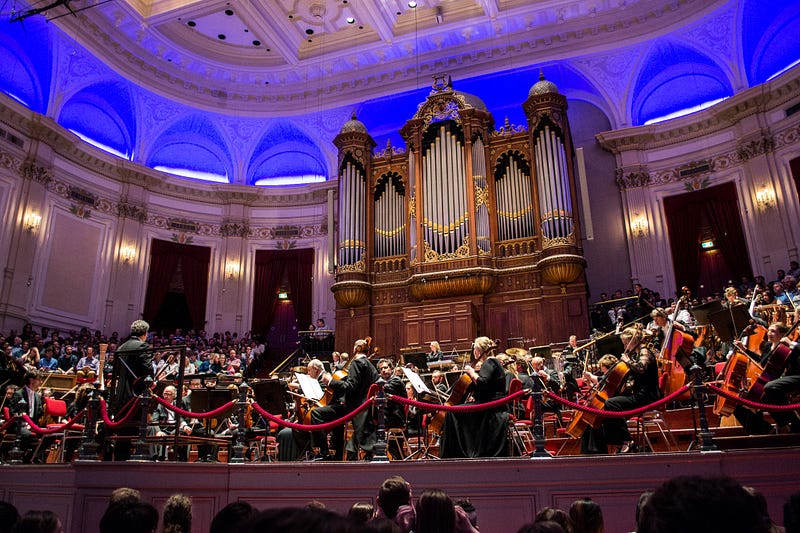
Classical music is in my blood and veins. I have told you that a million times before. I have played the cello when I was six, and one year later, I have exchanged the cello to play the violin.
I like playing the violin much more.
Since I started to play the violin I have been listening to other violinists as well as other musicians. In chamber music, as soloists and orchestra musicians. I love classical music so much. I listen to it every day. I am not such a pop music lover (although I love listening to Bon Jovi).
There are certain things when you listen to classical music you have to know, but when you play an instrument you also have to know certain things.
There are so many things that are difficult about classical music whether it is understanding it or playing an instrument. So, I will name 10 difficult things about classical music. 5 about playing an instrument, and 5 about listening to classical music.
Introduction to classical music
Classical music goes more than four or five hundred years back. Probably more years… But when it has been one of the music sorts people were listening to at these times.
All the music from ages ago is still be played by today’s musicians. It is maybe that the interpretations are a little bit different than when it just was composed or played in the time the compositions were written, but still with all the purposes of what the composer intended with the composition.
Style periods in classical music
There are several style periods in classical music. As classical music is going way back in time, there are periods in classical music how music should be played and listened to.
Periods we use in classical music: For this, I used Wikipedia to be good informed — even I know this stuff.
These are the style we call ‘classical music’. But they are in general the other styles within the main style, developed during the years.
Ancient music period, before 500 AD is the musical system that was formed in the ancient past, literate cultures. That includes Mesopotamia, India, Persia, Egypt, China, Greece, and Rome. This replaced the prehistoric music. The basic notes and scales were the music, and ancient music was transmitted through oral or written systems.
The early music period generally comprises Medieval music and Renaissance music. It also can include Baroque music. Early music is a widespread musical period in the past of Western art music.
Medieval era (500 — 1420) are the songs, instrumental pieces, and liturgical music from about 500 A.D. to 1400. Medieval music was an era of Western music, including liturgical music (this also could be known as sacred). This music is used for in the church, and secular music, non-religious music. Medieval music includes only vocal music, such as Gregorian chant and choral music, individually instrumental music, and music that uses both voices and instruments. The instruments accompanying the voices. This style period includes Ars Antiqua, Ars Nova, and Ars Subtilior.
Ars Antiqua (1170 — 1310) is also called Ars Veterum or Ars Vetus. It is a term that is used by modern scholars to refer to the Medieval music of Europe during the High Middle Ages. This was between circa 1170 and 1310. This is also the period of the Notre-Dame school of polyphony — the use of multiple, simultaneous, independent melodic lines — , and the following years as well. These years were also the years of the early development of the motet — a highly diverse choral musical composition. The term Ars Antiqua is used in opposition to Ars Nova, which relates to the years of musical activity around 1310 — 1375.
Ars Nova (1310 — 1377), means “new art”, “new technique” or “new style”. Art Nova is a musical style that flourished in France and the Burgundian Low Countries (these are the areas that covered the main parts of present-day Belgium, Netherlands, Luxembourg, and Hauts-de-France), in the late Middle Ages. In particular, the period between the preparation of the Roman de Fauvel (the 1310s) and the death of composer Guillaume de Machaut in 1377.
Ars Subtilior (1360 — 1420), is a musical style defined by rhythmic and notational complexity. This music was played most of the time in Paris, Avignon in southern France, but also in northern Spain, toward the end of the fourteenth century.
Renaissance-era (1400 — 1600) eras are vocal and instrumental music written and performed in Europe. That was during the Renaissance era. Music historians agreed that the start of the Renaissance era is around 1400, and ends around 1600.
The common-practice period, includes the Baroque era, the Galant music era, the Classical era, and the Romantic era.
Baroque era (1600 — 1750), is the time of the Western art music that has compositions from composers between 1600 and 1750. This era happened to be the Renaissance music era and was replaced by the Classical era, with the Galant style indicating the development between Baroque and Classical eras. The Baroque time is split into three major stages: early, middle, and late.
Galant music era (the 1720s — 1770s), refers to the technique which was played a lot between the 1720s and the 1770s. This change emphasized a coming back of simplicity and immediacy of interest after the complexity of the late Baroque era.
Classical era (1750 — 1820), was an era of classical music about 1730 and 1820. The Classical period happened between the Baroque and the Romantic periods. Classical music has a light and clear character than Baroque music and is less complex. The classical era is principally homophonic, it has a clear melody line over a lower chordal harmony, but the counterpoint was not forgotten. And especially later in the period.
Romantic era (c.1800 — 1910), is a stylistic evolution in Western classical music. It is linked with the time of the nineteenth century generally related to the Romantic era (or Romantic period). It is nearly associated with the wider idea of Romanticism — the intellectual, artistic, and literary evolution that became notable in Europe from about 1800 until 1910.
Late 19th-century to 20th- and 21st-centuries (1890 — present), this includes the Modernist era that overlaps from the late 19th century.
Modernist era (1890 — 1930/45), has the following eras: Impressionism that overlaps from the late 19th century, Expressionism, Neoclassicism which was a little bit dominant in the inter-war period. The Modernist era is an artistic position holding the period of transformation and growth in an artistic expression that happened around the turn of the 20th century. This period has a range of diverse reactions in challenging and interpretations of the older musical styles in music. There are lots of innovations in this style period that led to new ways of organizing and approaching harmonic, melodic, sonic, and rhythmic aspects of music.
Impressionism (1890 — 1925), was a change in a group of various composers in Western classical music. Most of their compositions focused on the mood and atmosphere. It was more focused on the general and the whole of the piece than the returning melody of the past music periods.
Expressionism (1908 — 1925), often a high level of dissonance, extreme contrasts of dynamics, constant changing of textures, “distorted” melodies and harmonies, and angular melodies with wide leaps are used in this style period.
Neoclassicism (1920 — 1950) — predominantly in the inter-war period, was a musical style in the 20th-century. This style was common in the interwar period. In this period composers attempted to go back to artistic rules of “classicism”; namely order, balance, clarity, economy, and emotional control.
Postmodern era/Contemporary (1930 — present), this includes the Experimental, Minimalism, Postminimalism.
The Postmodern era represents any music that results in artistic and profound bearings of postmodernism. This postmodernism was made slightly in response to modernism. It is not originally established as being the opposite style of modern music. Still, this is questioned.
The contemporary era is classical music is music written in the present day. It started at the beginning of the 21st century. It is included serial music, electronic music, experimental music, and minimalist music. More modern styles of music combine spectral music and post-minimalism.
Experimental (1950 — present), this is a style in music that pushes the existing limits and style keys. Experimental musical practice is interpreted by a wider awareness. Elements of experimental music include indeterminate music.
Minimalism (the early 1960s — 1990), uses limited or minimal musical elements. Notable characteristics of minimalist music are repetitive patterns or pulses, steady drones, consonant harmony, and repetition of musical phrases or smaller sections.
Postminimalism (the early 1980s — present), is a term invented by Robert Pincus-Witten in 1971 and it is used in multiple creative disciplines for the craft. It is influenced by or attempts to improve and go beyond, the aesthetic of minimalism.
Use of classical music during the years
As you can read, the style of classical music has been improved drastically. Also, the earlier styles were tried to bring back into the classical music genre. In the history of classical music, the use of classical music has drastically changed too.
I think it is wonderful to see and to hear what different taste composers have throughout the years. It is — sometimes — challenging playing and understanding the music, but I love that about music.
Classical music today
Musicians today still play classical music. There are still very good and talented classical musicians out there who are giving concert and touring around the world. The list of these musicians are too long to place here, but take a look at the websites of the concert halls of The Concertgebouw in Amsterdam, Royal Albert Hall in London, Carnegie Hall in New York, Cairo Opera House in Cairo, Hong Kong Arts Centre in Hong Kong, Schloss Esterházy in Eisenstadt, Mozarteum in Salzburg, Konzerthaus in Vienna, Gasteig in Munchen, and there are so many concert halls in the world.
As a good amateur violinist myself, I have provided you a list with 10 things you have to know about classical music.
Playing an instrument
Playing an instrument is at the beginning very challenging. You have to learn how to play the instrument you chose and adapt to the instrument. New habits must be taken. Practicing makes that easier. But also that is one thing you have to learn.
Choosing the right instrument
In the first place, you have to choose the right instrument to start with. When you have chosen the one that you like or fits with your personality (or just fits with you), then start playing that instrument. If you like it, it fits with who you are.
Well, I don’t think there is the right instrument for you, as there are musicians playing more than one instrument.
Choosing your teacher
I have talked about it earlier, but choosing a teacher is difficult sometimes, and also very challenging. You and your teacher must have a click together. Otherwise, it might not really work with the lessons you get and what you want to learn.
In the beginning, when you are a little child, your parents choose for you. And that is ok because they probably think it is best to get lessons close to home. These days are so busy for parents.
As you get older, and you get better in playing your instrument, you have your own path and you can choose the teacher you truly like, learn a lot from and help you understand the music much better.
When you are further in playing your instrument and you can play a concerto, then you are able to be with a very good teacher who can play these concertos himself or herself.
Practicing your instrument
Practicing your instrument needs dedication and perseverance every time you focus on practicing your instrument. The beginning could be challenging such as trying to know the notes on which strings instruments. You have to learn the notes, you have to learn which bar it is on and what they are called. You have to teach yourself/your teacher to remember which finger the note belongs to and which string to play the note on.
It is difficult to have the focus and stay focused during your practice sessions. So, how do you focus on what you want to learn? I am often motivated lately to practice my violin. Try to find a way that you actually still be motivated to practice and enjoy practicing.
When you practice your instrument, you realize that practicing is like a mountain. Yesterday you had difficulties with the melody you were practicing, today you can play it. That is the reward of practicing every day and every little bit helps where you want to go with that piece.
Each time you can play more difficult pieces and you become better at playing that instrument.
The music you’re playing
As a musician — amateur or professional — you have a lot of music you have played, or you are playing right now. That is good. That is fun to do as well. Every time you are going to play, you get a step closer to what you really want with the piece. How does the melody go? What is the phrase? What does the composer mean with this piece? What was the imagination of the composer?
All these aspects of music, you have to use for playing the piece. It helps you get into the vibe of the piece you are playing. Or any other music, even when you are listening to classical music.
The real fun of it: your imagination goes beyond wild.
Listening to classical music
Listening to classical music is one of my favorite thing to do, next to paying classical music myself. It is fun to hear how other people interpret the piece I am playing, or I am listening to a lot. Their interpretation is as much as important as your interpretation. Every interpretation is has something you like to implement in your way of playing the piece.
How to listen to classical music
I always love listening to classical music. Even, I listen to it every time I write an article. Listening to classical music on the background while writing motivates me to write the best I can. Being more productive as well.
So, since the age of seven, I know how to listen to classical music. I have listened to a lot of recordings. My father had so many recordings at home, I just took CD’s from the shelve and I listened to it for hours, and then another one, and then another one. As long as I could listen to it.
At home, we had so many recordings of the same piece, because every person or ensemble had a different interpretation. When I needed to know how I should play a piece, I listened to every recording we have, so I could practice my own interpretation.
So, how do you listen to classical music in general?
When you are not such a classical music listener, it could be strange listening to it. But there are certain aspects that might help you know what you are listening to.
- Know what you are listening to. Who is the composer? Who is playing the music and where are they from?
- What do you feel when you are listening to classical music? And especially to this music, you are listening now?
- What emotions does the composer had while composing this piece? Which emotions does the player had while playing this piece?
How to listen to your instrument
When you play an instrument you can listen to it differently because you actually play that instrument. You acknowledge what it takes to play that instrument and how many efforts the instrumentalist takes to play that piece.
As soon as you stand behind your music desk, you think about what you just heard on the recording or just make sure that the piece you are playing is good to listen to. What can I do to make this piece I like to play?
- What are the difficult part of this piece and I have to work on?
- What are the phrases that need to be played?
- Know what you can do better.
- How can I make my sound more beautiful and appropriate to listen to?
- Am I really playing the right notes?
How to listen to music written for your instrument
Listening to your own way of playing the music makes you being aware of what is happening around you, or what you are actually doing with your fingers, breath, or anything else related to your instrument.
Being conscious of what you are doing makes you a good and maybe — when you are really far in playing your instrument — instrumentalist, and musician too. The more you play and practice, the more you start to love your instrument.
When you are playing an instrument, you also listen differently to music written for your instrument.
- There are so many works written for your instrument. Search for the music you want to listen to.
- Listen to different kinds of works written for your instrument.
- What feelings do come to you when listening to this music?
How to listen to the same music played by different musicians
And, yet, when you listen to classical music, you will listen to the same music written for your instrument, played by different musicians. How many times have you listened to the same music played by different musicians, and you find different interpretations every time?
I love listening to the same violin concerto every time. I find new things in every interpretation with different violinists playing the same violin concerto.
- Listen to the phrasings the musicians are using.
- What do I do the musicians on the recording are doing differently.
- What are the feelings of the composer, musicians, and yours?
- What is the interpretation, comparing to all the other recordings? And what do you want to use?
These elements of classical music are complex. But also challenging. Research says that playing an instrument and listing to classical music is good for your brain. You learn to solve complex problems.


