
WRITING
There’s Nothing More To Write; We’re Just Recycling the Same
More than writer’s block is the monotony of topics that’s putting readers off
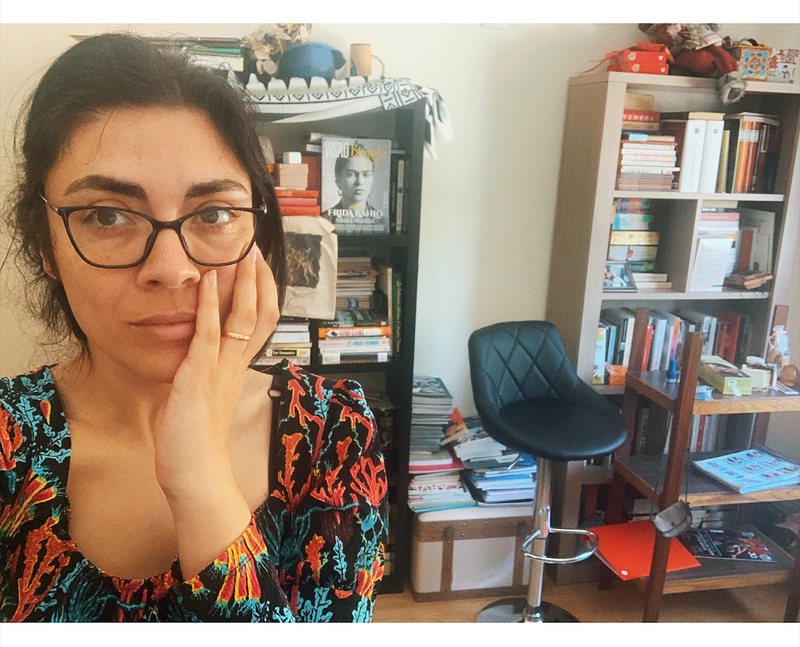
Today is Sunday, and as a good Portuguese trying to follow the minimum traditions of my culture, I don’t work today. However, I often view writing wrongly as not part of the endless list of tasks I set out to do, and even on Sundays, I open this computer to start typing something.
Writing is, therefore, work. It’s an activity that requires creativity and constant commitment — the latter often underestimated, as if only inspiration depended on it — and it comes more easily to me in my free time. When I’m not overwhelmed by endless online classes, my mind can think about society, reflect, and then write something I consider relevant.
However, I believe I won’t be alone when, among other writers, we often talk about phases where nothing comes out. No matter how hard we try, the brain only presents us with an agonizing void.
A writer wanders aimlessly through this world, futilely forcing something that doesn’t come quickly. It’s the famous writer’s block. It’s something authentic that can lead us into spirals of agony, mini-depression, and low self-esteem.
The latter makes us believe that we were never truly writers and that we never will be, only to, when the block passes, be flooded with too many ideas that we must select. And, of course, if there’s time, dedicate ourselves to reflecting on them. It’s an all-or-nothing that we try to manage.
But beyond the block, there’s another thing I come across, both as a writer and a reader; I’m talking about the constant repetition of the same subjects. Perhaps you’ve felt the same.
We’re inundated with Western society dwelling on the same themes, which is at risk of either becoming too petty—demanding solutions to problems it invented—or too boring for not bringing anything truly exciting to the reader and thus the society it finds itself in.
I’m referring to this platform and any social media where we fall into the monotony of themes. Open any of them to see journalistic writing around the same old topics. On one side, we have highly positivist writers who are sold to entirely market-driven writing, with somewhat empty self-improvement articles. I always distrust those who say, ‘I found the truth,’ or ‘I have the right answer,’ but apparently, they still have a market (for now).
On the opposite side, we have writers—where I often find myself—plagued by panic. Be it panic about politics, the environment, or the demand for rights in a Western society that has sometimes taken 360-degree turns, returning, even if on the other side of the spectrum, to an old problem.
Regarding this last issue, or almost non-issue now, I give the example of so many things that are now prohibited by law to profess. A nonsense created in America and spread worldwide, nonsense under a woke culture that has as its genesis a great intention but has turned well-intentioned people into perhaps too spoiled whimsical ones, where their beliefs can never be questioned with the risk of even being ‘canceled.’
It’s an invitation to non-debate, to non-questioning that our Western society took so long to build to be gagged by itself. Honestly, it’s almost comical.
And I, who am left-wing — as my recurring readers will know — find myself perplexed that, in so many cases, the discussion has died.
We fought so hard against dogmas, against final thoughts, to be back there again, committing ourselves to that mistake we fought against before. As an example, I’m inquisitive to read the book “The Left Isn’t Woke” because I feel forced to say that the spectrum of these things has shifted to unknown sides.
What it means today to be left or right has been lost, with exaggerations from both sides. The adults have left the room; that’s what I’ve been feeling lately.
And well, here we are: with no new topics, constantly recycling the same, killing our creativity, flooding everything with the same titles, with the same narratives that excite no one. And with first-world problems that are incredibly offensive—since they like this word so much—to people who are suffering horrors in other parts of the world.
While I’m aware that I’m not bringing anything new with this article, I’m simultaneously writing it with hundreds of books behind me. They are proof of our humanity and creativity and a reminder loaded with hope — both for the History they tell and the stories — that we are capable of so much better.
Perhaps turning off screens and opening more paper is a first step. I’m going to start doing that now.
As such, see you soon, with no return date.
Hello, I’m Araci, a female writer from Portugal. Thank you so much for reading me.
Your support is fundamental so I can continue writing. As such, If you have enjoyed this article, maybe you would like to buy me a “coffee” here:
