
Medium Writers: There’s no excuse for not making your stories more inclusive
As writers, we owe our fans stories they can see themselves in.
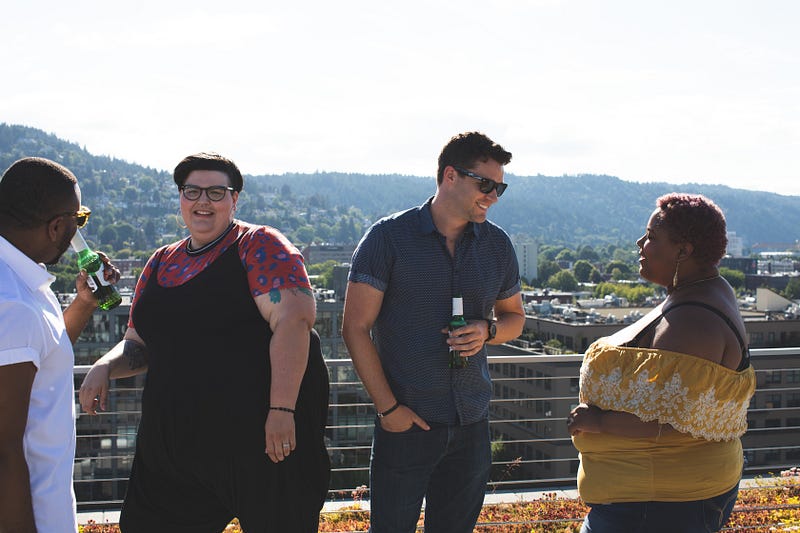
by: E.B. Johnson
I’ve been writing on Medium for a few months short of a year now and I’ve noticed one shocking thing: there are a number of Medium writers out there who aren’t striving to make their stories all-inclusive.
Now, don’t get me wrong. Medium has and appears to be an incredibly liberal and open space. People share stories on this platform from all walks of life, and they share important content that reaches out to people of color, transgender people and all other sorts of minorities who are normally excluded from the dialogue.
However, it doesn’t take a lot of digging to notice the extraordinary amount of white-washing and body-dismissal that goes on here, too.
Before you crucify me, just listen and consider a few things.
Title images
As writers on this platform, we really want our stories to shine, and a part of that is selecting images that are both emotive and indicative of what our story is about. That, however, can quickly lead to a barrage of images that can present less-than-real ideals.
Think about it. There’s endless articles here about feeling better about yourself, or learning to love your body. But so many of those stories feature title images that showcase beautiful young (white) women, or the stereotypical “posed model” nonsense we’re all so used to seeing.
Where are the big girls? The black girls? Where are the lesbians? The gay men? The non-binary and the intersex?
Those images exist if you seek them out — but you have to seek them out. Sure, when you might just select the first image that fits your search query…but what if you took that extra second to dig for an image that means a little bit more to someone who never feels seen?
The title images we attach to our stories bear meaning, and that meaning doesn’t just begin and end at the edge of our own perceptions. If we’re writing for the world, should be inclusive of a worldwide audience of readers who as an array of different experiences.
Content
Now to the content of the articles. Is it really that hard to write an entire article that doesn’t involve the constant use of gender-binaries or race-isolating references that leave your readers feeling isolated?
The answer is no.
When I first started writing for Medium, it took me a while to find my feet. When I did eventually do so, I found that I was mostly writing things geared toward self-help and relationships.
Being someone who works in the queer space, it didn’t take me long to realize how much I was leaning into the use of “he” and “she” in my articles. Coming to this knowledge, I realized I was inevitably isolating people who wanted to relate to my content and find themselves in it.
The first article I wrote which consciously dropped all use of “he” and “she” definitively received an instant response from a non-binary fan who had noticed. They appreciated that I had created something completely inoffensive and accessible for everyone.
Was it hard for me to do?
No. I just used “they”, “them” and titles like “parent”, “sibling”, “spouse”. What’s more, I always make an attempt to write from the perspective of “we” — meaning that we are all guilty of the shortfalls the article covers, and therefore all worthy and able to receive redemption.
It’s very simple to create an article that is both explorative and generic enough to allow anyone to access it. Like some of the best art, our stories doesn’t have bone-grindingly specific. We can open up the door to everyone without taking anything away from our own art.
Why it matters.
You might be reading this and thinking to yourself: this is nonsense and P.C. culture gone awry.
Well, you’d be mistaken and this is why.
As writers, we don’t have control over who accesses our stories. As artists, we don’t have control over who accesses our art. Our job is to take our creativity, and mold it into something that can be launched out into the world. It is a gift we give to the world, and it is a gift that is without bounds. When we give it, we have to give it freely and we have to give it to everyone. There can be no inbetween. Art and writing are not for one man alone. They’re for all of us, and we can make this possible by creating art that accessible (alone) to even the least of us.
That doesn’t mean you have to write something that everyone likes. It doesn’t mean that you have to sugar coat things, or water things down.
It simply means, that when you’re creating something that carries the intention of helping — it should be accessible to everyone, and not limited by the gender binaries or other stereotypes that plague our every-waking moment.
How we can do better.
The good news for us Medium writers is that it’s pretty easy to accomplish this sort of accessibility.
Use better title images
You can be a better writer (and a better ally) by regularly looking for title images that better portray the racial and gender diversity of the actual audience here on Medium. There’s more than just white girls, and pretty, skinny couples kissing in the sunset.
Look for people of color, look for males, females, drag queens, people who are heavy, people who are freckled or even disabled in some way.
Be as inclusive in your title images as you probably are in your day-to-day life. Remember: it’s not just white girls reading self-articles here. Black people need to love themselves too, and so do those with bodies that look different from what we might be used to.
Write more inclusive content
Likewise, you can grow your readership and include more people by simply dropping the constant use of “he” and “she” (alone) in your articles.
Rather than always leaning on these two pronouns, experiment with using only “they” or “them”, or resort to using the title instead (eg mother, father, sister, brother, partner, spouse).
Not everything is male and female. Not everyone reading your stories identifies as male or female. Give them the benefit of access to your art, and you’ll benefit your audience in the process.
Putting it all together…
In short, as writers who are putting self-help articles and all sorts of mental health recommendations out into the world — we should do what we can to make sure that content reaches as many people as possible.
There’s no excuse, in this day and age, to create only personal development stories which benefit a small number of people. There’s really no excuse for not making room in our minds and our stories for people of color and those with bodies that fall outside the realm of what society might consider “ideal”.
So much of what changes in this world is changed first by those who create art. We can be the champions who slowly help change the world for the better, but it takes a conscious effort and the knowledge that every little public thing we do actually counts, and is actually seen by someone it matters to.
Start making your stories more inclusive simply by being more considerate about the title images you post and the pronouns that you use. We all just want to be seen, and we each know what it feels like to be invisible.
Don’t make anyone feel invisible with your writing. Make them feel seen. Make them feel heard.
Make them feel included. It costs you nothing.


