
There is a Major Problem With Modern Book Cover Design
Sometimes, maybe you *should* judge a book by its cover.
I spend 35 hours a week working in a used bookstore. I see a lot of books. Most of them, I’m afraid, have terrible covers.
Traditionally, book covers have been the predominant form of marketing a book. Publishers hire artists to represent the ideas of a book at a glance — a picture, after all, is worth a thousand words — and shoppers rely on that initial impression to draw their attention and pique interest. It’s why, when a show or film is released, publishers release tie-in versions of book covers.
“Hey,” they say, “recognize me from that ad on YouTube?”
“Ah,” we say back. “How are you doing, Mr. Chalamet?”
The design language of books has evolved over the years just as everything else in the world has. Go back far enough and you’ll find book covers that were purely functional: they protected the words inscribed within them and bound them together.
In the 1950s, book cover design focused on illustrations done in a vintage style. Think Catcher in the Rye or The Lord of the Rings. Then, in the ’60s, the illustrations went away in favor of prominent text and minimalism. The ’70s ushered in vibrant graphics, while the ’80s brought back the prominent text and made it bigger and bolder.
It’s easy to tell from looking at a book when it was printed. Some covers are so timeless they haven’t changed much at all, as is the case with The Great Gatsby, while others are re-released and updated again and again and again, like most Stephen King books. No matter the when, though, the focus of book covers is always on the what and the why.
Book covers are supposed to tell you what the book is about; designers and publishers are supposed to approach cover design by asking why they’re making certain choices.
Ultimately, a book cover should do two things: tell you what kind of book you’re going to be reading, and look good.
Why is it, then, that so many book covers fail in both regards?
There’s an entire website dedicated to lousy book covers with the tagline, “Just because you CAN design your own cover, doesn’t mean you SHOULD.” But there’s a difference between covers that are simply terrible design — covers that are aesthetically appalling, adhere to no standards of design, and come across as amateur — and covers that are objectively fine from an aesthetic/design standpoint but still fail.
Compare the original dust jacket for The Hobbit with its 50th-anniversary edition, for example.
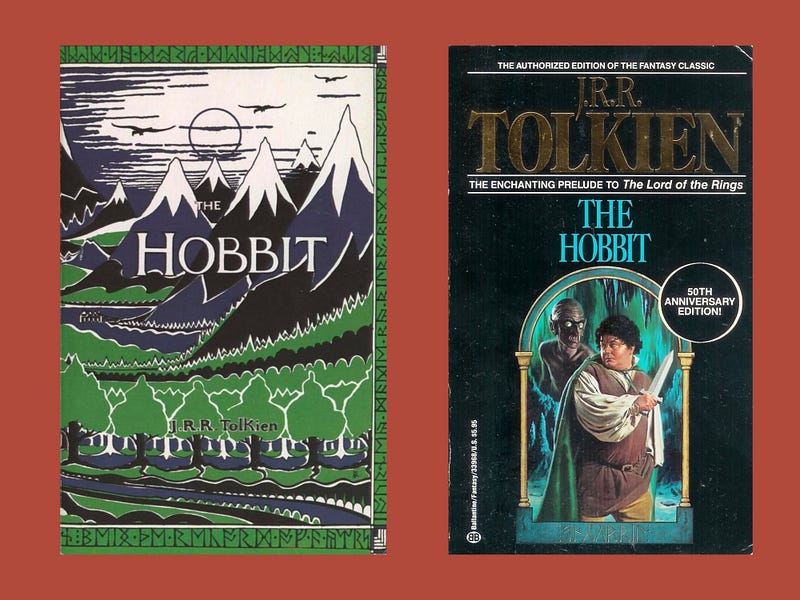
There’s a reason modern printings of The Hobbit opt for a variation of the original design rather than the 1989 edition. Tolkien’s illustrations of Middle Earth are inextricably linked to his novels; his life’s work was Middle Earth, and The Lord of the Rings isn’t bargain-bin fantasy. If you’d never read it before, though, and saw the 1989 edition on a shelf, you couldn’t be faulted for thinking it was.
See, more than anything else, the quality of a book’s cover is often an indication of the quality of the book itself, whether that’s fair or not. The content of both versions of The Hobbit is the same — you’re getting the same story in the same words — but by God is the 1989 edition a terrible representation of the story’s quality.
Publishing houses want to sell books; it’s their principal job. Some larger publishers will plug $1 per hardcover book on marketing based on expected sales. If they expect a book to sell 50,000 copies, they’ll spend $50,000 dollars on marketing materials. Other, smaller publishers might spend a pre-determined amount on every book they produce.
Generally speaking, though, publishers spend more money on books they expect to do well, and that money goes to things like cover design. So when you see a badly designed cover, the impression is that the publisher didn’t have faith in the book, to begin with. Again, this might not be the case in practice — certainly, a 50th-anniversary edition of The Hobbit would sell well — but the thought hangs about in our heads unconsciously.
After all, we don’t conflate those grocery store cowboy romance novels grandma buys for $4.99 with One Hundred Years of Solitude.
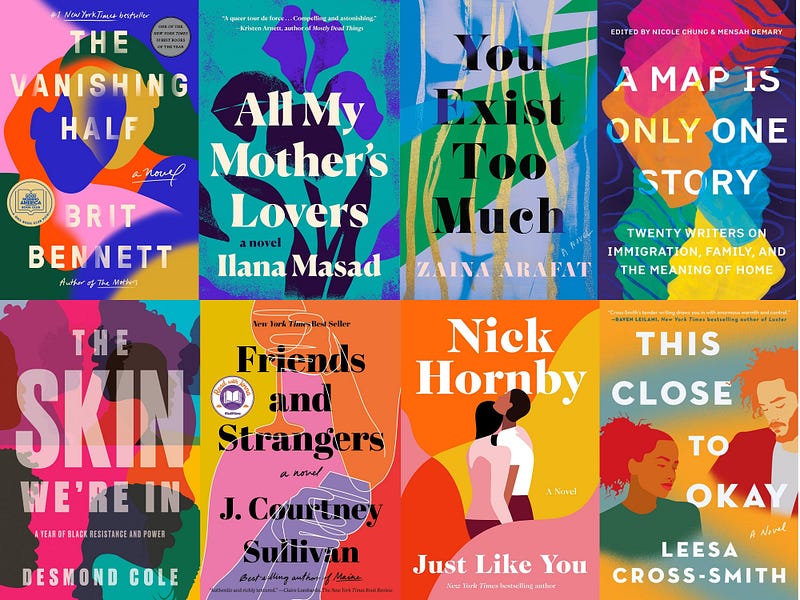
Modern book design is experiencing another big issue, however. Everything looks the same. This video from Youtuber and designer Divya Gurung exemplifies the trend perfectly. In fact, she has several videos explaining this issue across genres, but the one that sparked my deep dive into the rabbit hole of book cover design was her one on contemporary literary fiction. You know, the genre where everything looks like this:
It’s horribly ironic that books focusing on identity issues such as The Vanishing Half and Detransition, Baby are losing their own. Individually, I don’t think these covers are bad. They don’t tell you much about the book, but they’re pretty to look at and would liven up a bookshelf, at least.
You can find similar trends with thrillers, YA fantasy, romance, Christian fiction, and just about everything else. If an author isn’t already well-established and unique, their book isn’t going to be given an individualistic design. It’s going to blend in with every other book on the shelf near it, the publisher likely hoping someone will say, “Ah, Divergent looks a lot like The Hunger Games, and my friend liked that a lot. I’ll buy them this one as a gift. I’m sure they’ll like it, too. Thanks, Katherine Tegen Books!”
This article from Vulture identifies the current trend with books: big, chunky text and lots of colors. Things need to look appealing in miniature, with everyone shopping from Amazon on their phones. Everything needs to be Instagrammable. Fine details are out; boldness is in. This by itself isn’t worrying — again, book design has always changed with the times — but the laziness of some of these designs is. I mean, come on! Friends and Strangers and Just Like You use the exact same color palette.
More than anything, this laziness is a disservice to the author. It isn’t easy to write a book, let alone to write a good one. Authors — most of them anyway (looking at you, James Patterson) — put hours of their lives into telling stories. They put pieces of themselves into them.
It’s a shame that when those pieces hit the shelves, they blur together with the bits of someone else.


