
Epictetus: There IS a handbook for life
The 1800-year-old handbook for a “tranquil flow of life”
When we go through troubled times and we are faced with dilemmas, we are often consoled with the cliché “well, there’s no handbook for life.”
Except that there is. It was written in the second century and has been read as an accessible guide to living a good life ever since.
The book is called The Enchiridion, which literally means “handbook”. It contains fifty-three chapters of advice for living; making the most out of the best times, and enduring the worst of times. The book is a compendium of the teachings of Epictetus, one of the best known Stoic philosophers from the Roman era.
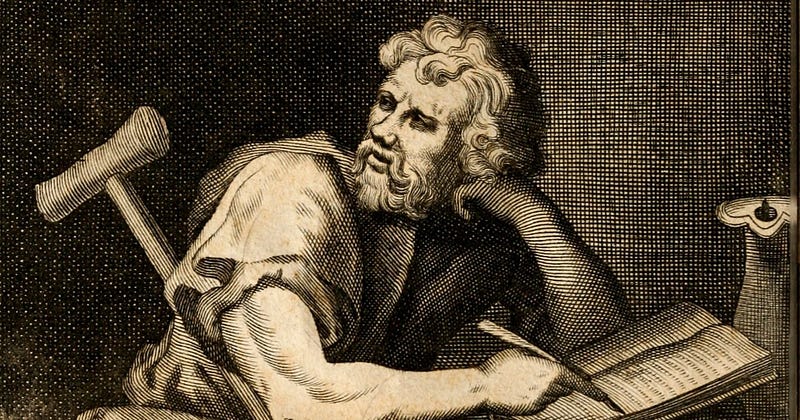
Epictetus was born into slavery in around 55 C.E. in modern day Turkey. He was brought to Rome to serve in the household of a wealthy secretary to Nero. Epictetus is barely a name, it actually means “acquired” or “property”.
Slaves had no rights in ancient Rome, they could be beaten, raped or killed by their owners with impunity. Their identities were often erased with generic — and frankly degrading — names like “property” (Epictetus) or “useful” (Onesimus).
While most slaves lived short lives of misery in hard labour, a minority of slaves had the relative luck of being educated and working in clerical roles. Epictetus was fortunate enough to be allowed to study philosophy by his master, and developed a passion for Stoicism.
He was eventually freed and taught Stoic philosophy himself in Rome until the Emperor Domitian banished all philosophers (for suspected subversion) from the city in around 93 C.E. He continued to teach in exile in Nicopolis in Greece (with only “soil, sky and a cloak”) until his death in 135 C.E.
There are no surviving writings of Epictetus, every trace we have of his teaching was written down by one of his students, Arrian of Nicomedia, who became a Consul under the emperor Hadrian and a notable historian. The philosopher’s ideas nevertheless have a distinctive use of vivid metaphors that shine through Arrian’s recordings.
The Central Notion
The Enchiridion begins with the notion that most things are out of our control, but some things are:
“Some things are in our control and others not. Things in our control are opinion, pursuit, desire, aversion, and, in a word, whatever are our own actions. Things not in our control are the body, property, reputation, offices, and, in one word, whatever are not our own acts.”
This may sound obvious, but we tend to try to exert control over those things we can’t, while allowing what we can control a messy freedom. When we try to fully control our fate, our emotions, like anger and greed, can get out of control and cause us a great deal of harm.
To live a contented life you must achieve mastery over the things that you do have control over: your temperament, your actions, your emotions and your thoughts; and relinquish the desire to have control over those things that you can’t control: everything that is external to your mind. It’s especially pertinent that these ideas were taught by a slave, somebody who by definition had no control whatsoever over their own destiny.
Stoicism’s Origins
This simple formula is the central tenet of Stoic morality, traceable to its beginnings. When we examine the historical context from which the philosophy emerged, we can more fully understand why it places so much emphasis on a robust peace of mind.
Stoicism has its origins in Greece at a time of enormous upheaval. Alexander the Great had conquered a vast number of territories from western Europe to central Asia. The ancient Greeks had become just a part of a new and complicated multicultural world unified under the sword.
In 323 B.C. Alexander died at the age of 32 without any heir ready to inherit his power. Chaos ensued for decades as rival factions jostled for control. The resulting wars (called the Wars of the Diadochi) and breakdown of trade caused widespread disruption and sometimes famine across the empire.
Zeno of Citium founded the Stoic school in around 301 B.C. by teaching in a public space - the “painted porch” (Stoa Pokile) that looked over the Athenian Agora, an ancient equivalent of the modern public square.
As a major ancient city, Athens was adversely affected by the turmoil following Alexander’s death. The city state was among the first to (unsuccessfully) rebel against Macedon (Alexander’s homeland). By the time Zeno was teaching the empire had been split into no less than five rival kingdoms and Athens had changed hands twice.
Amidst this danger and disorder, Zeno began to develop a new philosophy that emperors, kings and presidents would in future profess to follow thanks to its emphasis on resilience of mind no matter what the circumstances.
The Stoic philosophy originally borrowed ideas from the Cynic school (not to be confused with “cynicism” in the common sense) whose adherents lived an ascetic lifestyle free of material desires.
The inheritors of the Stoic school, particularly Chrysippus (279–206 B.C.E), further developed Zeno’s ideas and Stoicism became wildly popular among both rich and poor. Even some of Alexander’s successors supposedly professed to follow the philosophy.
A Simple Guide for Stoic Living
The Greek states were swallowed up by the Roman Empire, which had a remarkable tendency to integrate foreign creeds, customs and cultures into its own. Greek was the business language of the Roman empire and Greek philosophy, art, and literature were held in high esteem among educated Romans.
The Roman Stoics took a more practical approach to the philosophy, emphasising it as an antidote to inner turmoil. The Enchiridion is itself presented as a practical book stripped of the more complex metaphysical ideas that underpin Greek stoicism (for more information about the metaphysical aspects of stoicism, see my article here). Instead the Enchiridion is a simple (but not simplistic) Stoic guide to living for people without any formal training in philosophy.
The main points of the Enchiridion are made over fifty-three very short chapters. For the most part they stem from the central idea that while you may not be able to control your circumstances, you can control your emotions. Epictetus applies this idea not only to our fate, but also to our relationship with people and things. For example, from the Enchiridion we can learn how to take insults:
Remember that it is not he who reviles you or strikes you who insults you, but it is your opinion about these things as being insulting. When then a man irritates you, you must know that it is your own opinion which has irritated you. (my emphasis)
Material possessions are external to our minds and therefore not fully within our control as the mind is.
“Never say about anything ‘I have lost it’ but say ‘I have restored it’ […] Take care [of what is in your possession] as a thing which belongs to another, as travellers do with their inn.”
Fate has given us what we have and fate can take it back by any means, including theft. “What is it to you,” The Enchiridion says, “with whose hands the giver [fate] demanded it back?” A dirty rotten thief may have stolen your phone, but it was ultimately fate that “restored it”.
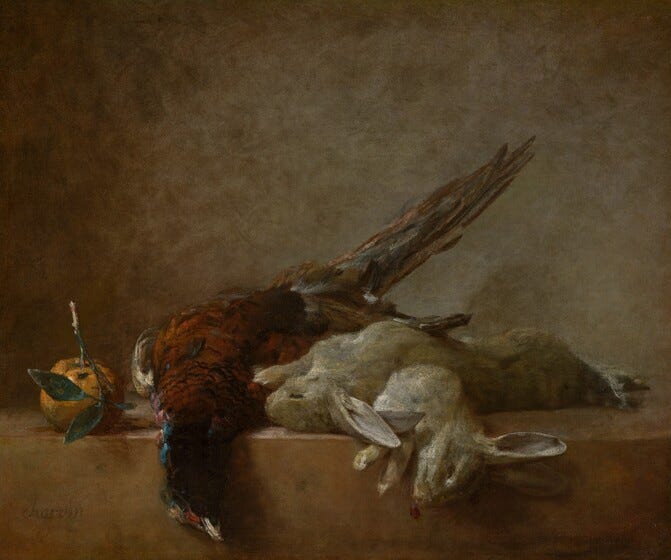
Neither is our own body fully within our control. We may suffer from sickness or injury, but must suffer in the knowledge that we only suffer as much as we allow ourselves to:
“Sickness is an impediment to the body, but not to the will, unless the will itself chooses. Lameness is an impediment to the leg, but not to the will; and say this to yourself with regard to everything that happens. For you will find it to be an impediment to something else, but not truly to yourself.”
This point is particularly pertinent to Epictetus who was himself lame (one tale claims that it was his owner that broke his leg in a rage). When it came to death — the ultimate uncontrollable phenomenon— Epictetus reveals our fear to be fear itself. If one man can accept death (in this case Socrates, who was sentenced to death), then we all can:
“[D]eath is nothing terrible, for if it were, it would have seemed so to Socrates; for the opinion about death, that it is terrible, is the terrible thing.”
To make ourselves strong, according to the Enchiridion, we must expose ourselves to catastrophe. Epictetus goes as far as saying we should expose ourselves to everything that is dreadful — including death — as a kind of daily exercise.
All these lessons are not just academic. Epictetus had a huge influence over hundreds of people of note from the Roman emperor Marcus Aurelius (who was himself a Stoic philosopher), to James Stockdale, an American prisoner of war in Vietnam known for his extraordinary bravery. Stockdale credits Epictetus for providing him with the wisdom needed to endure the torture he was subjected to for the seven years he spent in captivity.
The Enchiridion is very cheap to get hold of (free if you have an ebook reader), but as you can see from the quotations above, it can be a little hard to read. A good “modern English” translation of The Enchiridion will be more expensive, but worthwhile buying.
The handbook could serve you as a guide to life, but it could also be an introduction to philosophy in general. As such it may open up a whole new world of ideas to you.
Thank you for reading. I hope you learned something new.
If you enjoyed this article and want to know more about Stoicism you might like this article I wrote about Marcus Aurelius:


