
There are Way Too Many Misconceptions About Using AI in SEO and Business
You may hate this, but it is the omnipresent. This is how the digital world is turning around and revolutionizing. Know how to prepare yourself. Here are my thoughts on common beliefs:
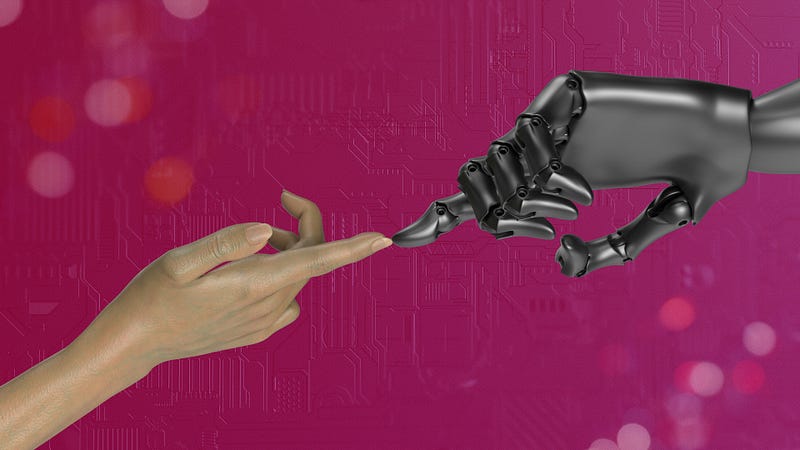
First, what is SEO — Search Engine Optimization? SEO (Search Engine Optimization) is the strategic practice of enhancing a website’s visibility on search engines, aiming to increase organic traffic by optimizing content, keywords, and technical elements to match search engine algorithms.
Second, what is AI — Artificial Intelligence? AI (Artificial Intelligence) refers to computer systems performing tasks that typically require human intelligence, including learning, problem-solving, and decision-making.
For your interest about Off-Page SEO, read the detailed following:
So, let’s look at this SEO process:
- A person finds a competitor’s article by visiting their site or using a SEO tool like Ahrefs or Semrush.
- They hire another person to write a competing article on the exact same topic. Is this wrong?
Most of us see this as a completely normal process, which is part of the SEO work.
If this is acceptable, then why does leveraging AI change anything?
And why not make use of this civilization progress?
Let’s explore some possible reasons:
- It “steals” content from others.
Some people think AI scrapes articles to use competitor’s content in its own article.
This isn’t the case at all.
Once you use AI to find topic ideas at scale from the competitor’s blog, AI then generates new and original articles.
Nothing is ever stolen other than topic ideas.
Which, as mentioned, is a common SEO practice.
It is actually rare for someone to re-invent the wheel.
2. It takes traffic away from a competitor.
Welcome to SEO and also to the business world.
Writing SEO-focused content is all about winning over traffic away from other websites, other competitors.
If your page wins a click (or a customer), another page loses a click (and the customer).
And you can’t ‘own’ traffic either (nor customers)…
3. It does this process for 100s of articles (not just one) and therefor boosts your productivity.
But what if you hired 100s of writers? Or allowed one writer enough time to do this process for all articles?
It’s unusual that something acceptable, if done once, suddenly becomes unethical when reproduced at scale.
4. It’s… AI.
Is it that AI *feels* unethical? Or too powerful? Out of reach? It may *feel* this way, but personal weakness isn’t an argument.
AI allows you to automate these processes like finding topic ideas and then executing those ideas.
Why shouldn’t we leverage it?
Even if we put a ban on it, someone somewhere will still use it and i am not specially talking about China.
5. It’s not human.
Hiring writers costs $100,000s and takes months to complete large-scale projects.
Instead, AI can cost low $1,000s and be finished in a few days.
I have also invest in human writers and content creators. But for generic SEO articles and content, AI definitely does a better job than many writers.
Most websites, especially large-scale projects, will hire cheap writers who know nothing about the topic they’re writing about.
They copy and regurgitate content from the top few Google results.
AI is smarter and has more capabilities than 99% of the people writing those articles.
Do you still have any other reasons or misconceptions?
Comment them below and I’ll provide my thoughts.
If you enjoyed this story, then follow me Olivier Jacob - Digital Project Manager for more. I am a Nerd for sharing and driving Digital Success.
ps: this article has affiliate links. I may receive a small payment in exchange, if you click on it.


