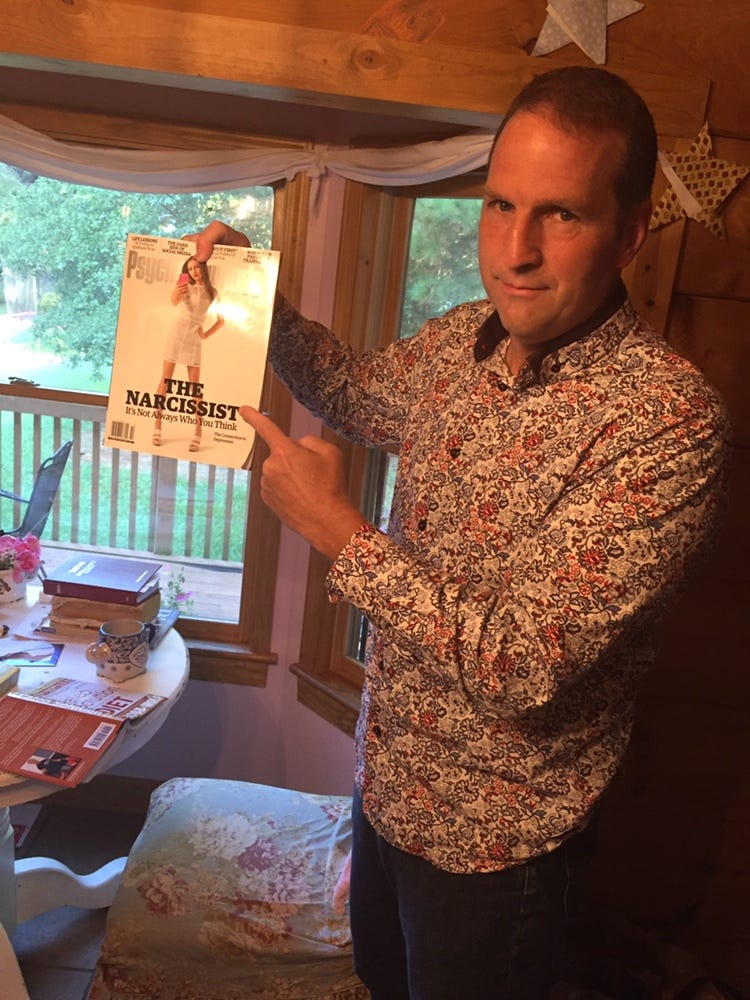
There Are No Dead Narcissists!
Dead people are all equally dead.
Regardless of your spiritual beliefs we all agree on the following…
After-life or no after-life, status seeking ends at death. No need for narcissism if you are dead.
Think about this…
When someone famous dies of suicide or overdose (Kate Spade, Chester Bennigton, Robin Williams, Phillip Seymour Hoffman etc…): People are stunned. They say things like:
- “He had everything why would he end it”?
- “He was on top of the world; I don’t understand”…
When the middle-class or upper middle-class white kid from an “in-tact All-America family dies of an overdose people say things like:
- “He was from a “good” family I don’t understand”….
- “we would never have thought this was happening. they are such a “good” family…”
SIDE NOTE:
First question: What is a “good family”?
Second question: Who gets to define the criteria for a “good family”?
Third question: Did I make the cut as a “good” father?
Will Ferrel Masterpiece…Credit Giphy…
Let’s Get Serious…
The despair driven death of the poor kid in middle of nowhere Nebraska is no different than the despair driven death of the troubled “superstar” musician.
The overdose death of the “white trash” kid in the hills of West Virginia is no different than the celebrity overdose death in Beverly Hills. Whether in a mobile home or a luxury hotel…
Dead is dead.
No one ever says:
“It was so surprising he took his own life…. he was such a piece of shit and his family was trash… It makes NO sense he would kill himself.”
Instead you get sarcastic comments, or silence, that implies: “oh that makes sense… he killed himself because he was worthless”.
How bad does the media suck?
The media uses celebrity death as click-bait. The entertainment and mainstream media pretty much suck across the board. TMZ type shit.
This phenomenon also reflects the depth of the behavioral health stigma. Mental health and substance use disorders are significantly misunderstood. I don’t think any of of us are surprised when stigma shows up.
For those of us working and living in recovery; dealing with stereotypes and misinformation is a given. We know we have lots of work to do in these areas.
Core Issues…
This process of marginalization and alienation, even in death, indicates a deeper problem. This sad reality reflects America’s core issues of isolation and despair.
Those statements cited above indicate that people believe wealth, income, status, achievement, recognition, fame, power, etc… EQUALS HAPPINESS AND CONTENTMENT.
They buy into the great myth of a consumption society.
That’s why they are stunned when an actor kills himself but indifferent when your average citizen does so. We have been conditioned to acquire things and programmed to desire unlimited attention. These things will ultimately lead us to the destination called happiness.
Irrational Behavior.
Behavioral Economics examines the strange relationship between humans and the marketplace. Attempting to explain irrational decision making that drives modern first world economies.
Use science to create “artificial needs or wants”…Credit Giphy
Our system is built on creating the constant need for more. If people only purchased what they need (the basics-food, shelter, clothing) everything would grind to a halt. Behavioral economics takes on the psychology behind over-consumption answering the question:
How do marketers and sellers get people to buy things they don’t need?
It’s complex and multi-layered. However, much of the strategy is founded on making sure the following message is encoded into your subconscious:
“You suck if and you are not good enough. You don’t have enough stuff; so come buy this shitty thing from me so you feel better”.
Adding to the confusion and supporting this vacuous status system is misplaced admiration and earned respect.
The Court Jester Has Become The King…
In America we place value onto very flimsy people. Idealization of the superficial over the substantive. Or as Stephen Covey puts it. The cult of personality over the character.
Obviously, some stars give back and help millions. But, they are just people. Respect should be earned not bestowed based on fame.
We admire random people who, objectively speaking, add little value to society’s bottom line (actors, athletes, etc..) over the real heroes (moms, dads, doctors, teachers, recovery workers etc…). Actors and athletes entertain us.
They don’t cure cancer. They don’t help serve meals at the soup kitchen. They aren’t doing an on-call shift on our overdose response team. They are court jesters… Society is ass-backwards.
All of this leaves us with a warped sense of the value of a human being. We have a tendency to clearly reinforce who’s life is worthy of attention and who’s life is insignificant.
There is no peace in attaining things for the sake of status. There is no serenity in externals.
Yes. Poor sucks worse than having money. But money and power do not equal subjective well being.
I have no intention of being poor and playing the non-profit martyr. (that non-profit martyr vibe makes me just as frustrated). But I know money and “stuff” won’t make me happy. I will just be miserable with more toys…
Things that matter…
Things that matter vary from person to person. They are individualized and internal.
Such as:
The pursuit of a great goal or cause. Work that lights you up. As they say “putting a dent in the universe”.
Spending time with loved ones. This always makes the list.
Trying to add value and help as many people as possible makes the cut.
Fully accepting and living out your unique role life. What’s your purpose?
We have a “values” crisis… the overdoses and suicides are but symptoms.
Our society is rotting from the inside out.
Things that matter…