
Gold Fever
Skagway Alaska, the start of the trail and the end of Soapy Smith
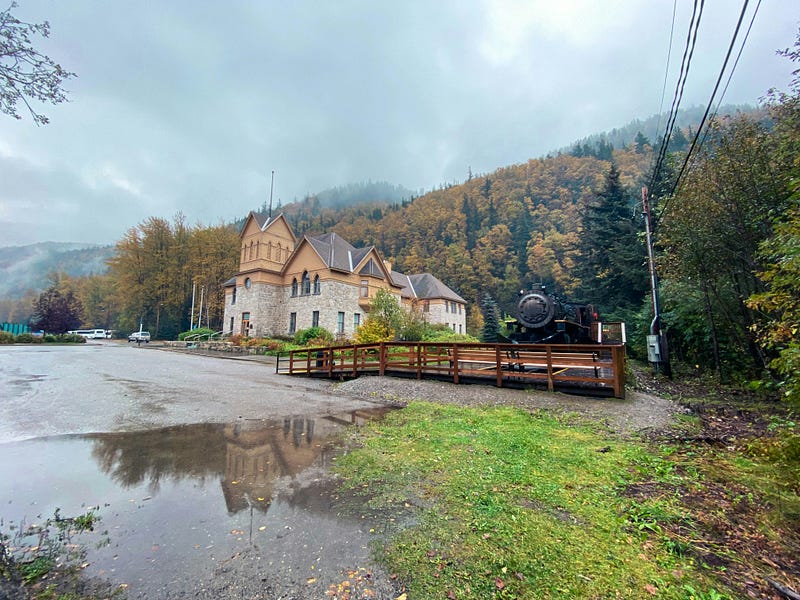
There are many remote places I have had occasion to visit on this vast continent we call North America. Skagway, Alaska, the start of a gold rush trail, was one such location.
By the late eighteen hundreds, the most devastating pandemic of all time had hit North America: gold fever, and it continues killing people around the world to this day.
Paddle wheelers from Seattle were a frequent site, and successive high tides brought tens of thousands of people to Skagway, all fevered and most ill-prepared.
A gully full of horse bones is a testament to how truly unprepared many folks were when they set out on the first leg of the journey inland. Mules and donkeys could make the steep incline, horses not so much, especially when laden.
I arrived early in the spring, a few weeks before tourist season. Once again, I found myself in a place and time where most businesses were closed. After reading several historical information placards placed around town, I had a general idea of what occurred back in its heyday. With very few locals about to talk to, I slowly drove along the main road out of town, looking for history, when serendipity struck.
I offered a ride to an older woman carrying groceries on the side of the road. After a short drive, we arrived at her place and I was offered tea. Turns out this woman had played the Madam in the historical saloon’s daily vignettes for over twenty years, and local history stories were her hobby. The saloon, fully restored to its former glory, held small historical theatre productions during the tourist season. These productions were mostly themed around the highly lucrative trade of prostitution.
This being off-season she was more than willing to talk my ear off and show me some of the significant historical places and tell the stories that made them. Two of these tales have stuck with me all these years; let’s see how they affect you.
Both stories stem from our walk in the local cemetery.
As the first story goes, similar to so many, there was a man with money. He was a nasty man; many accounts refer to him as a confidence trickster. Soapy Smith had amassed enough local power to control people, events, and life in the small town. He would be considered “the good guy” in today’s age of corporations. As the protagonist of this story, his actions were ultimately self-serving, yet he did benefit the community in many ways.
The antagonist is Frank H. Reid, known as a local mapper and part of the vigilante committee known as the 101. It is the morals and ethics of each that spin this tale.
Soapy was being challenged for his nefarious ways and the consummate con man would rise to the challenge. The 101 committee was to meet at the end of the wharf, and Reid was to guard the entrance, keeping Soapy and his henchmen from entering. The gunfight took place on the wharf and ended instantly. Reid was rushed to the doctor but eventually succumbed to his injuries.
This is where the cemetery defines the true feelings of the local population. There is a ring of metal around the cemetery, defining its consecrated boundaries. Reid was given a hero’s funeral and buried inside the ring; Soapy was not, and to this day he still lies outside the consecrated grounds. Public opinion had spoken.
The second tale stems from two simple grave markers, two short lives according to the dates etched in stone. As the story goes, it was the wild west, and many civilized rules and authorities to enforce them had not yet arrived. To keep chaos at bay, many codes of conduct were followed that today might seem a little harsh. So, for the sensitive readers among you, perhaps skip this next bit.
Tensions between Native populations and gold seekers were always palatable, yet a calm had been in this time and place for a while, until the long winter.
Skagway Alaska is a frontier town and gateway to the northern gold rush trail. Why two city folks from down the Oregon way found excitement in a working honeymoon in the wild northwest eludes my grasp, yet here we are, telling part of their story.
Now, the story, as told to me, went like this:
It was early spring, and with the ground still covered in snow, foraging was difficult, and the meat sources had not yet migrated north to the area. For two traveling natives, starving and cold, the cabin in the woods seemed like a logical place to camp for the night. The two young men searched the cabin for anything they might eat, and after finding a box in the cupboard, they shared their last meal.
Residential schools being decades in the future, not many native people were able to read English in this time and place, hence the words “rat poison” were lost on them.
In those early, lawless days, it was hard to keep the peace between settlers and natives, so certain codes were created, which, if adhered to, kept both populations safe. One such code concerns this tale. If a white man was killed by a native, retaliation was acceptable, one life for another; the same held in reverse.
Once the two dead tribesmen were discovered in that cabin, the living demanded vengeance and sought out two white people. Sadly, the first two white people they encountered were the young honeymooners. The vengeance was swift, without explanation, and with two white people suddenly dead, the alarm bells rang, the telegraph tapped, and the transmission was received down south.
By the time the “native rebellion” was explained away and the townsfolk put down their pitchforks and pistols, the good ole US of A had stood up the Buffalo Soldiers, ostensibly to keep the vigilance committee from becoming the vigilante posse.
Why only the black soldiers? That, dear reader, is beyond my understanding.