
Then rearrange the rules to suit yourself.
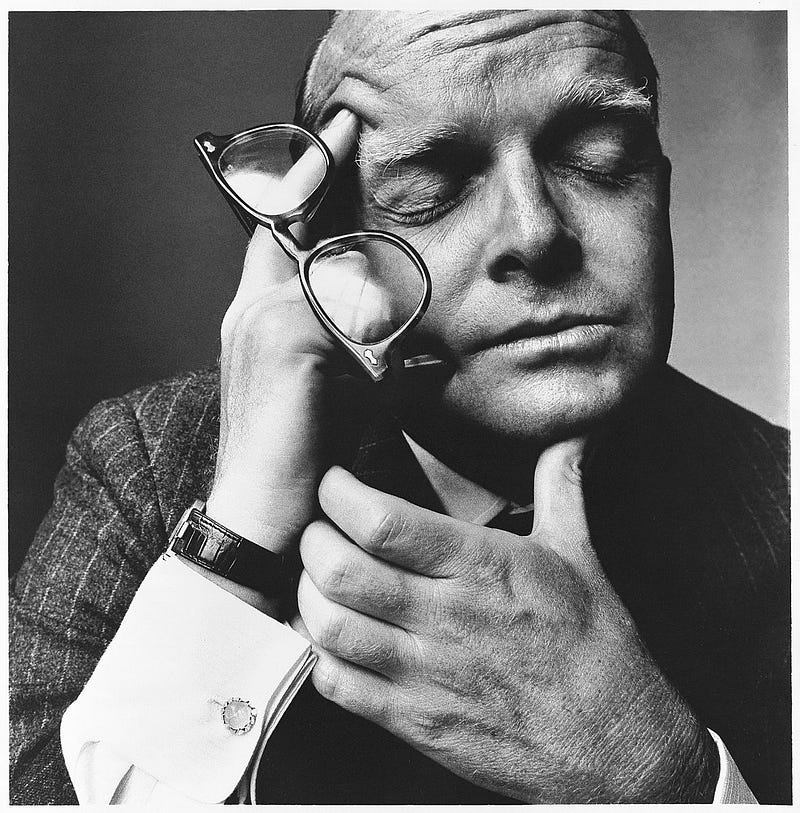
Truman Capote on writing as art. (The Commonplace Book Project)
The Commonplace Project is a daily post based on Ray Bradbury’s advice to aspiring writers: read a poem, a short story, and an essay every day for 1000 days. These posts start with a quote and go wherever the rabbit hole leads. Follow The 1000 Day MFA so you don’t miss a thing.
“Work is the only device I know of .Writing has laws of perspective, of light and shade, just as painting does, or music. If you are born knowing them, fine. If not, learn them. Then rearrange the rules to suit yourself.” — Truman Capote, The Paris Review, 1957
For a long time, Breakfast at Tiffany’s was my favorite movie.
Then one day I realized it was based on a novella by Truman Capote. And so I read that. It ruined the movie for me — it is so spectacular that the movie just faded — but it was so worth the cost.
I read some of Breakfast at Tiffany’s again this morning, as part of this experiment, and it still makes my breath catch.
I read Capote’s In Cold Blood when I was in high school. It was my first experience with true crime. He called In Cold Blood a ‘non-fiction novel’ and there was some speculation about how closely his book stuck to the truth.
I loved this Capote interview. (I wonder if he purposefully matched himself to the set.) He talks in it about how he never took notes during his four years of research into the events detailed in In Cold Blood — instead he developed the ‘auditory version of a photographic memory.’
My grandma would have called Capote a character. He was openly gay, wore outrageous clothes, and had a distinctively high-pitched voice. He was well known for telling tall tales, especially name dropping.
One of his most famous exploits was a party that, more than 50 years later, is still considered one of the best parties ever thrown. The Black and White Ball was a party for Katharine Graham (owner of the Washington Post.) At least in name. According to the article below, Capote wanted to throw a grand party after the success of In Cold Blood and couldn’t make himself throw it for himself.
Capote set out to make himself more than a writer. He wanted to be an icon. His first novel, Other Voices, Other Rooms was well received in 1947. But maybe its biggest splash was the photo on the back cover. I think it’s a reflection of how much times have changed that the photo below caused such a stir, but it certainly did.
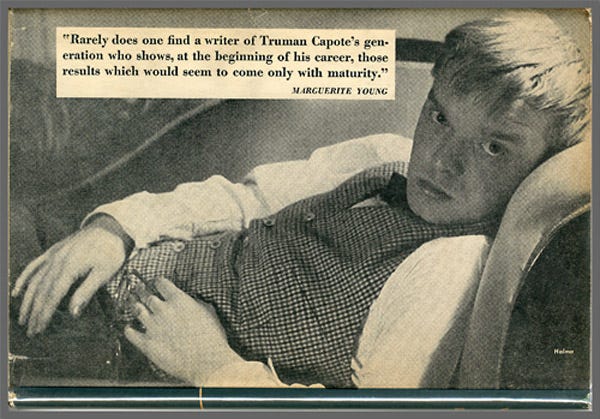
The picture was reprinted along with reviews in magazines and newspapers, some readers were amused, but others were outraged and offended. The Los Angeles Times reported that Capote looked “as if he were dreamily contemplating some outrage against conventional morality.” The novelist Merle Miller issued a complaint about the picture at a publishing forum, and the photo of “Truman Remote” was satirized in the Mad (making him one of the first four celebrities to be spoofed in the magazine). The humorist Max Shulman struck an identical pose for the dustjacket photo on his collection, Max Shulman’s Large Economy Size (1948). The Broadway stage revue New Faces (and the subsequent film version) featured a skit in which Ronny Graham parodied Capote, deliberately copying his pose in the Halma photo.
Capote’s friendship, going back to childhood, with Harper Lee is legendary. Each included the other in their work — Capote based a character in Other Voices, Other Rooms on Lee and Lee’s character, Dell, is based on Capote.
I’m super excited to add the children’s book Tru and Nelle, about their childhood friendship, to my reading list.

Captoe and Lee grew apart sometime after she was his research assistant for In Cold Blood. Perhaps because she was as notoriously shy about publicity as he was notorious about seeking it.
Lee herself, in her later years, said that it was jealousy and Capote’s propensity to lie that ruined their friendship.
But in a 2006 letter to Flynt, Lee said of Capote: “His compulsive lying was like this: If you said, ‘Did you know JFK was shot?’ He’d easily answer, ‘Yes, I was driving the car he was riding in.’”
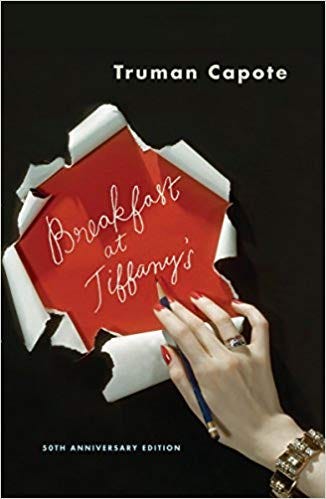
If you’ve never read Captoe’s Breakfast at Tiffany’s, it definitely belongs on your reading list. It’s so darkly beautiful. It’s a story I go back to over and over again. Just don’t say I didn’t warn you if the movie is one of your favorites.
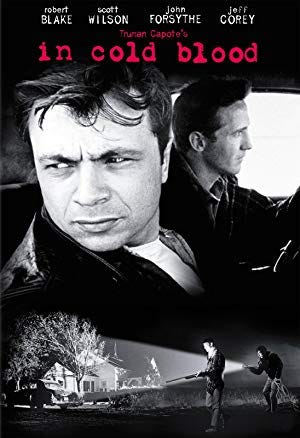
In Cold Blood is also a must read. I think I’ll watch the movie again tonight. In the video above, Capote says that every scene was shot in the real locations detailed in the book.
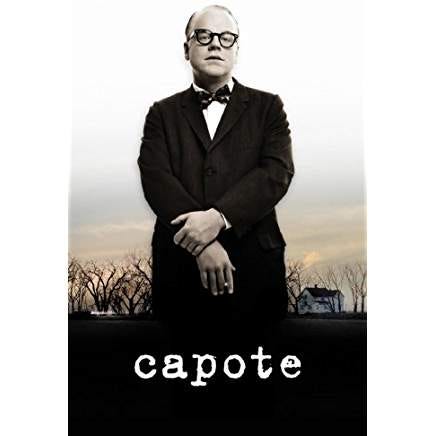
Or maybe I’ll rewatch Capote, a 2005 biopic starring Phillip Seymour Hoffman as Capote. It centers around his time writing In Cold Blood.
Today’s Short Story:
“Miriam” arguably launched Truman Capote’s career by leading to the contract for his first novel. It’s not very long and very, very good.
Today’s Poem:
Capote featured this poem in In Cold Blood. Click the link to read the whole thing.
The Men Who Don’t Fit In By Robert W. Service
There’s a race of men that don’t fit in, A race that can’t stay still; So they break the hearts of kith and kin, And they roam the world at will. They range the field and they rove the flood, And they climb the mountain’s crest; Theirs is the curse of the gypsy blood, And they don’t know how to rest.
Shaunta Grimes is a writer and teacher. She is an out-of-place Nevadan living in Northwestern PA with her husband, three superstar kids, two dementia patients, a good friend, Alfred the cat, and a yellow rescue dog named Maybelline Scout. She’s on Twitter @shauntagrimes and is the author of Viral Nation and Rebel Nation and the upcoming novel The Astonishing Maybe. She is the original Ninja Writer.


