
Themes for Agile Planning
How Themes can drive meaningful outcomes when Agile planning
As I have discussed in a previous blog about how Progressive Elaboration can effectively drive a successful requirement breakdown for Agile planning, see the Relationship between Features, Epics, User Stories and Sub-Tasks for more information.
You may have noticed I left out Themes. This blog will cover them in detail.
What is a Theme?
A Theme is the widest area of focus that can help an Agile team track organisational goals, it can also be used to group wider organisational goals to other similar activities.
Themes can be used as a big container that cover similar activities in an agile product or project delivery system. Alternatively, you could just simply add a label to different group Themes accordingly in your ticket system (such as Jira, or Azure DevOps).
No matter what you do, the purpose of a theme is to define the common characteristics between specific areas and group them under one heading.
A theme is the largest unit of work in agile planning — all related epics, features, stories, and tasks fall underneath this.
The Agile Planning Work Structure
There are five primary sections in Agile Planning: Themes, Epics, Features, User Stories, and Subtasks.
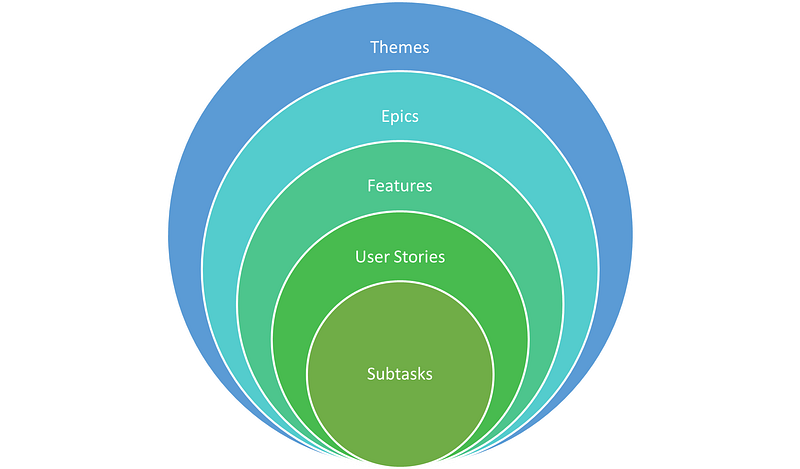
How to use Themes in Agile Planning
Themes help you in Agile Planning by:
- Connecting the development team’s work to product and business goals.
- Defining strategic areas of focus for agile development work.
- Organizing related bodies of work into broad categories.
Themes are the start of the process
At the top of the Agile planning structure are Themes, which are then broken down into Epics, then Features, User Stories, and finally Sub-tasks. Each item rolls up to the one above it.
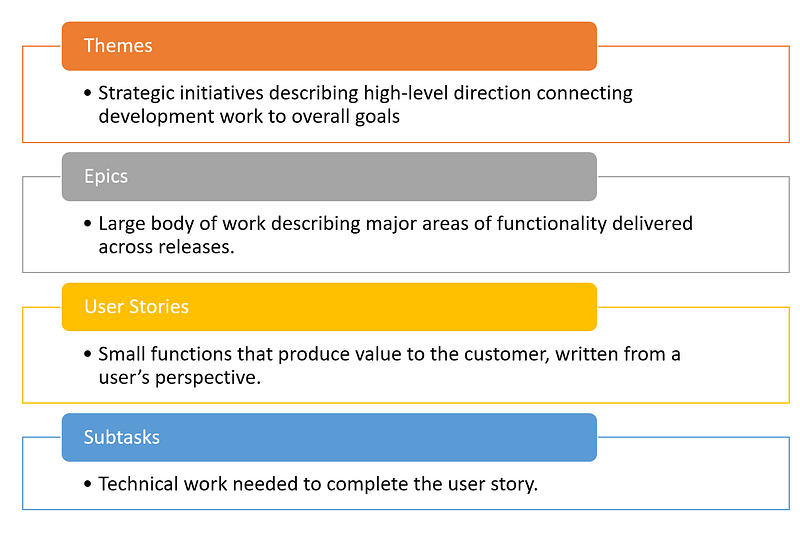
As this diagram illustrates, each item in the agile planning work structure relate to each other as you break down the work.
From Themes, the strategic initiatives that describe the high-level direction that connects the development work to the overall goals.
The Epics that contain the large bodies of work describing main areas of functionality delivered across releases, and typically can be up to a quarter’s worth of work.
Then User Stories that contain smaller focuses that provide value to the customer that are written from a user’s perspective. These should not take longer than a sprint to complete.
Followed by the Subtasks, which is the breakdown of the technical work needed to be done by the development team to complete the user story or task.
Essence of Agile Planning
A key item to remember when agile planning, is in the essence of agile itself, being adaptable. Being adaptable is our ability to show how flexible we are, having the courage, openness and willingness to respond to change when the situation arises.
How Themes can help with Agile Planning
When you are progressively elaborating a new agile programme, project or product, Themes can help structure your work by breaking down the requirements accordingly.
Themes help you make sense of the work you need to do, the work you need to deliver, and the value you need to have to ensure successful outcomes. However, ensure you structure the work to fit the needs of your organisation, it is more important if something is not working, to react quickly to change it, being nimble enough to make changes and pivot to meet the needs of the work required.
Make the structure work for your organization. If something isn’t working, react quickly and make changes.
Agile Planning will only be as effective as the team’s understanding of the process. So, work out with the various groups within your organisation to make sense of it.
The Agile Planning Work Structure is an important component to help break down work and have value realised at every level.
Interested in more of my writing?
I have two new books that have just been published in 2022. To find out more, click below:


