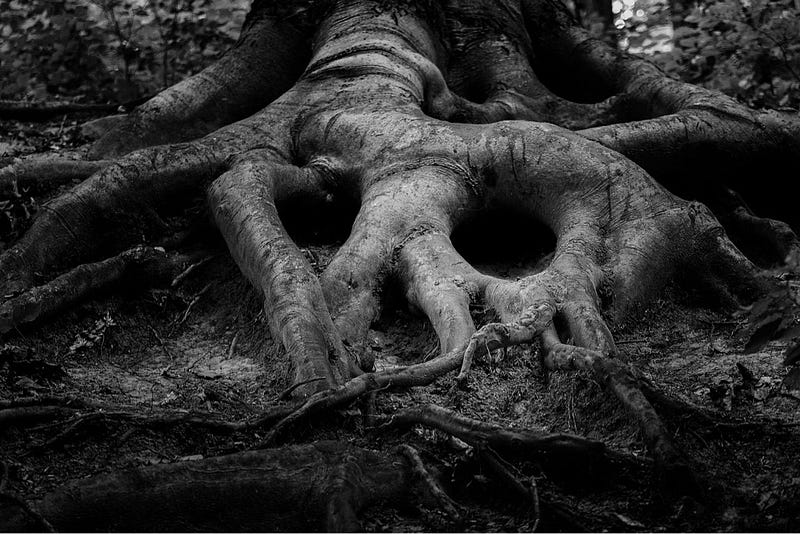
Their Roots Run Deep: October 1604
“Isn’t it beautiful, Minister Duqua,” Samuel Dupont grinned as they watched the boats bringing supplies ashore from the three large sailing ships anchored in Passamaquoddy Bay.
Henry IV of France had granted Samuel exclusive rights to the island for conducting the fur trade for ten years. The charter had forbidden any fur trading in the area where he held his monopoly.
“Yes, Samuel,” the Huguenot minister watched the scores of men bringing ashore the supplies of bricks and pre-fabricated frame buildings they brought with them from France. “The Isle Sainte Croix will be the perfect location to summon the natives to a knowledge of Christ. I hear they are barbarous people, atheists without faith or religion. This work will be my greatest challenge and most remarkable achievement. “
“We are all his servants,” Samuel nodded to the Minister appreciably, though he did not share the Minister’s convictions. As far as Samuel was concerned, the natives were his only competition, and he would sooner see them filled with musket balls than the Holy Spirit.
“What is it the natives called this place?” the Minister’s beady eyes followed the flight of a loon through the air as it dove into the water.
“I believe the Allataki call it Metanegwis,” Samuel searched the beach until he found the blonde-haired of his wife Elyna; the slender woman was trying to corral his twin daughters off the beach. The eleven-year-olds were reveling in the barking noise a cluster of seals were making on the seaweed-coated outcroppings of granite in the makeshift harbor.
“Metangewis,” the Minister’s face looked like the words felt distasteful in his mouth. “I think Isle Sainte Croix is far more fitting, don’t you agree?”
“Yes, of course,” Samuel was thankful for the arrival of Pierre Dupont, his second in command. Behind the short, heavy-set man strode the expeditions military commander, Major Gabriel Anawan, with his bevy of weaponry. A large musket slung across the man’s back, the bone handle of a large hunting knife poked out of a sheath on the man’s hip, and he wore a flintlock pistol holstered on the other hip, a second slid into the front of his belt. Anawan had served alongside Henri IV during the Wars of Religion, though to Samuel’s knowledge, the man had never seen combat.
“Samuel,” Dupont was sweating and breathing heavily from the short walk up the beach; he held a leather-bound ledger in his hand. “All thirty-five men, thirty women, and fourteen children are accounted for, and the supplies will be finished coming ashore before nightfall.”
“Thank you, Pierre.”
“Sir,” Anawan stroked his long dark mustache in a manner so self-important that Samuel despised talking to the man. “I would like to get the men working on fortifying the islet overlooking the harbor. I require work parties to cut trees for the barricade and three men to move the canon into a position to fire upon the harbor if necessary.”
“As I explained, Major Anawan,” Dupont moped the sweat off his forehead with a handkerchief. “Several men suffer from severe swelling from mosquito bites, and I have already selected others for their turn in The Order of Good Cheer.”
“The Order of Good Cheer?” Samuel believed wholeheartedly that of all the men he recruited for this expedition back in Havre de Grâce, no two men were more unlike than the good-natured Dupont and the battle-seeking Anawan.
“Oh yes, the Order of Good Cheer is what I call the men who have volunteered to hunt for food for the good of the whole company each day,” Dupont smiled broadly as he explained but cast a scornful look at Anawan. “And as I explained, they are not available for military responsibilities.”
“If I may offer a suggestion,” Minister Duqua stepped into the middle of the three men. “I fancy myself quite the huntsman. I will take my two sons, and we will bring back a bounty. After all, we all know Philippians 4:19.”
The three men looked uncomfortably amongst themselves as the Minister stared expectantly at them.
“And my God will meet all your needs according to the riches of his glory in Christ Jesus.” Duqua gave them a disdainful look at their continued silence.
“It is settled then,” Samuel grabbed the leather-bound ledger from Dupont and headed down the beach toward his family. “Minister Duqua will handle the hunting until the barricade is built, and then the Order of Good Cheer will take over the responsibilities.”
Three weeks into his business venture on St Croix, Samuel had to admit it was going better than expected. Isabelle, the oldest of his twins by a full minute, stood by his side as he ran his hand over the large and growing piles of beaver and raccoon pelts. At this rate, his only concern would be running out of animals before he could get King Henry to expand his charter to the mainland. Even at twelve, Isabelle developed an interest in the business and had a good head for numbers, unlike her sister Fleur, who only delighted in cooking and housekeeping.
“Minister Duqua told us that Psalm fifty says, ‘For every beast of the forest is mine, I know every bird of the mountains, and everything that moves in the field is mine,’” Isabelle’s ice blue eyes studied the furs as she ran her hand over the soft hairs.
“For once, I agree with the Minister,” Samuel smiled to himself; he would have to remember that Psalm could come in useful one day.
“Does the Psalm apply to the trees too?”
“Even more so to the trees than the animals,” He brushed his daughter’s long blonde hair from her shoulder and smiled at her inquisitive nature. “Trees have no souls; they are merely here so we could build our barricade for defense and our homes for shelter. To heat our fires for warmth and cooking.”
She thought on this for a moment with an expression on her face that made Samuel think of someone mentally doing a math problem.
“Mr. Dupont and Major Anawan and their men cut down so many trees each day,” Her face was solemn as she met his gaze. “If it takes so long for trees to grow, what will we do if we run out of trees?”
“If we cut down all the trees on St Croix,” Samuel chuckled at her concern and smiled down at her. “Then we’ll just move someplace with more trees.”
That seemed to appease her concern, and she smiled back at him. She was correct; Dupont and Major Anawan had made excellent progress clearing the forest to have enough timber to complete the fortifications and construct a meeting hall and this storehouse for his furs. Dupont’s foresight in bringing pre-constructed walling and roofing enabled them to raise the blacksmith’s barn and several dwellings rapidly. He, of course, had his cabin with his wife and the twins, but most of the others were still living three families to a cabin as construction continued. Keeping the men busy felling trees and building homes had an added benefit; it meant Minister Duqua and his sons stayed occupied with hunting and out of the camp and his business. The tall, lanky Minister proved an adept and prolific hunter, and the trio provided ample deer meat for the whole company to eat well every night. They had even brought him back three thick, dark black bear furs from animals they had shot and skinned in the woods.
Much to Major Anawan’s chagrin, even the natives had largely steered clear of the island. Their only encounter had been when three natives approached in a canoe and shouted at them from the bay. One of Anawan’s men who spoke the Allanaki tongue said one of the men was a medicine man, and he was shouting for them to leave the island. A warning shot from the camp’s canon had sent the natives rowing back to the mainland, with much cheering from the men and women of the camp.
“Samuel,” Dupont stood in the doorway of the storehouse, his plump cheeks red from exertion. “I need you to come quickly; there’s a problem with Minister Duqua.”
So much for the Minister staying out of his business.
The Minister’s sons had their father’s tall, lean frame and dark hair, and Samuel felt they would grow into near exact replicas of the man someday. The young men addressed a large crowd of families outside the meeting house. Nearly the whole community seemed to be present. Samuel could see a very agitated Major Anawan tugging at his long mustache as he spoke heatedly with the Minister’s oldest son, Jebediah.
“The Lord has guided my father to the very spot where the trees that will be made into our church grow,” the Minister’s younger son was addressing the crowd. “I have seen them, and they are tall and majestic.”
Excitement rippled through the crowd as the men and women listened to the young man’s words.
“Jebediah, Job, what news is this?” Samuel greeted both men as he pushed his way to the center of the crowd.
“My father has located the spot where the Lord has planted the trees for our church,” Jebediah’s brown eyes gleamed fervently as he spoke, and Samuel thought he heard a few “Praise God” ripple through the crowd.
“Well, that’s excellent news,” Samuel patted Jebediah on the shoulder. “We’ll all be delighted to have our church built.”
“Therein lays the problem,” Major Anawan crossed his arms across his chest. “Minister Duqua is asking that we send everyone to fell the trees and bring them back to camp.”
“Everyone?” Samuel felt his left cheek twitch slightly.
“Everyone,” the military commander glared at the Minister’s sons. “All the men. All the axes. All the horses and carts.”
“Certainly, there is no more important work than to see the Lord’s will be done,” Job spoke to the crowd more than to the Major.
“The Bible tells us,” Jebediah extended his arm and thrust a finger skyward. “‘He shall build for Me a house, and I will establish his throne forever.”
Samuel heard the Amens; he saw the nodding heads in the crowd and the smiling exuberant faces and knew the Minister had already won the camp.
“Well, let us not tarry any longer; we have a house to build,” Samuel gave the crowd his best fake smile, though his mind was calculating how much this lost productivity would cost him.
Major Anawan and his five men stayed behind to protect the camp, while the remaining seventy-four camp members traveled by foot and cart to the Minister’s sacred grove of trees. Led by Jebediah and Job, the men, women, and children sang church hymns as they trekked the two hours to the spot. Samuel was confident that many would turn back instead of crossing a stream that lay in their path, but the whole procession happily splashed across the cold water.
Samuel saw Duqua sitting on a tree stump, arms across his chest, and serenely gazing up at an unusual copse of birch trees. At least, he thought they were birch trees; the leaves certainly had the egg-shaped triangular-tipped leaves with serrated edges that grew on birch trees. However, the trunks and branches of the trees looked so light to be almost white and smooth in appearance.
“Aren’t they magnificent?” Duqua raised his arms heavenward towards the trees as the procession approached. “They are like the trees in Genesis. ‘Then Jacob took fresh rods of poplar and almond and plane trees, and peeled white stripes in them, exposing the white which was in the rods.’”
The people streamed among the trees; there were twenty-six of the unusual trees in all, touching their bright white bark reverently. Some remarked at the remarkable straightness of the tall trees, and others commented about the smooth, unblemished bark.
“Minister Duqua, how many trees will the church require?” Dupont stared at the impressive trees.
“All twenty-six of them,” Duqua’s face beamed with delight. “We shall take all of the trees for our church.”
“Father, where is this tree?” Isabelle pointed to the stump.
“It must have fallen, Izzie,” Samuel looked at the stump, mesmerized by the sheer number of rings in it. They were so thin and tightly grouped from the center to the bark that they seemed too infinite to count.
“But then, where is the tree?” Isabelle looked around the stump. “And shouldn’t the top look jagged and broken?”
Samuel was about to answer her when the sound of the first axe blade striking one of the trees rang out as the crowd cheered. An inexplicable cold chill ran down his spine at the sound of the axe cleaving the tree.
The cheering ended abruptly, replaced by a wave of anxious murmuring through the crowd. Samuel followed closely behind Duqua as he pushed his way through the crowd. The men and women stared at the tree and whispered silent prayers.
Jebediah stood before the tree, axe in hand; the blade dripped a red viscous liquid so dark it was almost black. The place on the tree where the axe struck oozed the dark sap, which ran in rivulets down the white trunk. He looked at his father as the Minister walked up and placed a hand on the axe mark. Duqua looked at the red sap that coated his hand with sheer reverence and turned to the assembled men and women who stared expectantly at him.
“The blood of our Lord and Savior,” Duqua held his hand up to the crowd and looked heavenward with tears. “God ordains our work here.”
The crowds’ shouts of “Amen” and “Praise the Lord” echoed through the trees as the men eagerly took up their axes and set upon felling the majestic trees.
“It will be a magnificent church,” Minister Duqua smiled broadly as he surveyed the twenty-six tree logs. “We should declare tomorrow a day of rest to reward everyone for their toils doing the Lord’s work today.”
“I’m not sure anyone will be capable of working tomorrow,” Dupont frowned at the lost productivity the camp was facing after the tremendous effort it took to fell the trees and bring them to the camp. “The men are exhausted, and the strain of dragging that timber to the camp nearly killed the horses.”
“Mr. Dupont, surely, there is no reward like seeing God’s will be done,” Jebediah stared defiantly at Dupont with his hands folded across his chest.
“Of course not,” Dupont swatted at a mosquito buzzing around his ear.“ Jebediah, you still have some tree sap on your hands.”
Samuel looked down at his hands, dotted with the unusual dark red tree sap from his turn with the axe.
“All the men bear the mark of the Lord’s work this day,” Jebediah looked at his hands and smiled. “The sap washed off, but some staining remained; I’m sure it will fade like blueberry stains. But for now, everyone is wearing the stains as badges of honor in the eyes of the Lord. Even the women have dipped their hands into it.”
Samuel had watched Elyna dip her finger into the dark crimson sap and smear a little mark on each cheek; several others, including the Minister’s wife, had spread the sap into a cross on their foreheads. The efforts to out-piety one another continued, with some men smearing large crimson crosses on their bare torsos. He noted with hidden amusement that only the fastidiously clean and notoriously squeamish Dupont remained free of sap stains.
“Looks like blood to me,” Dupont failed to keep the disapproval from his voice as he continued his battle with the mosquito.
“Revelations teaches us that the righteous triumph by the blood of the Lamb,” Minster Duqua turned to gaze reverently at the felled trees. “And what could be more righteous than what we have done today?”
The ground was soaked with the fallen trees’ crimson sap as a primal rage surged through the clearing where the twenty-seven birches had once stood. Not since the desecration of one of their number two hundred years ago had the Ancient Ones been awakened from their slumber.
Ethereal forms darker than the night rose from the stumps of the violated trees; even the moonlight overhead failed to illuminate their shapeless forms. They congealed into a black, impenetrable cloud over the clearing as they raged in their ancient tongue.
The cloud separated into shapeless forms as they descended into the stumps. Filled with malice, the blackness coursed through the roots of the felled trees and into the earth saturated with their crimson sap. It joined with the forest’s subterranean network of thread-like mycelium that shared water and nutrients among all the forest’s trees and rode it like a highway, racing for the encampment of those who desecrated the sacred grove.
The forms seeped back to the surface amidst the scattered dwellings of the camp and swirled in the air like sharks circling prey. Had they not been sleeping, anyone that looked up at the night sky would have seen the dark shapes obscure the stars and moonlight as they passed overhead. Then as one, the shapes dove for the camp, passing effortlessly through the wooden roof and walls of the dwelling and into the sleeping forms of the fourteen children who slumbered in the camp.
The children awoke simultaneously, their eyes wholly white and absent of pupils as they sat silently up in their beds. Wordlessly, in every home, the children crept from their beds and quietly retrieved their father’s axe, still stained crimson with the sap of the trees.
“Grenier! Tremblay!” rage roiled up in Major Anawan’s chest as he approached the two sleeping guards. He was tired of these unprofessional colonial guards and regretted not requesting King Henry have him assigned to a command on the continent. The native threat had not materialized, which provided him endless frustration; however, it was still inexcusable to sleep while on guard duty.
The two guards sat, legs outstretched on either side of the barred wooden gate that led to the beach, heads lolled in deep slumber. Anawan had reared a leg to kick Grenier awake when his boot stepped in something wet. His eyes opened wide, and his intestines gurgled when he realized it was a pool of blood. He knelt beside the guard and could make out the deep gash that nearly severed Grenier’s neck from his shoulders. Tremblay bore a similar wound to the side of his head; both men were dead.
“The natives are attacking,” Anawan heard the sound of terror in his voice as he reached for the pistol in his belt.
Major Anawan turned to raise the alarm, but a searing pain in his stomach caused the breath the rush from his lungs. His hand went to his midsection, and he gaped in disbelief at the blood that coated his hand, then at the blacksmith’s nine-year-old son who stood in front of him with a bloody axe clutched in his small hands. There was something wrong with the boy’s eyes; they were as white as snow. Anawan sank to his knees, mouth still trying to form words as the boy cleaved his skull with the axe.
The terrified screams of his wife awoke Minister Duqua from a deep sleep. He sat in his bed as moonlight streamed in from the open doorway. Duqua reached for her, but she seemed to fall away from him as something thudded into his lap. By the moonlight, he could see the face he had come to know so well staring back at him. Her eyes rolled back in her severed head as her mouth still tried to form words.
His mind was uncomprehending what he saw as he looked around the room. Both of his sons lay sprawled and bloodied outside the door. Beside him, his wife’s headless body spurted blood soaking her grandmother’s knitted quilt. Duqua turned to Pierre Peltier’s boy, who stood beside the bed, soaked in blood and with sightless white eyes. Nothing made sense to Duqua.
Then the Peltier boy’s axe struck him in the chest, propelling him backward into the bed. Duqua gasped for air as his chest gurgled with air bubbles from his exposed lung. Then the Peltier boy brought the axe down again.
“Isabelle,” Samuel tried to rub the sleep from his eyes. “What are you doing up?”
The girl looked odd to him as she stood by the foot of his bed staring at him, and she seemed to be holding something in her hand. A rhythmic thudding sound filled the cabin as he searched for his wife in the darkness.
“Elyna,” his eyes tried to pierce the darkness. “Where are you? I think there’s something wrong with Isab….”
A forceful blow to the side of his head that knocked him from his bed and onto the floor cut short his words mid-sentence. His body felt strangely detached, and he could not feel his arms or legs. Samuel cast about the cabin with his eyes, the only part of his body he could move. He blinked as something wet and metallic tasting ran into his eyes and mouth. Somewhere in the back of his mind, he knew it was blood. But whose?
The rhythmic thudding continued, and he finally made out the still form of his Elyna on the floor, her face a bloody ruin as Fleur struck her repeatedly with an axe. His wife’s body reverberated with each blow of the small girl’s axe. He watched in detached fascination until two legs stepped in front of him, obscuring his view.
Unable to move his head, Samuel looked upwards with his eyes into Isabelle’s blank, expressionless face; her eyes looked like two white eggs as she cleaved her axe down into his face.
Moonlight filled the deathly quiet encampment as the children slowly walked out of the cabins, dropping their axes as they entered the night air. They moved into single file behind Suzanne Rochefort, the oldest of the camp’s children at thirteen, and walked to the gate.
Although the thick piece of wood that barred the gate typically took two adult men to put into place, Suzanne lifted and tossed it aside effortlessly. She swung the doors open, and the fourteen blood-soaked children followed her into the night. They walked in a line out to the beach and turned to face the cold waters of Passamaquoddy Bay.
One by one, each of them laid down face up in the cold surf. The children lay there motionless, sightless eyes staring unseeing at the moon as the incoming tide slowly rose around them. The waters steadily covered their arms and legs with every passing moment. Their chests disappeared below the cold dark waters and then their faces, leaving only faint trails of bubbles that lessened and then ceased.
Jack Finn (TWITTER: @TheRealJackFinn )