
‘The Zone of Interest’: The Banality of a Holocaust Movie
‘The Zone of Interest’ is a sad reminder that the Holocaust is routinely commodified and turned into a spectacle for mass consumption
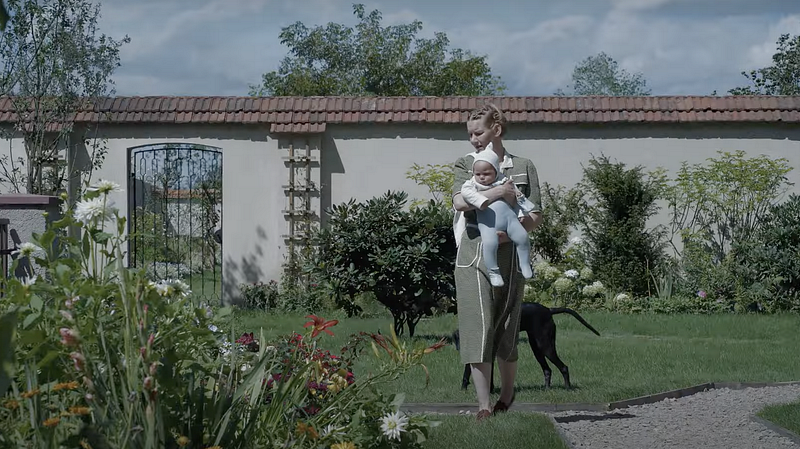
Should historical tragedies be the subject of art-house experiments? This is the question I kept asking myself as I watched Jonathan Glazer’s The Zone of Interest, which follows a Nazi family living in the Auschwitz complex. The husband, Rudolf Höss, is the commandant of the camp, and while he’s off at work (his commute is a short ride on horseback), his wife Hedwig (Sandra Hüller) tends to the garden. Servants handle the household chores and care for the children.
The space is idyllic for the Höss family, highlighting their indifference to the horrors happening next door. Every so often, a wide shot will show the top of the barbed wire fence that separates their yard from the camp, and the smoke coming from the gas chambers, where prisoners are sent to die. On the soundtrack, we regularly hear gunshots in the distance, passing trains, screaming people, and the hum of a furnace. But the camera stays away, focusing instead on how the Höss family reacts — or doesn’t — to the sounds.
Glazer uses several art-house conventions we’ve seen in countless other European movies to tell the story, including static shots that capture the action from a distance, ambiguous character motivations, elliptical editing that confuses the timeline, symbolism that conveys the theme, and emphasis on mood over plot. Some of the craft is impressive, like Johnnie Burn & Tarm Willers’ layered sound design, but for the most part, Glazer is indebted to masters who came before (a little Michael Haneke here, some Claude Chabrol there) and never finds a way to forge a cinematic language of his own.
If, as an art-house experiment, The Zone of Interest doesn’t break new ground, it is slightly more effective as an exercise in elevated horror. The movie aims to unsettle us, and I must say I was always uncomfortable. But even writing this makes me question Glazer’s ethics. Should the Holocaust be turned into a genre threshold test for cinephile snobs?
It all comes down to what, if anything, The Zone of Interest says that we don’t already know. Glazer has the right to make any movie he wants, and I don’t take issue with his prioritizing the perspective of the villains over the victims, as some do. Rather, the problem is that the movie doesn’t contribute to the conversation in a meaningful way. Within the first twenty minutes, the big idea is introduced, and Glazer keeps reiterating without going deeper. Anyone who has ever taken a Holocaust class, read a history book, or watched one of the hundreds of movies made about the subject over the decades will have already been confronted with the same question Glazer asks: How could people have let this tragedy happen?
Glazer’s answer, that human beings will ignore, accept, and then participate in death and destruction for power and a luxurious lifestyle, is obvious, and as one scene after another shows the Höss family carrying on with their day-to-day routine despite sounds and sights of suffering in the background, it becomes increasingly clear that Glazer doesn’t have much else on his mind. The Zone of Interest is a one-idea movie that might be thought-provoking as a short, but at 105 minutes, is dull and repetitive. Do you need to sit through it to know that the perpetrators of the Holocaust didn’t care about the victims, as long as they were able to live comfortably? Perhaps you’re a glutton for punishment, but that information can easily be found on Wikipedia.
Rudolf is an exceptional worker and his high rank represents a bourgeois elitism that makes him stand out from the German population. His family’s proximity to the gas chamber makes their situation unique. Of course, the average person can’t relate, but Glazer still dares to try and connect their experience with our own by representing the quotidian rhythms of family life. You see, Rudolf is a commandant of a concentration camp, but he is a commandant of a concentration camp who reads stories to his children before bed, much as we all do, or at least that’s the intended message. We might not be orchestrating the Final Solution, Glazer seems to say, but we are all strivers who want to provide a pleasant life for our loved ones. It’s a cynical perspective that insults the intelligence of the audience. Of course, all of us can live like the Höss family, but many of us don’t. Glazer’s goal is to shine a spotlight on the barbarism human beings are capable of, but who needs a reminder?
Toward the end of The Zone of Interest, Glazer abruptly cuts to the present day. We see workers opening the Auschwitz-Birkenau State Museum and cleaning the site in preparation for visitors. The image is shocking. Glazer links the present with the past by showing a new generation of workers undemonstratively doing their jobs, much like Rudolf and his colleagues did.
The act of cleaning has a deeper symbolic meaning and strikes me as commentary on how the Holocaust has been sanitized in the culture, particularly Hollywood cinema. Glazer’s movie, which borrows heavily from the art-house tradition, serves as a counterpoint, or so he believes. But like the museum, The Zone of Interest is more than anything a sad reminder that the Holocaust is routinely commodified and turned into a spectacle for mass consumption. No amount of grueling long takes makes Glazer any less complicit in continuing this trend. He may avoid uplifting happy endings and sentimental gestures, but the constructed formalism is equally troubling. The Holocaust shouldn’t be a canvas for artists to show off their cool tricks.
In reviews of the movie, many critics have referenced Hannah Arendt’s phrase “the banality of evil,” but there’s a difference between portraying banal characters and making a banal movie. The Zone of Interest is a banal movie, devoid of new ideas and simplistic of its understanding of history. Of course, we must remember this tragedy, but are movie directors the most effective messengers?
The Zone of Interest leaves me doubtful. I’ve been moved by a few Holocaust movies over the years and have been outraged by many others. The ones that offend me play to our basest impulses as viewers. They exploit the gruesome murders or simplify complexity for maximum entertainment. To be fair, The Zone of Interest isn’t entertainment, but it also isn’t educational and its artistic ambitions feel familiar. There’s nothing under the skin here, to reference Glazer’s last movie released 10 years ago. Glazer knows how to compose a shot. Mica Levi makes strange music. Sandra Hüller can act. Big deal. The idea they’re all in service of is so basic that it makes you wonder if, in that decade between projects, Glazer bothered to learn anything new.