
The Wrong Way to Take a Walk
What I learned by taking a miserable walk

Introduction
Okay, hang with me here. I’m going to start out with some self-pity. But I promise it swings up pretty quickly.
And stick around because I’m going to issue a challenge that could make a difference in your life as it has in mine.
Miserable
On Sunday, I took a much-needed walk with my daughter and our dog. It didn’t go as planned.
…regular walking was linked to a 7 percent reduced risk of high blood pressure and high cholesterol. — Consumer Reports
It was colder than I thought it was going to be. Windier, too.
Oh, and there was this random freezing rain when we were almost home.
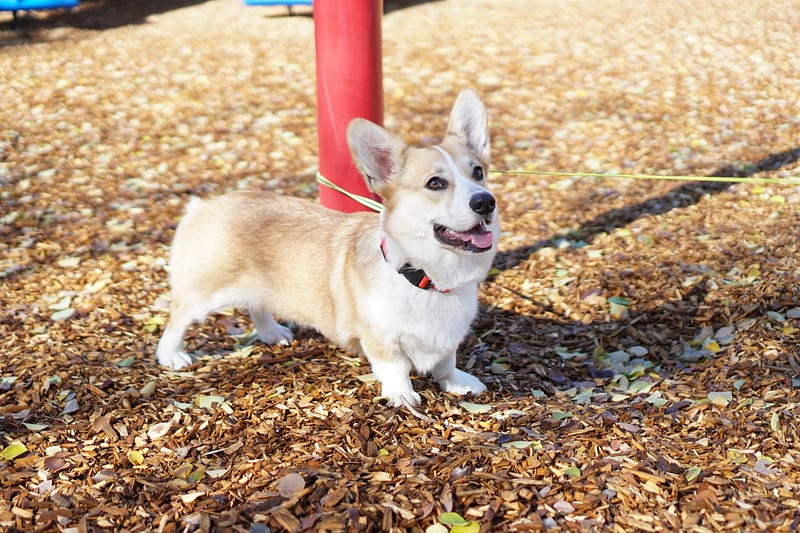
My dog walked around the wrong side of seemingly every stop sign. He would then proceed to sprint away, causing everyone to jerk side to side until I could unwind him from the post.
The podcast I wanted to listen to just wouldn’t load. And when it finally did, you can probably guess what happened. Yep, my earbuds didn’t have any power.
My daughter would not keep her gloves on.
At some point along the walk, she must have lobbed her cup of water out of her stroller.
We went back to look for it. But as far as I’m concerned it must have fallen into a wormhole because it doesn’t exist in this galaxy any more.
So that was my walk. I’d been looking forward to it, too.
And when I got back, I was more miserable than when I left. I carried on all day muttering under my breath about the injustice of it all.
Throughout the rest of the day, a lingering sense of annoyance hung just at the back of my mind. Nothing could settle me. I felt unfulfilled.
It was clearly because of my failed walk attempt.
Except, the walk wasn’t the failure at all; I was.
Next Morning
The next morning I woke up and sat down at my computer to write before heading off to work. I considered my walk again with some perspective.
It’s then that I realized how badly I’d love to take another walk with my family.
A 12‐week physical and cognitive exercise program can improve the efficiency of brain activation during cognitive tasks in older adults, which is associated with improvements in memory and executive function. — Journal of the AGS
I’d happily give up my headphones and podcast. I’d walk through the icy rain, send my dog to the wrong side of every pole and mailbox. I’d suffer stopping every few feet to put my daughter’s gloves back on. All of that would be fine if I could just have another walk.
It struck me then how wrong I’d been about the whole thing. The ideal walk exists only in my mind. There’s no perfect walk. There will always be a crooked sidewalk or an unexpected rain shower. There will be lost mittens and misplaced bottles.
In actuality, that’s the beauty of the walk.
The walk itself was a success. I put one foot in front of the other for a mile. The rest was background noise that I treated like the title track of the album.
With this in mind, the walk suddenly became a metaphor for life.
It’s not just a walk; it’s a “walk.” See what I did there?

Missed Opportunity
Like many of you on here, I read articles about how to make my life more fulfilling. I consume story after story about mindset shifts.
I could have seen my walk as an opportunity to practice those skills, to appreciate my surroundings, I used it as a way to pity myself.
Greater amounts of walking are associated with greater gray matter volume, which is in turn associated with a reduced risk of cognitive impairment. — American Academy of Neurology
Instead of seeing the privilege I have to walk through my neighbourhood with my dog and child, I saw each inconvenience as a personal attack.
I took the very act of walking for granted. The safety I feel. The fact that I have a home to go back to.
See, what I realized (too late to save my walk but not my “walk”) was that focusing on the negatives minimized the overwhelming positives.
This is why I say I had a failed walk. It wasn’t that I didn’t walk. I did. It wasn’t that I didn’t go as far or as long as I usually do. Because I did go just as far.
The reason I failed is that I allowed the inconveniences to overshadow the joy inherent to the action.
Perspective Shift
So yes, now that I’ve realized this, I can go about my business, taking better walks. The next time I’m annoyed on my walk, I’ll be reminded to shift my mindset. That’s all good and well.
The minimum prescription for good health is 30 minutes of moderate-intensity walking, five days per week. — Consumer Reports
However, it’s not nearly far enough. This is only worthwhile enlightenment if it extends beyond the physical walk.
To think exclusively about this one experience is to miss the point.
It’s not enough to commit to better and more appreciative walks (though it’s certainly a starting point). It’s vital that we also appreciate and are thankful for our “walk” through life.
Too often we speed through, fixating on the ideal while missing opportunities to be grateful.
My walk with my daughter is just one example of this. But there are thousands of moments I can show daily gratitude.
The Challenge
Here it is. The moment you’ve all been waiting for.
Take a moment and think about all the things afforded to you or that you take for granted.
Consider all the friends and family who support you. The material items you have. The basic needs being met every day.
Close your eyes if you need to. I’ll still be here when you open them.
Did you come up with anything?
How about the fact that you can read? The very act of turning these symbols into ideas is a privilege, not every person has.
You’re reading this on an electronic device that many people can’t afford.
Have you eaten today? Do you have running water? Access to education?
When we start to consider these daily benefits to our life, we can turn our mindset from self-pity to self-love. I know I’ll be thinking about this a lot more.
So I’ll end with this: How’s your “walk” going?