
Historical Christianity
The Writings of Jesus the Church Destroyed
How the Church Hid the True Historical Jesus
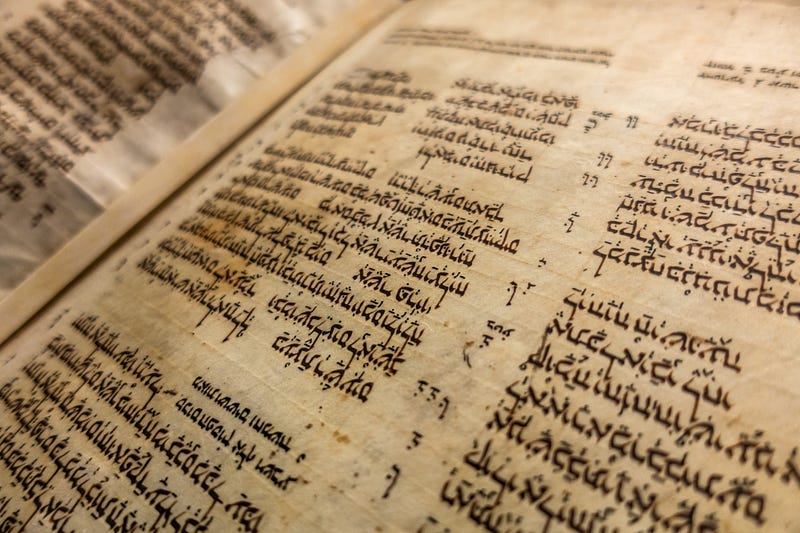
The other day I was in a conversation with my brother who holds a Masters of Divinity from Princeton Theological Seminary. Our conversations rarely turn religious, but on this particular day we spent the better part of the hour-long conversation discussing an emerging theory—something that has likely been brought up many times before in history—but is again making its way back into the mainstream of modern thought.
That “theory” is that you don’t become the prominent religious figure of your era by being an illiterate nobody. Modern scholars are only now, meaning within the last century, rediscovering the lost history of Jesus and his rather prominent family.
One of the things I have learned in my own journey of faith is that the last place to find the truth is to ask the Church, meaning the Church’s holy tradition—especially when it comes to Jesus and his family. This tradition of understanding is usually man-made, meaning massaged, bears little to no resemblance to the actual facts, and was most probably wrought or steeped in Rome’s anti-Semitic aversion to anything even remotely “Jewish”.
The Church would like you to believe that God was inspiring them (their Pagan leadership) at every step along the way, but that is just not the truth. Modern scholars of many denominational stripes will openly tell you that the Church played fast and loose with the facts and history of itself in order to massage away its own heinous deeds, bogus dogma, just pick your era.
Aramaic—the Language of Jesus
Scholars have long wondered why there are no extant writings of Jesus and the Twelve.
“Oh, but we have Matthew and Mark and Luke and John,” the unskilled in Christian history will immediately note.
Not so fast.
It has long been a footnote of Christian history that Jesus spoke Aramaic. But none of us is really ever taught what that language was. It seems odd to us that Jesus didn’t at least speak Greek. After all, the New Testament was specifically all written in Greek, the language of the Bible, right?
Again, not so fast.
Here is where things get muddy. The [original] language of the Bible, if you will, is Hebrew and Aramaic, not Greek and not Latin. These latter two languages are those of Pagans, Gentiles, the languages of Greco-Roman culture, not that of the Semitic Yeshuah [Joshuah, or “Jesus” in later Greek transliterations].
What most of us don’t know is that Aramaic is a Semitic language, both written and spoken, very similar to Hebrew. In fact, Aramaic can be written using the Hebraic alphabet; the two languages written as such are almost indistinguishable from Hebrew.
In most sermons and discussions I’ve sat through, the fact that Jesus spoke Aramaic is a mere mention or footnote; but this does not do justice to the language at large.
In fact, I’ve heard sermons trying to teach that Jesus was illiterate, that he wrote nothing down, which is pure nonsense. And because the extant Gospels were all written in Greek, we think that this is the more common language of the region.
It was not.
For the record, and contrary to lying Roman Catholic tradition, Jesus was not a pauper. He was a member of a prominent Jewish family who themselves had access to preach and teach within the Temple. They didn’t let you do that if you were a nobody. James, the brother of Jesus, served as High Priest as did Jesus’ Uncle.
In his book, The Jesus Dynasty: The Hidden History of Jesus, His Royal Family, and the Birth of Christianity, Dr. James Tabor reveals stunning facts of the true historical Jesus the Church would rather have us not knowing—because it shines a light on the Jewishness of Jesus.
The point is, Jesus was well-educated; his family had money, and lots of it. As a Temple teacher, he knew both Hebrew and Aramaic and probably some Greek as well.
As such, Jesus wrote. Probably a lot. The questions that remains is, what happened to his writings?
The Rich History of Aramaic
A thousand years before Jesus would even be born, Aramaic was widely coming into its own as both a written and spoken language. By 500 BCE, Aramaic would be the common language throughout the Levant, the so-called cradle of civilization within the Middle East and across the Mediterranean and Northern Africa.
It was the common language of Babylon, spoken by Nebuchadnezzar and made the official language by Darius.
During the so-called intertestamental period, the books of Ezra and Daniel contain parts written in Aramaic. It is also the written language of the Targum (an originally spoken translation of the Hebrew Bible), and the Jewish Talmud(s).
Many of the Dead See Scrolls were written in Aramaic.
By 135 CE the dialect Jesus used, called Galilean Aramaic, would become prominent (if not dominant) within the region of Judea.
The point is, none of us is ever really taught this about Aramaic. If anything, we’re taught (if only by default) that Aramaic was simply a spoken-only language of poor reprobate fools with little to no education.
Not. True.
It was the most widely used common language of the time throughout the Roman Empire.
Aramaic—The Language of the Original Gospels
Many a scholar has pondered why there are no extant (surviving) original manuscripts of the Gospels or even the writings of Jesus or the Twelve Apostles. Surely, something should have survived.
Greek was not the most prominent language of the region.
Most of us know that the Greek copies of the Gospels we now have today are not original texts, but copies of copies of copies of some original texts that are no longer extant (not surviving). We’re taught that there was most likely something scholars refer to as a Q source that most if not all of the extant Gospels in Greek pulled from.
What we’re not told is that that this Q source was mostly likely written in Aramaic, not Greek.
We get this understanding because quite a number of words in the extant Greek manuscripts still harbor transliterated words and signs from an underlying Aramaic source.
Why Are There No Aramaic Gospels?
The short answer to this questions is: Because the Church destroyed them. With malice. On Purpose. Because they looked too “Jewish” and probably taught things that were too Jewish for them to stomach.
The writing of Jesus would have fallen into this category, because, well, Jesus was after all, Jewish.
The early Church is/was not really Jewish—it is/was Pagan Roman, or Gentile if that term makes you feel better. (Pagan is simply another term for Gentile.)
Rome’s anti-Semitism is renowned. No one in the early Church would put up with a document or manuscript written in the language of those “accursed Jews”. Not a Gospel or later “New Testament” book anyway.
The fact that Galilean Aramaic used nearly the same Hebrew alphabet just made the early Church even more reticent about incorporating a Jewish-looking manuscript into “their” Bible canon; that would be a non-starter.
Coming out of the first century, one can imagine that there were a bazillion versions of writings in Aramaic describing Jesus and the Apostles, what they did, what they believed, etc.
Yet we have little to no extant Aramaic text. Why? Why destroy the texts of Jesus?
Paul’s “Jesus” Did Not Exist
To answer this we need to understand that there were really two versions of Jesus being preached during the latter part of the first century: One was the Historical Jewish Jesus; and the other was the one Paul of Tarsus manufactured using Jesus as a kind of cipher for the Pagan god Mithras. (See the below article: Paul’s New Jesus.)
Of course the Church denies this with abject horror. But the facts are what they are.
By siding with and promoting Paul as their founding “apostle”, actually their only “apostle”, the Church now had a problem, and it was a big one. The true historical Jesus was Jewish and bore little to no resemblance to the Pagan Mithraic version Paul preached as a human sacrifice to pay the price for the sins of the world.
While the historical Jesus and his cousin John both preached a gospel of repentance for the forgiveness of sin, something that gelled well with the latter prophets (see Ezekiel 18) and eschewed the bloody animal sacrifices of the Temple, Paul’s Jesus became a human sacrifice, a near identical import from Persian Mithraism, for the foreignness of sin.
“No sooner had Jesus knocked over the dragon of superstition than Paul boldly set it on its legs again in the name of Jesus.” — George Bernard Shaw
What most of us do not understand is that by the end of the first century, Paul’s version of Christianity was all but dead. The Apostles themselves embarked on a crusade to eliminate it from Judea; but they had no control over what was happening in Rome.
By the time Constantine would make the Pagan Pauline Church in Rome’s version of Christianity the official State religion in the fourth century, numerous factions of Christianity had risen, most of them very Jewish looking in how they had adopted the Jewish Feasts and traditions of Jesus, the Jewish mashiach.
Anti-Semitic Rome was not going to stand for such apostasy! It would be the Church who embarked on a concerted State-sponsored effort to eradicate any and all competing versions of Christian faith—especially those bearing any kind of Judaic tradition.
The Church Embarks on the Destruction of Jesus
The very first ecumenical (church-wide) Church Council of Laodicea was established to cement a number of “canons” (standards) that the developing Roman Catholic Christian Church would abide by. Among them, in addition to establishing what books of the Bible the Church considered official, were changes to the day of worship.
According to the Pagans (Gentiles) running the Church in c. 364 CE, Christians were no longer permitted to rest on the Sabbath (the 7th day of the week, what we call Saturday), or keep the Passover as they had done alongside their Jewish brethren for centuries.
Canon 29 reads,
“Christians must not judaize by resting on the Sabbath, but must work on that day, rather honoring the Lord’s Day; and, if they can, resting then as Christians. But if any shall be found to be judaizers, let them be anathema from Christ.”
Just so we know, “the Lord’s Day” is Dies Solis, Sun’s Day, the first day of the week, the worship day dedicated to the Roman sun god, among other Pagan gods of the period, including Mithras.
Canon 37 reads,
“It is not lawful to receive portions sent from the feasts of Jews or heretics, nor to feast together with them.”
Canon 38 reads,
“It is not lawful to receive unleavened bread from the Jews, nor to be partakers of their impiety.”
Anti-Semitic much? Here we see the State-sponsored Church embarking on an all-out war against anyone observing a Hebraic (Jewish) version of Christian tradition.
Along the way, the early Church would also embark on a mission to destroy any so-called “heretical” writing that contradicted official Church (meaning Paul’s version of Jesus) dogma.
The true history of Jesus and the Apostles would be erased and replaced with a fictional version, that of Paul and his lying/swindling Pagan/Gentile sidekick Luke. Via Luke’s Acts of the Apostles, not to mention the forged books of I and II Peter, the Church would manufacture a false version of Jesus and a false version of their buddy Paul’s relationship with the Apostolic founders.
But this attempt to rewrite the history of Jesus has not gone unnoticed by modern scholars:
“… the purposes of the book of Acts is to minimize the conflict between Paul and the leaders of the Jerusalem Church, James and Peter. Peter and Paul, in later Christian tradition, became twin saints, brothers in faith, and the idea that they were historically bitter opponents standing for irreconcilable religious standpoints would have been repudiated with horror.
The work of the author of Acts was well done; he rescued Christianity from the imputation of being the individual creation of Paul, and instead gave it a respectable pedigree, as a doctrine with the authority of the so-called Jerusalem Church, conceived as continuous in spirit with the Pauline Gentile Church of Rome.”[1]
Conclusion
What the Church preaches today is a Pagan gospel—one wrought by the anti-Semitic Gentiles of Rome, not the Jewish Apostles or the Jewish Jesus.
The reason we have no extant copies of the writings of Jesus or the Apostles in Aramaic is not because Jesus and the Apostles were illiterate men; it was because the Church embarked on a mission to destroy them.
They were destroyed because these writings showed that Paul was not a real Apostle of Jesus; that Paul preached a Pagan, Mithraic version of Jesus that was not accurate of the historical prophet, the messiah of GOD.
By all rights, there should be a plethora of extant documents written in Aramaic, the most prominent language of the region and period, all of them extolling the teachings, the TRUE teachings, of Jesus.
But there are none.
The Church did an admirable job of destroying them for all time.
Still, no one can erase everything. There are still glimmers of truth peeking through history that the Church could not erase.
Keith Michael is a Christian author and lay scholar who has spent nearly 40 years within various Christian churches; he is the author and contributor of numerous Christian books, including FALSE WITNESS — How the Christian Church Built a Foundation of Lies

[1] MACOBY, Hyam, (Christian / Jewish / Talmudic scholar) The Mythmaker, Weidenfeld and Nicolson, London, 1986 p. 139