
The Writer Who Transformed American Children’s Books
She wrote the oldest U.S. picture book still in print and inspired Maurice Sendak and other literary stars
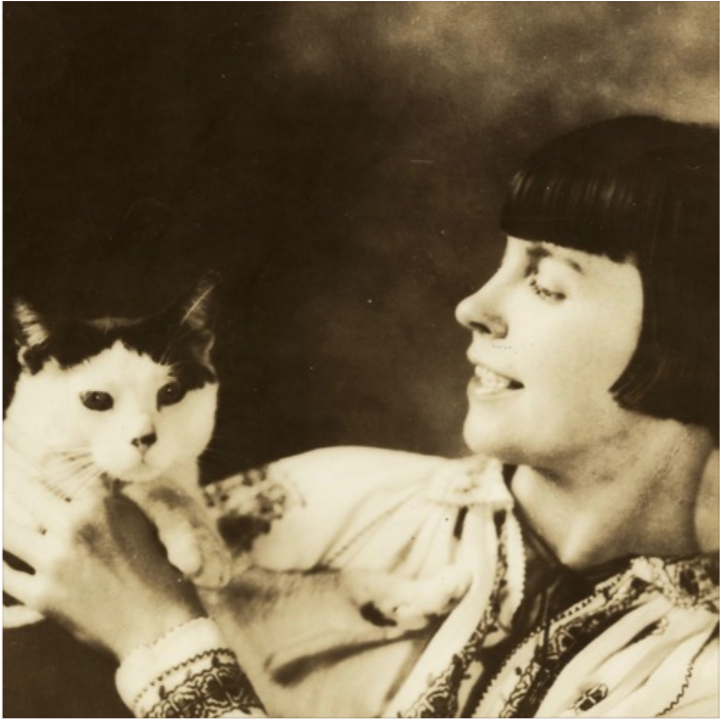
At the age of 15, Wanda Gág watched her father, an admired regional painter, die of tuberculosis before he achieved his goal of wider recognition.
Anton Gág said, on his deathbed, “What Papa was unable to accomplish, Wanda will have to finish,” and his daughter took it to mean she would have to live out his dream. He had taught her to draw before she was three years old, and she vowed to honor his wish.
Yet few could have imagined how brilliantly she would succeed.
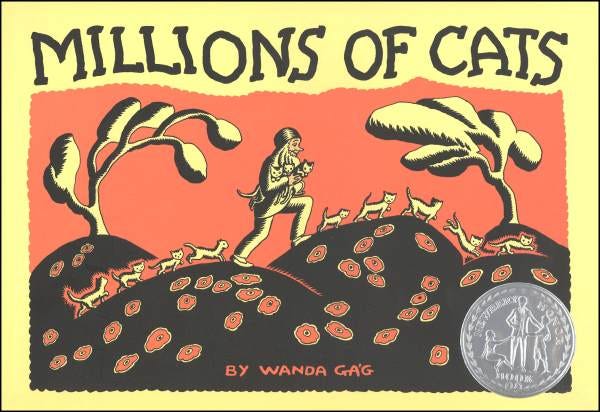
Wanda Gág (1893–1946) was to picture books what Julia Child was to French cooking: the first American star in a field that caught fire in her wake. Like Mastering the Art of French Cooking, Gág’s Millions of Cats became a standard-bearer, the first great children’s picture book born the United States.
One of the most influential U.S. picture book authors of all time
Millions of Cats introduced to its genre the double-page spread, in which a scene moves across the two pages. It made bold use of black-and-white art instead of color, which had ruled picture books since the days of Beatrix Potter. And it melded Gág’s fresh Midwestern spirit with words and illustrations influenced by European folkloric traditions. It is the oldest American picture book still in print in the United States, and nearly a century after it appeared, teachers read it aloud to a new generation on YouTube.
But vast obstacles stood between Gág and the achievements that would make her one of the most influential American picture book authors of all time.
Anton Gág was an immigrant from Bohemia who supported his wife, Lissi, and their seven children by working as photographer and decorative painter in their town of New Ulm, Minnesota. Those jobs added to his meager fine-art earnings but left the family destitute after he died, in 1908, at the age of 48.
Anton’s insurance policy and an $8-a-month welfare payment failed to cover their expenses, and his wife “became an alcoholic after a well-meaning doctor prescribed beer to build up her strength,” Karen Nelson Hoyle writes in Wanda Gág: A Life of Art and Stories.
Her motto was, ‘Draw to Live and Live to Draw’
Young Wanda helped her mother cope by delaying her high school graduation to stay home half days. She brought in money by teaching art to children and making deerskin bookmarks and other items she sold at a local drug store.
By the age of 17 she had found a mission that she noted in her diary: “My Own Motto — Draw to Live and Live to Draw.” She sold her work to a Saturday supplement for the Minneapolis Journal that paid students for their contributions, and in one 18-month period before she graduated from New Ulm High School in 1912, she earned more than $100, an astonishing sum for her day. She also taught in a one-room schoolhouse for a year.
Gág won a scholarship to the Art Students League in New York City for further study. But a second tragedy had struck the family. Her mother died of pneumonia in 1917 leaving her children destitute. In order to help support herself and her siblings after she moved to New York, Gág painted lamp shades and worked on ads for a department store. For years she had seen male artists fare better, and, at the age of 22, she wrote to an acquaintance:
“I have more courage and self-assurance than many a man, and yet I am treated as mere wisp of femininity….I shall not rest until men are willing, and glad, to regard me as important as they (and with my hair hanging down my back in curls if I choose!)”
She later wrote to a childhood friend that “I cannot bear to be placed below men” and that she preferred to stand “shoulder to shoulder” with them.
Whatever biases existed against women, Gág worked to transcend them. After leaving the Art Students League, she pursued entwined careers as a fine-art printmaker and author and illustrator of children’s books.
New York publishers at first rejected the children’s stories she hoped to sell. But a breakthrough came in her early 30s when she had one-woman show at Weyhe Gallery in New York, an important showcase for her drawings, lithographs, and watercolors. An editor at the new publishing firm of Coward McCann saw her work and asked her to do a picture book.
That book, Millions of Cats, came out in 1928 and had immediate success.
One rave came from the most powerful librarian of the era, Anne Carroll Moore, a children’s literature specialist for the New York Public Library and a reviewer for the New York Herald Tribune. Millions of Cats, she said, was “a book of universal interest to children living anywhere in the world” and “sure of a place among early American children’s books of the future.”
The next year it was a finalist for the Newbery Award, the first of Gág’s many major honors, and its sales stayed strong during the Depression. A Coward McCann executive calculated decade after its publication “that Millions of Cats had sold more than two copies per hour for every hour every business hour that the company had been in business.” Gág sent fans a fact sheet that told how to pronounce her name: “to rhyme with jog, not bag please!”
What made ‘Millions of Cats’ a classic
Gág’s masterpiece is so unassuming by today’s measures that if you came across it on a library shelf, you might overlook it.
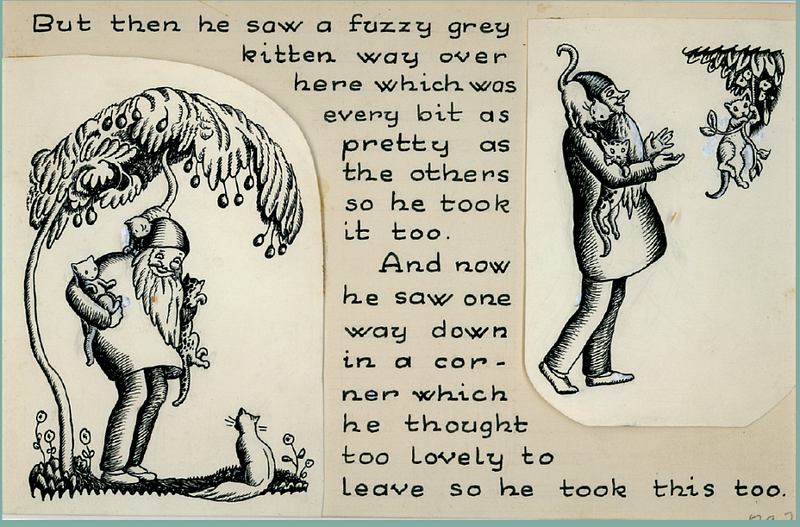
Except for the cover, all of the illustrations are black-and-white. The book is relatively small, just over half the size of a typical book by leading artists like David Wiesner and Chris Van Allsburg, with a horizontal format. It has only two human characters — an old man and woman with no children — who might have stepped out of the story of Abraham and Sarah.
But Millions of Cats combines love and tenderness with powerful themes. They include the human longing for companionship and struggle to survive in the natural world, and it does so in a story 3- and 4-year-olds can understand.
The old woman believes a cat would ease the couple’s loneliness, and her husband sets out to find one. But each cat he sees is so pretty, he can’t resist any of them. He goes home followed by what looks like a feline peace march.
The horde of inspires the refrain:
Cats here, cats there,
Cats and kittens everywhere,
Hundreds of cats,
Thousands of cats,
Millions and billions and trillions of cats.
The old man and woman can’t keep them all, so the cats fight to survive, except for a frightened and “very homely little cat” that others see as no threat and ignore. That is the cat that the couple come to see as the “the most beautiful cat in the world.”
Gág tells this story in bold pen-and-ink lithographs that flow across gutters and move the story forward in waves instead of boxes that can make a book look flat or inert. Many details recall both folktales or her Bohemian ancestry — a kerchief, a tunic, a tidy fieldstone cottage encircled by flowers. The humor comes not from visual gags but believable emotions, such as the old man’s astonishment on seeing the “millions of cats” for the first time.
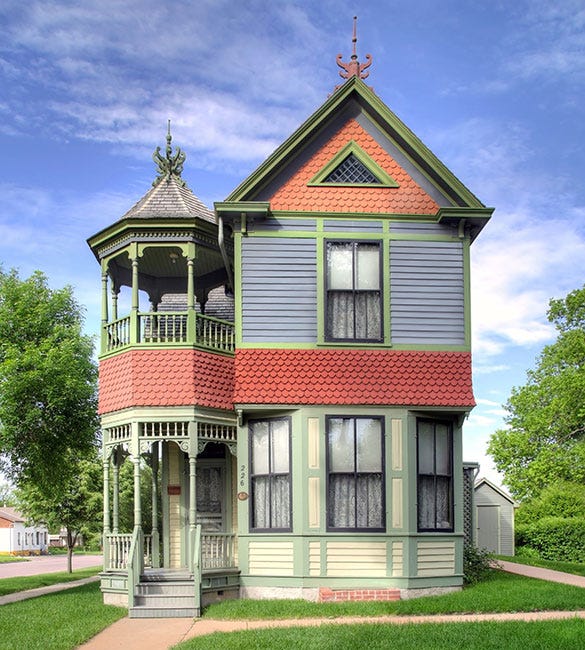
Gág didn’t marry until she was 50
Gág went on to write other admired picture books, including The ABC Bunny and Nothing at All, and did her own translations for her Snow White and The Seven Dwarfs and collections of Grimms’ fairy tales. She reflected on her childhood in Growing Pains. All through life, she experimented with new themes and techniques. By 1940 her art was on exhibit somewhere in America almost every week, biographer Hoyle writes.
Gág kept writing during World War II, when war rules limited paper use and the conflict took a psychological and practical toll. For two decades, she lived with her male companion, Earle Humphreys, whom she married when she was 50 and only then because he risked losing his job because some saw their unlicensed cohabitation as morally degenerate.
In early 1945, after exploratory surgery, Gág was diagnosed with lung cancer. She wrote at All Creation, a rural New Jersey retreat where she lived for the last 20 years of her life.
“She lay on a couch with notebook in hand, alternating between translating the Grimm fairy tales and writing her childhood reminiscences,” Hoyle writes.
Gág died of lung cancer, at the age of 53, in 1946. By then many of the world’s most important libraries and museums had acquired her work, among them the Metropolitan Museum of Art, the British Museum, and the Bibliothèque Nationale. She was a four-time runner up for the Caldecott or Newbery medal, though the top prize for each eluded her.
But perhaps the clearest sign of her influence lies in the other artists she inspired, including Maurice Sendak, the author of Where the Wild Things Are. Years after her death, Sendak answered immediately when a leading children’s book editor asked him, in an interview, if children’s books were better in the past. Yes, he said, “there was Wanda Gág.”
Partial list of sources:
Gág, Wanda. Millions of Cats. New York: Coward, McCann & Geohegan, 1928, and Puffin Books
Hoyle, Karen Nelson. Wanda Gág: A Life of Art and Stories. Minneapolis, Minn.: University of Minnesota Press, 2009. Originally published in 1994 by Twayne Publishers.
Sutherland, Zena, and Arbuthnot, May Hill. Children and Books: Seventh Edition. Glenview, Ill.: Scott, Foresman & Co., 1986.
Unsigned. “Wanda Gag, Noted As Illustrator, 53. Author Also of Children’s Books Is Dead. Her Work In Many Museums Here And Abroad,” The New York Times, June 28, 1946.
Sendak, Maurice. Caldecott & Co.: Notes on Books & Pictures. New York: Farrar, Straus & Giroux, 1988.
Wanda Gág House: Historic Home and Museum, New Ulm, Minn. http://www.wandagaghouse.org/about/the-wanda-gag-house/
@janiceharayda is an award-winning journalist whose work has appeared in many major media. She is a former book editor of the Plain Dealer in Cleveland.
You might like some of my other stories about classic picture books.


