
The Writer I Want To Be
I’d returned to Missouri full of purpose and conviction, convinced the new novel would be successful.
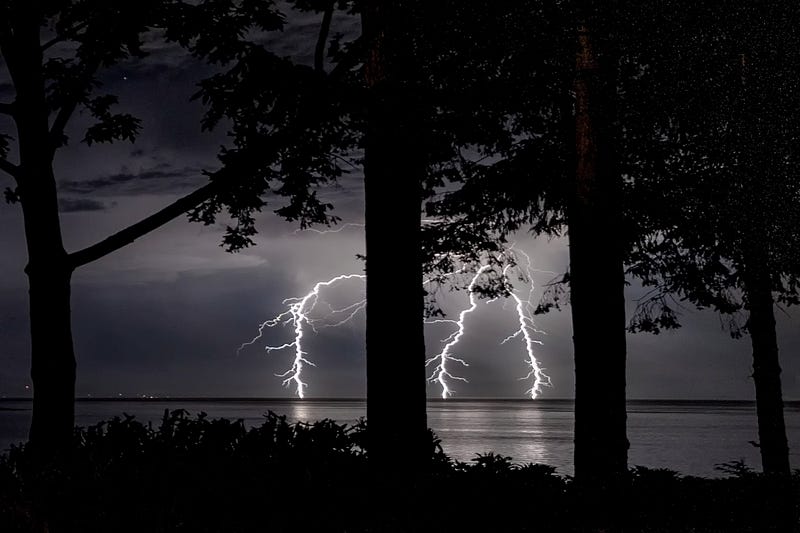
Before I left for San Francisco, I had worked on the foundation and completed the story framework. I figure another three months will be sufficient to complete the first draft.
Three months later.
Okay, I haven’t progressed beyond the first chapter. I can’t even make the excuse of having writer’s block, not being short on ideas — and truth be told, I have so many ideas I cannot decide the best direction in which to proceed.
I’ve been sitting in the park of writing tranquility, you know how it is, but I cannot stop spinning different ways to take the story. I completed the storyboard, and now it feels like procrastination.
I’d have gotten out of my damned chair a year ago, put on a jacket, and taken a walk along the beach with the dogs.
A year ago, I wasn’t living in Missouri. There’s no sniff of a trawlerman, only relatives of Jesse James.
I’ve tried shaking myself out of it. I need to go out and find a distraction, then return to the story later. The only reservation I have is to do with the weather outside. Jesus, Heaven, and Earth, the study windows are rattling against the strength of the wind and the noise of clattering hail.
I pull on a rainproof anorak and head out into the elements. It is something after nine in the evening; it is still ninety degrees as a flash of lightning silhouettes my surroundings, and the resulting clap of thunder shakes my bones. I don’t care if bloody Thor stands between the pub and me. I’m getting a damn whisky.
When I enter, the place is heaving. A girl in her twenties, wearing shorts, braless under a tight t-shirt, rides a mechanical bull, and whatever the air conditioner is doing, it isn’t cooling off the guys watching her.
In the far corner of the bar, a band of Stetson-wearing musicians is destroying a rendering of Metallica’s Master of the Puppets.
I pull off my anorak, saturated, holding it in my hand as I look up the bar for an empty seat, but there is little hope of that at this time of the evening. I lean between a couple of guys, red-neck Missourians, both in their thirties, one wearing an Ultra MAGA t-shirt, and call out for a Guinness.
The woman behind the bar acknowledges my order and proceeds to ruin the beer, not pausing to allow the bubbles to sink to the bottom of the glass and then return to the top before topping up. There’s no point in explaining the right way to pull a draft Guinness. When she brings it, there’s been more cream on a child’s lip.
You can teach a bar person to pull a good Guinness; it takes 119.53 seconds to settle. Not 119 seconds. But this is Missouri.
When the girl brings it, I add, “I’ll have a double Macallan chaser, please.”
The girl looks along the bottles of liquor on the shelf.
“Just give me a moment, I’ll check with the manager,” she says.
On her return, she tells me they only have a Double Cask 15 Years Old, kept on the restaurant side.
“$80 a shot,” she says.
“I would like a double,” please.
The word ‘double’ seems to perk up the ears of the two guys next to me. I pay for my drinks.
“Did your wife leave you?” One red neck asks, grinning.
“Not yet,” I reply, carrying my drinks away.
Some writers might work better with a mountain view to feel inspired or an unencumbered view of the ocean; others like ice cream, female authors, I’m reliably told, like retail shopping. I drink whisky.
It is then I notice a vacant stool farther along the bar. There’s no half-full glass on the counter, suggesting a person will be returning. There is, however, a book lying face down.
I inquire if the stool is empty and receive a typical Missouri response, a rise of the shoulders. I place my drinks on the bar, willing to offer the seat up shall someone return to claim the book place and hang my anorak from a hook underneath the bar counter.
People do it everywhere, bars, beaches, pool sides; it annoys the shit out of me; leave a book, a towel, or a half-eaten sandwich to save what they consider is ‘their’ space in the world. Five minutes go by; I feel certain no one is returning.
The book’s cover draws my attention; although badly faded and torn, it pictures a fishing village flooded by what I assume is an onrushing tsunami. Fishing vessels are submerged, masts showing above water, debris floating, and standing alone on a cliff above the tragic scene is a woman wearing black. Her long dark hair, fanned by the wind, hides her face.
On my left, a woman, fiftyish, holds a Margarita and talks to a female companion. Something about the freezing of a woman’s eggs.
“You do know the women that do this probably only use one egg? The others are mass murdered,” she says to her friend.
On my right, a guy is gambling on his iPad. His hands are filthy, and he smells of new rubber.
I have yet to touch the book, fearing it might disintegrate if I pick it up. Fuck it, I think; no one is returning. I pick up the book. The cover art piques my curiosity.
Studying the picture, it is a story set close to the ocean. A village, which, looking at the cover, has been destroyed by what I assume is a tsunami. It also pictures, standing on the cliff, overlooking the scene, a woman wearing black, her hair fanned by the wind and hiding her face.
I glance inside, and within six pages, I’m enthralled.
I gasp down whisky, leaving the Guinness, and grab my anorak, placing the book inside the front pocket.
On the walk home, I surmise that if Noah is going to build a second Ark, tonight might be an excellent time to start. The double shot of whisky glows on my cheeks so much that they feel warm to the touch.
As I walk, I’m thinking about the heroine of the book. It is precisely on this kind of night she appears, stormy, sharpened by the lightning, as if sinister but desperate.
I brew some tea at home and pull a handful of Fig Newtons from the jar before sitting at the kitchen table. Water drips from my clothing onto the tiles, but the waterproof pocket has kept the book dry. I lay it on the table.
I pull my clothes off in the kitchen and run up the stairs butt naked. The hot water runs off me, but the humidity is so bad I can hardly dry myself. I pull on some boxers, return to the kitchen, and stuff my wet clothes into the washer, which I’ve yet to learn how to operate. Fuck it; Jenny will be home in a day or two. I feel happy she is not flying into St. Louis tonight.
I pour my tea, grab the book, and take it to my study.
Hail is still hammering relentlessly on the panes.
I sit in my chair, put my tea down, and open the book to page seven. I pause and put my nose to the page. Yes, it is the source of the odor permeating the room. Fresh seaweed, even though I’m aware this is impossible. Unless, perchance, a previous reader had infected its pages, read this same book while sailing the Atlantic, or maybe sat on the rocks on the coast of Maine, waves crashing and spraying mist onto its open pages.
Common sense calls it stupidity. Does the wind drive smell from the ocean into the Midwest? Impossible! Ocean smells cannot reach into this Maga saturated wasteland.
I continue, fifty pages more. Again, I feel great empathy for the heroine as I’m led down the pages by this captivating author.
I pause and check the cover for the author’s name. It is missing. I suspect it was on the bottom of the fly cover. Two letters are left visible. Ko…. I feel cheated and check inside the leaf. Thank God, here I find it. Kori McDermott.
The heroine’s name is Elizebeth Montgomery, but she is called Beth in the book. At seventeen, she falls in love with a boy, Arthur, the son of the village fisherman. Arthur is an unassuming lad, not gifted with conversation but kind enough.
I feel deeply connected to this character, especially when I read how four school ruffians pile fists flying into one of his friends. So naturally, Arthur jumps into the fray, taking several blows. But brave as he is, Arthur has bitten off more than he can chew.
Moments later, from out of nowhere, Beth joins in, pushing one ruffian to the ground, and pinning his arms at his side.
“You’ll have to grow up if you want to fight me, Barry West, and build yourself some muscles,” Beth warns the boy, “you look a little fragile to be fighting,” she mocks. The crying boy’s face is getting redder and redder.
With one less ruffian for Arthur and his friend to battle, they overcome the three other boys, sending them running off.
“Hell, you’re strong,” Arthur tells Beth.
“Yeh, thanks, Beth,” says Joe, his arm around Arthur’s shoulders.
Beth smiles, tasting a little blood on her lip, and releases the bumbling Barry West from her grip.
Arthur is fourteen, not overly handsome, but enough, with unruly dark hair and broody eyes.
From page fifty on, I know I’m reading a love story.
Page 201: 3 years later.
Beth is riding two miles away from where the sea has broken through the village’s meager defenses and rides with fury. When she arrives, the town is underwater, and Arthur is missing.
While reading this paragraph, I feel how damp my hands have become — I’m so engrossed in the book when I realize there is no end, as all further pages are missing.
I feel cheated. I’m never going to find out whether Beth saves Arthur.
Holy shit, wetness is seeping from between the covers of the book. No, wait. Jesus Christ, the book’s pages are dissolving.
Look, I’m a writer; I get it. Is it simply that my imagination is spiraling out of control? But this writer, my God, what a talent. I think back to page one hundred and fifty, the wedding in the garden, Beth wiping teardrops from her eyes, late September, petals on the ground, standing there, a creature in rapture.
Next to her, Arthur, the Lord’s light shining on his countenance, a young man with eternal summers left to love her, fingers touching her cheeks so lightly, just the two of them and nature, in the garden with the Father, and the Son, and the Holy Ghost.
I read this, feeling what Arthur felt, a marriage for which the birds hushed, and Beth tells him he is her own. In the garden, dew on the roses, and their melody felt like something I always wanted to write. So beautiful, soft as a breeze, and I feel a shiver down my neck and spine; I’m in a childlike trance, feel the tears run down my cheeks.
I was thinking about all those summary words and the writer writing them. Me, ha, what a hope. I’m a brute in daylight. A couple of days ago, I was with friends in California, and I was like a big child, loving them, but without subtlety, not a breeze of passion, but a man with big feet on the stairs.
I wanted to tell them how much I love them, silly almost, to the point I could only make fun. Yet I felt so sad that my friends will never see through me, know me, feel the way I feel for them because my words always fall short, empty, queued up but never leaving. It is all bravado because this is who I am, the writer I am, and oh, how I want to be the writer of loves, the seer, and the poet, occasionally ablaze with passion, half asleep on the banks of the Petaluma River on a golden day, waiting…
I look again at the last page, half missing and a hundred more after it. This infuriatingly incomplete book is breaking my heart.
Fuck it! I’m going to write the last page.
Beth calls to Arthur from the cliff; you are not dead, Arthur, only wrapped in silence. I will walk to Tír na nÓg, my love, your fire burning in my heart, and I will recognize your chin, see into your eyes again. I will come from another lifetime, on a golden autumn day, stand in a garden wet with rain, and pray to our Father that He will let me be with you.
I will come on a day when a storm is raging, but we will be on another road, quiet and still, going home to the sea because I’m here and I’m coming for you, do you hear me?
And standing on the cliff, Beth looks over the devastation and, stepping forward, she mumbles, “It will never do for me to come to life again without you.”
The Following Day
I didn’t even know her, but she had a full, attractive face, and long dark hair, and beneath her tight yellow t-shirt and blue jeans, she had the figure of the century.
I stood in line for coffee, having a slight headache from the night before.
“Grande Latte, non-fat, extra hot, for Harry.”
I picked up my drink and looked around for a table. All were occupied.
“This chair is free,” said the woman wearing a tight yellow t-shirt.
“That’s kind, thank you,” I said.
I sat down and brought out the book I’d found at the bar. I wanted to read several passages again.
“That’s a coincidence,” the woman said. “That is my favorite author.”
“Really, you know her?”
“Let’s just say I love everything she writes.”
“Have you read this book?”
“Yes, her best, in my opinion. But that doesn’t really mean anything, she only wrote one book. It was reported that she had started a second, but it was never finished.”
“She did? I found this book… half book; it was left on a bar in a pub. It appeared to have been left behind, I took it with me. I could have handed it to the girl at the counter, but I didn’t, instead I slipped out with it.”
“Last night was a terrible night, a great storm,” she said.
“Yes, but I’d got stuck, I’m a novelist, too. I got fed up, frustrated, and walked down to the pub in Wildwood. Yes, I was saturated.”
Her gaze became intense. “What you needed was a distraction.”
I don’t know why; I knew instinctively that wasn’t a guess. There was something in the way she’d said that. It set my nerve ends twitching. I didn’t know this woman and yet…anyway, I continued on with my story.
“At home, reading it, the pages seemed alive — it was faded, old — and when I started turning the pages, they smelled of seaweed, and then the pages became wet. But the worst thing was, the end pages were missing. I never knew the ending,” I said, throwing my hands in the air.
“What a strange experience,” the woman said, “what is the book called?”
At that second, I had another thought, and shook my head, believing I’d released the world’s greatest secret. “I’m sorry, I should never have said anything. I’m not normally so verbose.”
“It doesn’t matter,” she said.
I sighed, knowing that it did matter, and then quietly, I revealed the title:
“When the Tide Gives Back.”
“But you don’t know if the tide did give back?”
“I do know the two came back together,” I said. “I was again, frustrated. I wrote the end myself. Just for me, of course. I didn’t want it to be a mystery for the rest of my life.”
“What did you write?”
“Oh, some imaginative thing. You’d have to be a writer to understand.”
“Well, I hope you gave them a happy ending…?
“Harry, my name is Harry.”
The woman shook my hand, “I must be off, Harry,” she said.
“Goodbye…?”
“Kori,” she said, turning away.
“But this boo….” I looked at the table, flooded with water.


