
HISTORY
The Worst Year to be Alive in Human History [What Happened In 536AD?]
Death, destruction, and misery in biblical proportions
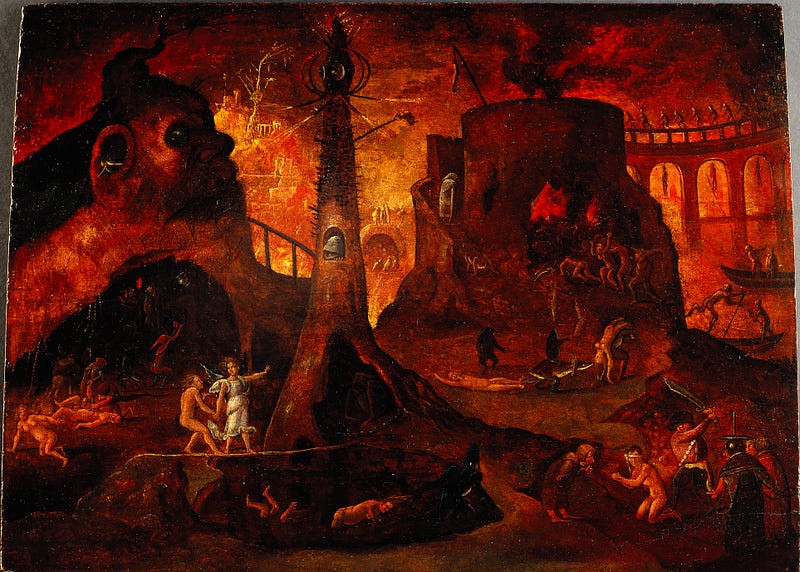
Planet Earth is a sanctuary for life in a presumably empty universe. On this relatively small rock is the entirety of all known life. Home to all manner of creatures to thrive in. Yet this seemingly perfect planet has a sinister secret up her sleeve. At any moment she can destroy all the life here. Weather, disease, and famine are just three deadly weapons in her infinite arsenal.
This is something that the Earth inhabitants of 536AD knew all about. They lived in a time period that scientists, archaeologists, and historians all unanimously believe to be the worst time to be alive.
What Was Life Like Before 536AD?
The year of 536AD sits at the beginning of the Early Middle Ages, better known as the Dark Ages. The Dark Ages ran from around 476AD to 1000AD. The time period gained its less than flattering name because of the Italian scholar Francesco Petrarch. In the 1300s, he dubbed the era the Dark Ages due to the lack of good quality Latin literature available at the time.
It’s also worth noting that during this period of time, the world was without any western Roman Empire and all the culture, creation, and romance associated with the Roman people were lacking in the western world. Although the Empire lived on further towards the east, with its heart centred in the ancient city of Constantinople, where it thrived and became the epicentre of Mediterranean culture. Nonetheless, Rome was gone.
6th century Britain remained mostly wild and untamed. The Romans left the natives around 408AD. They left behind loosely defined kingdoms led by chieftains. Without the Roman army, the native peoples were left to defend the island from invading forces, most notably the Saxons, a tribe of Germanic people who came in significant numbers during the period.
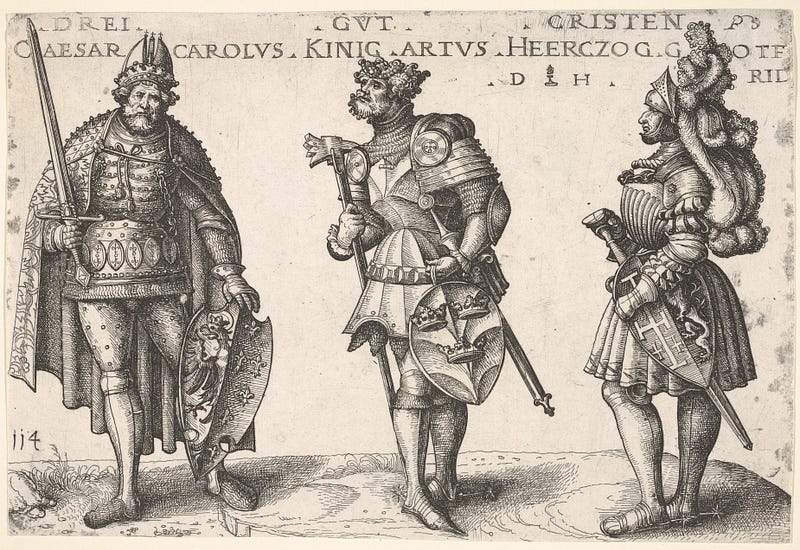
The 5th and 6th centuries also played host to the legend of the infamous King Arthur and his Camelot with its mystical Round Table. Whether he or his Camelot actually existed will probably never be definitively proven or unproven. Perhaps King Arthur is a representation of multiple leaders who led the people of the time, or maybe he was a great warrior helping to hold off the Saxon invasions. Either way, his legend helped to define the era.
Further south, the Spanish and Portuguese of the Iberian peninsula inhabited an area then known as Hispania. They too also experienced relative instability following the departure of the Roman occupiers. As German tribes (Visigoths, Vandals, and Suebi) took control of the area and the Iberos peoples who lived there.
In Asia, the religion of Islam is yet to be formed (it begins in the 7th century), the region is shaped by thousands of years of Hinduism and hundreds of years of Buddhism. Sikhism too is yet to come into existence.
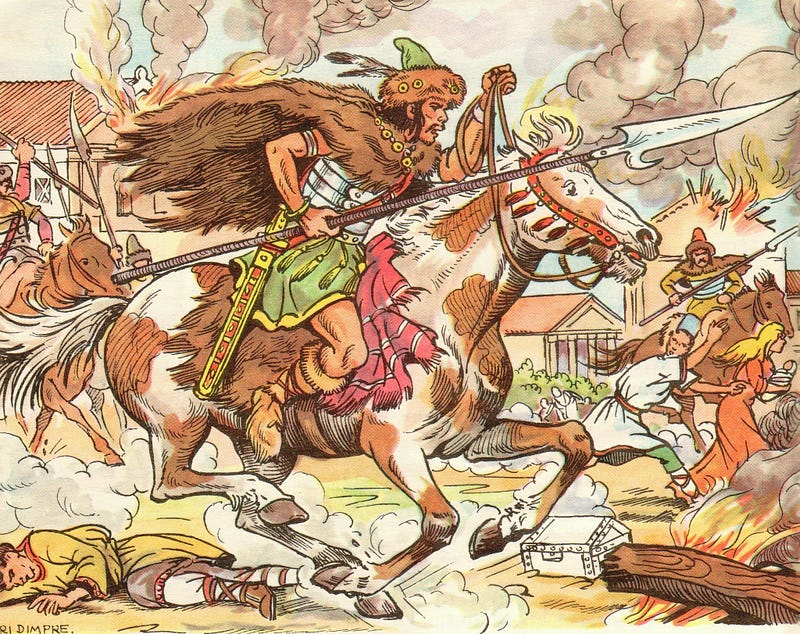
Throughout both the 4th and 5th centuries, the Huns gained their fearsome reputations as brutal warriors. A reputation achieved through years of plundering in Europe. They were master horsemen and even reported to sleep on their steeds. The Huns Empire breaks down just before the 6th century.
China is divided into dynasties and in the south, the Liang Dynasty rules. It is a relatively prosperous time for the South Chinese people. Emperor Wu rules from 502Ad to 549AD and he is a devout Buddhist, with a love of art. In northern China, the situation is far less stable. The Wei Empire breaks down, and the land was further divided into eastern and western factions.
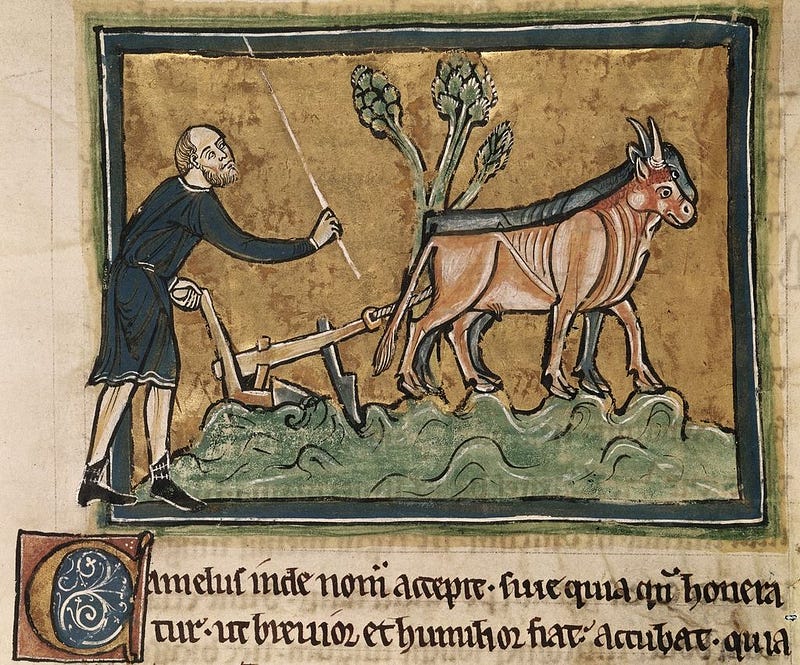
Inventions and technological advances of the time include the heavy plough, which was first introduced in Asia around 200AD. By the 5th century, the use of the heavy plough was widespread throughout Europe. Prior to its introduction, farmers used much more rudimentary equipment to plough their fields, which was essentially a pointy stick led by an animal to carve a shallow well in the dirt. This worked well enough for loose and light soil, but was less suitable for thick and dense dirt. The introduction of the heavy plough helped farmers to be more productive and increase their crop yields.
By the 5th century, water mills were widespread throughout the world. Although they were first introduced by the Ancient Greeks much earlier. The increased use of water mills allowed people to harness the power of water and increase production in many areas, including forges, furnaces, tanneries, and grain milling.
What Happened In The Year Of 536AD?
536AD was the year that everything changed and humanity risked total extinction, but what really happened?
It all started in the far and remote islands of Indonesia, around Java and Sumatra. These islands have an ominous beast living amongst them. That beast is the terrifyingly huge volcano known as Krakatoa.
In the year of 536AD, Krakatoa put out an eruption of epic proportions. An eruption that is likely to have been the most powerful that humanity has witnessed in our entire history. In fact, it could be hundreds of times larger than anything we have ever seen before.
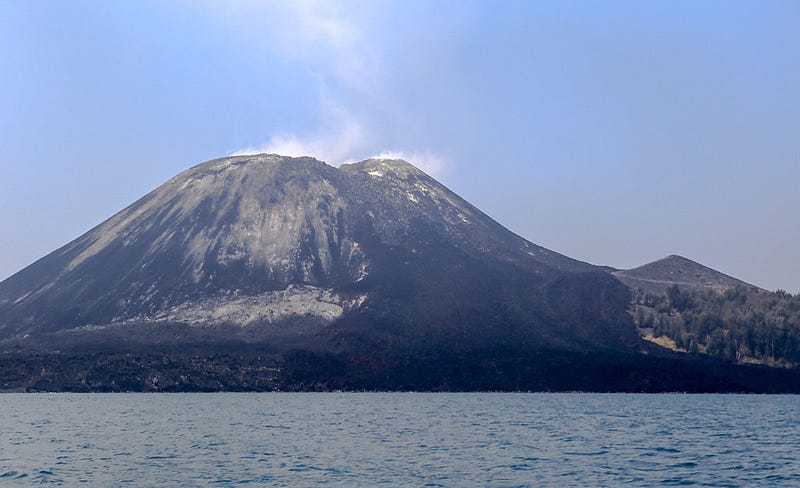
The eruption had an estimated equivalence power of around 2000 Million Hiroshima atom bombs. The initial explosion would have blown apart the land, sending molten rock and ash up into the sky in a column 30 miles high. All followed by volcanic ash which flooded the sky and blocked out the sun for almost two years and sent the climate into turmoil.
Ancient manuscripts from China detail a mighty climatic event, describing thunder, lightning, shaking, and darkness, which is then followed by a great flood. The Chinese record also states that following this flood, the island of Java had split into two and the island of Sumatra was born.
This incredible eruption devastated the planet and climate for decades to follow. The people of the time experienced famine, darkness, and drought for years.
The eruption led to a short-lived ice age. The Late Antique Little Ice Age began in 536AD and lasted for over one hundred years. An ice age so severe that further ancient Chinese texts depict snow falling in the summer months.
As if the eruption had not caused the population enough turmoil, they received more hardship and death from the first recorded Bubonic Plague pandemic. The disease is thought to have originated in Egypt and then spread its way to the Byzantine Empire, eventually affecting Asia, Europe, and Africa. The Bubonic Plague was spread by rats and the pandemic lasted for almost a decade.
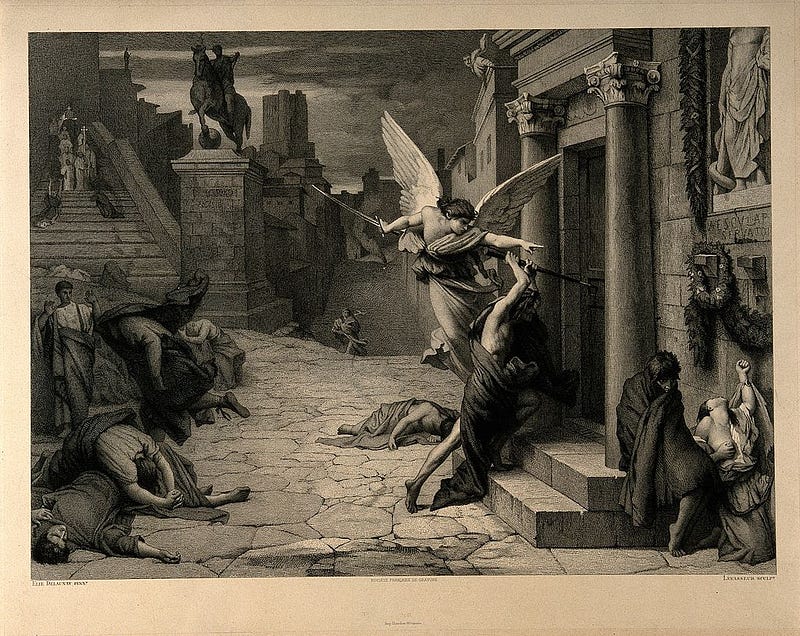
The toil of the 6th-century inhabitants continued to mount. They faced death from starvation and disease, but also a more familiar enemy, war. As if the people weren’t already facing a bad enough situation, their problems were compounded by wars that raged worldwide. The Byzantine Empire and the Ostrogothic Kingdom (modern-day Italy) go to war. Following the initial successful advance by the Byzantines, they begin the month-long Siege of Naples. By winter, the Byzantines had taken control of Rome.
The two enemy empires fight in Dalmatia (modern-day Croatia), and the Ostrogoths are victorious.
In Africa, there is a mutiny in the city of Carthage against Solomon.
War was everywhere, and the apparent climatic cataclysm did nothing to deter them.
At the time, the historian Procopius wrote,
Men were free neither from war nor pestilence nor any other thing leading to death.
The culmination of famine, flood, plague, and war killed approximately half the population of the world.
What Scientific And Historical Evidence Is There For A Catastrophe In 536AD?
So how do we know 536AD was so awful?
The evidence is everywhere.
Take trees, for instance. A cross-section of any tree will reveal a beautiful ring pattern within. A pattern that is the result of new bark forming. Each ring can be associated with a particular year. Think of it as a window into the past, giving researchers and scientists a snapshot of the weather conditions of the past.
If the weather was good, the rings would be wide, but if the weather was poor, then the rings would be narrower.
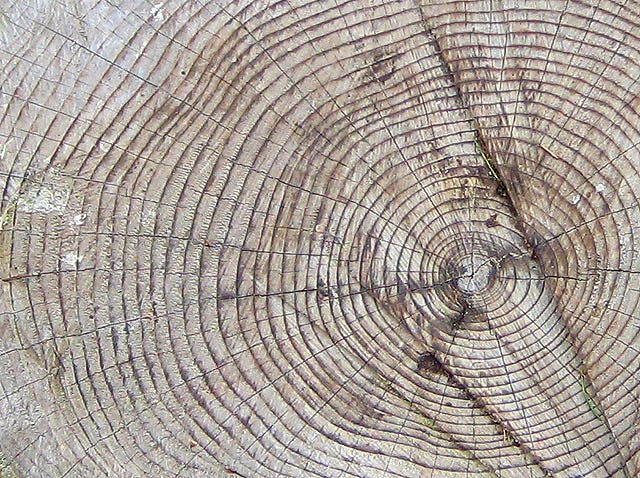
The interesting thing about the historical record from the 6th century is that any sample that you look at, anywhere in the world, from any species of tree will reveal very narrow rings for the years post 535AD. This shows very little to no tree growth worldwide.
The record clearly shows us that awful conditions were present during these years. In fact, Fox Tail Pine tree rings for California show us that these trees experienced their worst growth and conditions for over 2000 years. These poor conditions were in no way limited to just one year. Instead, these difficult conditions appear to have continued for multiple years.
This significant reduction in tree growth can be witnessed in the tree ring record all around the world, from the Americas (north and south) to Europe and Asia. This widespread stunt in growth serves as evidence of a global and hard-hitting cause.
The tree samples tell us more than merely an indication of an environmental problem. They reveal the cause of the hardship, cold; the planet was too cold.
We know that the summers of this time period were not summers at all. The trees experienced frost in the summer months, just as they did in the winter.
More evidence can be found in ice core samples from the Arctic and Antarctic. Samples from the year (and years that followed) show extremely high levels of sulphuric acid, which is indicative of a volcanic eruption.
This ice core evidence further proves that the volcanic eruption impacted the entire planet, as evidence of the eruption is available at both poles.
People recorded the disaster too. Many scholars of the time described the sun as being blocked out from the sky for 18 months. Scholars from different regions described this almost two-year-long dimming of the sun.
One such account comes from John of Ephesus (a Syrian Bishop), who witnessed the unusual weather. He described 18 months of darkness where the sun only shone for around four hours each day, but the four hours of light they did receive is what he described as a ‘feeble shadow’. He spoke of the opinions and worries of the people around him. Many believed the sun would never return to full strength again.
John of Ephesus witnessed this darkness from the city of Constantinople, over 5000 miles away from Krakatoa.
Cassiodorus, an Italian monk and politician, also witnessed the darkness during the same time period and recorded his encounters. He writes of the troubles they faced producing crops with such a mild summer and a lack of rain. Cassiodorus wrote “the seasons seem to be all jumbled up together” and revealed that people were unable to see their own shadows, even at mid-day because the light from the sun was so limited. He describes the light from the sun as more blue in colour.
Other first-hand accounts can be found in Asia. The Great King of Japan, Emperor Kinmei, described famine and food shortages in 540AD. In China, they recorded ‘yellow dust’ raining down which could be ‘scooped up in handfuls’.
For there to be such widespread darkness throughout the world, there can only be three potential culprits: an asteroid, comet or volcano. Only these three causes can lead to such enormous quantities of ash and/or dust to be in the atmosphere.
How Can We Rule Out An Asteroid Or Comet As The Cause Of The 536AD Climate Catastrophe?
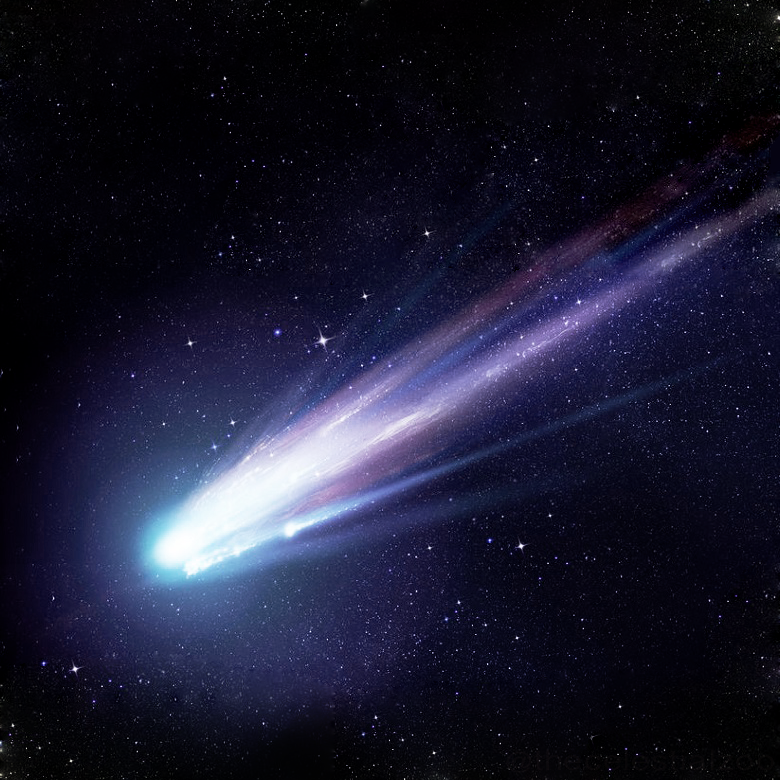
If an asteroid, comet or volcano could have caused the climate disaster of 536AD, why are we so sure that it was a volcano?
Here’s why:
For an asteroid to cause two years of darkness, then it would have been an asteroid around 4km wide to affect the planet in such a devastating way. If it was a comet, then it would have needed to be even bigger (because comets are less dense and made mostly from gas and ice) with a width of around 6km.
A comet or asteroid of such a colossal size would be visible to the naked eye for around two days before impact. Initially, it would resemble a star, but as the hours went by, it would gradually appear bigger and bigger until it was the largest thing in the sky. Then it would enter the Earth’s atmosphere and look like a fireball hurling through the sky at unimaginable speed (around 20x the speed of sound).
It’s fairly safe to assume that someone would have noticed such a significant event and recorded it, and there is no record.
Furthermore, there would be a large impact crater left behind (like there is for the asteroid 65 million years ago, which wiped out the dinosaurs) and there is not.
If the impact occurred in one of the oceans, then a tidal wave hundreds of metres tall would have formed, which would have travelled many miles inland. Again, you would expect to see a mention of such a significant disturbance in the historical record and there is not.
How Do We Know It Was Kratakoa That Erupted In 536AD And Not Another Volcano?
At this point, there is little room for skeptics to argue that the 536 climate disaster was caused by anything other than a volcano, but how do we know it’s Krakatoa?
The previously discussed Chinese records point towards Kratatoa being the culprit as people witnessed the damage to the island.
The ice core samples identify Krakatoa as being an ideal candidate for the eruption too. This is because the high sulphuric acid levels found at both poles are evidence of widespread ash clouds stretching right across the planet. For the sulphuric acid to be so abundant in the north and the south, the eruption must have taken place near the equator so that the equatorial winds could then distribute the toxic air. No other wind system is capable of this sort of distribution.
This further suggests that Krakatoa was responsible for the climate disaster of the era.
Final Thoughts
Looking back at the 6th century is hard, the pain and suffering are almost unimaginable. Living in a dark world for months on end, with no understanding of the cause, would feel entirely apocalyptic. The lives of every person were affected, rich or poor, man, woman or child. You could not avoid the hellish reality of the world around you. Nor did you have any way to determine when the nightmare would finally be over. All you could do is bear it the best you could, for as long as you could.
If you enjoyed this article and you are not yet a Medium member, then consider signing up through the link below. You will gain unlimited access to all the articles here from thousands of writers.
SOURCES:
history of technology — From the Middle Ages to 1750 | Britannica
Cassiodorus | historian, statesman, and monk | Britannica


