The Worst of Both Worlds
What headphones and smartphones have done to our auditory experience
For a while during the pandemic, I did my grocery shopping on Saturday nights to avoid the crowds.
I found that Saturday-night shoppers, especially at the height of COVID, behaved differently from the people I was used to seeing at the store on pre-pandemic weekend mornings. The store had a grim, lonely vibe — there was no chitchat in the aisles, not even much eye contact, really. Everybody was on a mission, determined to get in and get out of the place as quickly as possible.
One thing I found interesting about my fellow Saturday-night shoppers: a majority of them were wearing earbuds or headphones.
This meant that most of the people in the store were in their own little worlds, listening to their own podcasts or music rather than the Sheryl Crow song coming out of the store’s PA system or the words of their fellow shoppers.
And their earbuds and headphones were a signal to the world: I don’t want to interact with you; leave me alone.
We focus a lot on the effects of smartphones on our lives and our society. People worry that their attention spans are being pillaged by apps that are designed to keep them hooked. They complain that their kids never look up from their phones. Almost all of the concern about the effects of smartphones focuses on their visual enticements — the bright colors and fast-moving videos. But what have smartphones’ audio capabilities done to our society and ourselves?
I worry that it’s nothing very good.
The smartphone revolution has enabled two types of audio consumption — one inward-facing, and the other outward-facing. Most of us are now carrying around in our pockets a device capable of either sealing us off from the rest of the world or inflicting our soundscape on everyone else.
Let’s go back to Saturday night at the grocery store.
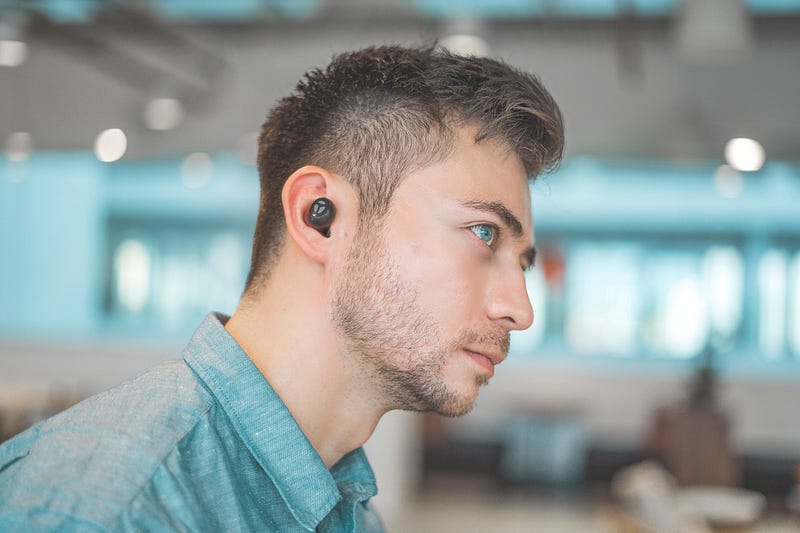
Earbuds and headphones aren’t necessarily bad — as I’ve written before, I quite enjoy my earbuds and often have a podcast playing while I’m doing boring stuff around the house. But the rise of smartphones and earbuds — especially in public — is changing how we interact with one another.
Modern audio equipment is excellent. With your earbuds in, you’re immersed in a rich world of sound, sealed off from reality. I’m often struck by just how different my experience becomes when I am listening to good, loud music on my earbuds, how the whole room — which is perfectly quiet, of course — seems to fill up with sound.
You’ve probably witnessed somebody tunelessly singing along with the song that’s playing into their ears, really feeling the music and convinced that they sound and look awesome, when the reality is anything but. They’re experiencing something very different from the real world around them.
One thing I’ve noticed as an educator is that a larger and larger percentage of the students at my school are walking around all day with earbuds in their ears. Many teens’ default mode is to have at least one ear plugged into their phone at all times; they have to be reminded at the beginning of class to take their earbuds out.
Students often seem irritated that they’re being asked to remove their earbuds. They insist that they’re not listening to anything, and they claim not to understand why I might think it’s rude that they keep one in during class.
This seems to be how they spend most of their waking hours: with at least one ear plugged into their phones, their attention often divided between the people talking to them and the audio being pumped directly into their ears. I’ve noticed that many students begin a conversation with an earbud in, and then tap the earbud to stop their audio after a little while. This means that they’re conducting many of their conversations with fragmented attention, only stopping the music if the conversation becomes important or interesting enough to merit pausing Spotify.
And then there are the kids who walk down the halls with the big headphones — the noise-canceling ones, the ones that are designed to be noticed.
The big headphones, in addition to being excellent audio devices, tend to be a message to the world — “I don’t want to talk. Leave me alone.” That’s why I put them on in my regrettably open-plan office when I really have to get some work done. Many students who wear these around school often won’t take them off when somebody tries to talk to them; they’ll just pull one side of the headphones partway off of their ear. This is a temporary, minimal concession to politeness, but they’re eager to disappear into their own sonic world as soon as the interaction is over.
To be honest, I find being in settings where a large percentage of people are plugged into earbuds or headphones to be pretty discomfiting. Even if I’m unlikely to strike up a conversation with my fellow grocery shoppers, the fact that lots of people are cutting themselves off from the world in this way feels just as dystopian as a room full of people who can’t look up from their phones. It feels like a sign that society is dying.
Earbuds and headphones aren’t the only way that smartphones have changed our soundscape. Since everybody is carrying around a smartphone, they’re also carrying a fairly capable speaker in their pocket. And many people don’t mind broadcasting their chosen sounds to everybody else.
Remember this Apple commercial from a few years ago — the one in which an old man plays music from his phone at a pool and then dives off of the high dive?
I think people had two reactions to that ad. One group thought, “Cool, Apple phones have waterproof speakers now!” Another group thought, “I can’t believe that Apple is promoting sociopathic behavior. What about all the other people at the pool who don’t want to listen to that guy’s music?”
Now that our phones can access an unlimited library of audio and video content at all times and play it out loud at a fairly significant volume, a lot of Americans have no problem inflicting this content on the people around them. They mostly do this on speakers that are loud enough to bother everybody else but not good enough to sound anything but tinny and annoying to anybody who isn’t holding the phone.
There are the people walking around in public having loud, often quite personal conversations on speakerphone rather than holding the phone up to their ear (no, I don’t understand why they do it, either).
There are the people inexplicably listening to their podcasts or music out loud while walking the dog. Ever heard of earbuds, pal?
There are the people watching YouTube videos at full volume in waiting rooms or airplanes. I once sat on a transatlantic flight near an old woman who watched videos on a phone at full volume for the first hour or so of the flight. Palpable unrest and frustration rippled through our part of the cabin as people exchanged frantic glances — were we really going to have to endure nine hours of this lady’s videos? The dirty looks and sighing finally inspired a younger relative to go over to her and persuade her to turn it off, saving us all from the worst flight ever.
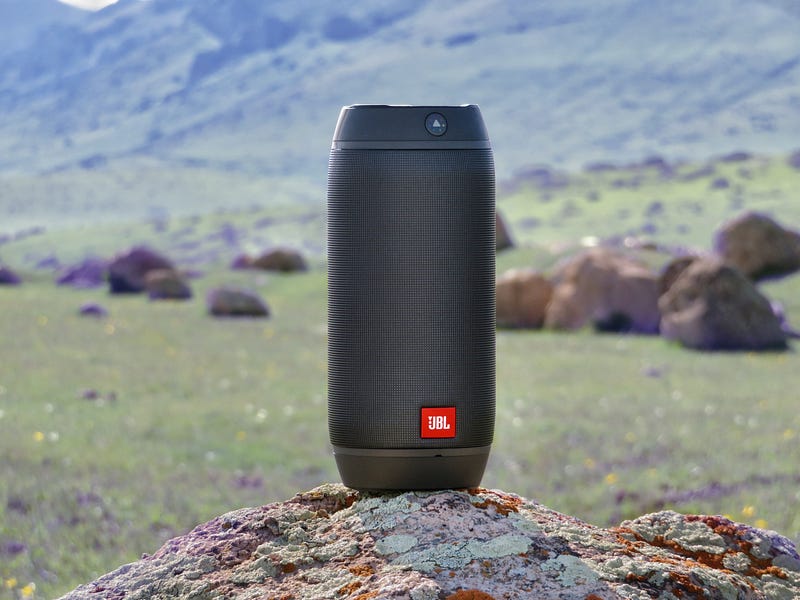
And then there are the people for whom the built-in phone speaker isn’t loud enough. These people take their Bluetooth speakers along with them wherever they go, assuming that everybody else wants to listen to their music — even deep in the forest. Kudos, by the way to the Washington State Department of Natural Resources, for this excellent meme:
All this noise pollutes our already pretty crowded soundscape. It’s quite jarring having to listen to the ’80s hits coming out of the grocery store sound system and both ends of some lady’s FaceTime argument with her husband about which beans to buy. And don’t get me started on the murderous rage I feel when I realize I’m going to have to spend the next half-hour listening to electronica emanating from some other hiker’s backpack.
Just as earbuds allow people to announce that they don’t wish to interact with anyone else, phone speakers allow a small number of inconsiderate people to inflict their sounds on everybody else. Andy Richter (Conan O’Brien’s brilliant sidekick) may be overstating it a little here, but I don’t think he’s too far off:
So we have a world in which some people are using technology to wall themselves off from the world of sound, while others are using it to inject their preferred sounds into the lives of everyone around them. A society in which the only escape from the tinny, obnoxious audio of somebody else’s TikTok feed is to be antisocial in a different way by literally covering your ears, isolating yourself from the world.
Smartphones didn’t start anything new, exactly— we’ve long had earplugs and loud car stereos and boomboxes — but they’ve made it easier for people to alter the auditory experience of the world for either themselves or everyone else with the tap of a screen.
We often talk about the effects of “screen time” — how people don’t look at each other anymore, how they’re constantly scrolling, how they don’t have the attention span to pay attention to the world around them, and how they don’t make real friends. All of these effects are important. But we should pay attention to the ways that our smartphones’ audio capabilities are altering our society, too.
Thanks for reading! If you’d like to receive an email whenever I publish an article, click here. I’d be forever grateful if you consider supporting my writing by buying me a cup of coffee here.