avatarPeggy Jones

Free AI web copilot to create summaries, insights and extended knowledge, download it at here

1988

Abstract

ttps://cdn-images-1.readmedium.com/v2/resize:fit:800/1*BkPE2puKlVDn6E0114XERg.jpeg"><figcaption><b>Fair Use — The Sunflower Quilting Bee at Arles (1991) by Faith Ringgold Courtesy of <a href="https://www.wikiart.org/en/faith-ringgold/the-sunflowers-quilting-bee-at-arles-1996">Wiki Art</a></b></figcaption></figure><p id="7d5c">If you want to see this piece “in person,” you’ll have to wrangle an invitation to Oprah Winfrey’s house. Winfrey commissioned and subsequently bought “The Quilting Bee at Arles” for her private collection.</p><p id="c55c">It features eight historical Black women Winfrey admires — CJ Walker, Sojourner Truth, Ida B. Wells, Fannie Lou Hamer, Harriet Tubman, Rosa Parks, Mary McLeod Bethune and Ella Baker.</p><p id="1dcd" type="7">Time and geography separated these women in real life, but the artist united them on her quilt.</p><p id="bf7f">“The Quilting Bee at Arles” is the fourth in a series of 12 quilt paintings called “The French Collection.” Faith Ringgold, 92, completed them between 1991–1997.</p><p id="a638">They tell the story of a fictional Black girl in the 1920s — “Willa Marie Simone,” 16. She leaves Harlem for Paris to live as an artist and model. In a 1996 print version, Ringgold adds “Willa” to the group of quilters.</p><h2 id="bcc9">Self Portrait by Judith Leyster</h2><figure id="c358"><img src="https://cdn-images-1.readmedium.com/v2/resize:fit:800/1*px9mQhsPtK-rtehwxPvR6Q.jpeg"><figcaption><b>Self Portrait by Judith Leyster circa 1630 <a href="https://www.rawpixel.com/image/8229909/image-art-vintage-public-domain">Public Domain</a></b></figcaption></figure><p id="c20e">Judith Leyster taught, ran a workshop and sold her art in the Netherlands during the Dutch Golden Age (1588–1672). She was wildly successful at a time when there were few women painters.</p><p id="9e12">Nevertheless, she was almost forgotten. For centuries historians misattributed her paintings to her husband or another artist, Frans Hels.</p><p id="1944">

Options

Leyster signed all her paintings with a monogram; her initials struck through with a five-pointed star. In 1892, an unhappy buyer noticed the monogram in a painting he bought of a couple making merry in a tavern. He thought he had purchased a Frans Hels.</p><p id="434d">He sued, and officials took a closer look at several paintings. The monogram appeared on all of Judith Leyster’s work. After centuries, she finally received recognition.</p><p id="aac1">Leyster would not have worn an enormous lace collar and silk sleeves to paint. The portrait displays her ability to paint textiles and probably won her admission to the guild.</p><p id="3bec">The laughing fiddler on the easel is typical of her work which often showed musicians having a grand time. Her subjects always look relaxed and happy.</p><h2 id="ddfc">Orangutan (1914) print by Samuel Jessurun de Mesquita</h2><figure id="be48"><img src="https://cdn-images-1.readmedium.com/v2/resize:fit:800/1*EYtOOEa3q4Cillg6LvVczQ.jpeg"><figcaption><b>Orangutan, 1914, print by Samuel Jessurun de Mesquita, <a href="https://www.rawpixel.com/image/2687349/free-illustration-image-art-prints-pattern">Public Domain</a></b></figcaption></figure><p id="51bf">I am drawn to this print because of the orangutan’s wise and kind face. The artist, a Sephardic Jew, lived in Amsterdam and supported his family by teaching. One of his pupils was M.C. Escher.</p><p id="ae90">In 1944, the Nazis burst into Jessurun’s home. They arrested him, his wife Elisabeth and their son Jaap. By then, Jessurun was elderly. He and Elisabeth died in the gas chambers. Their son perished in Theresienstadt, a concentration camp.</p><p id="8937">Escher and Jaap’s friends rescued some of the artist’s work.</p><p id="e868" type="7">Key Message: Don’t overlook art as a way to learn about history. And while you’re at it send me your recipes (vegan please). My next blog will be, “The World’s Stupidest Smart Person Makes Lasagna the Easy Way.”</p></article></body>

ART

The World’s Stupidest Smart Person Learns History the Easy Way

What a quilt, a self-portrait, and an orangutan taught me about life
Courtesy of Wikimedia Commons

Going through life with a neurodivergent brain left gaps in my education. You could drive a tank through some of them. I’m always amazed by how much I don’t know.

I did well enough in nursing school to tutor some of my classmates. I collected several letters behind my name and was no stranger to the Dean’s list.

But I still can’t balance a checkbook or make a decent lasagna. I have trouble sustaining friendships. I’ve also noticed embarrassing holes in my knowledge of history.

Have you seen those videos where interviewers ask Americans questions any fifth grader should get right? I’d probably flunk them all. Well, maybe not all of them, but I am the stupidest smart person I know.

Speaking of history

Half the battle is learning how your brain works. Lectures never cut it for me. I require an emotional connection to the subject matter. Maybe that’s why I’m so lousy at math. It’s hard to get emo about the Pythagorean theory. However, history is another matter.

Teaching history as a bone-dry set of dates to be memorized makes no sense. Not when it’s full of people who fought, rejoiced, suffered, and died. That’s where art comes in. Here are three examples of art teaching history. I challenge you to think of more.

The Sunflower Quilting Bee at Arles by Faith Ringgold
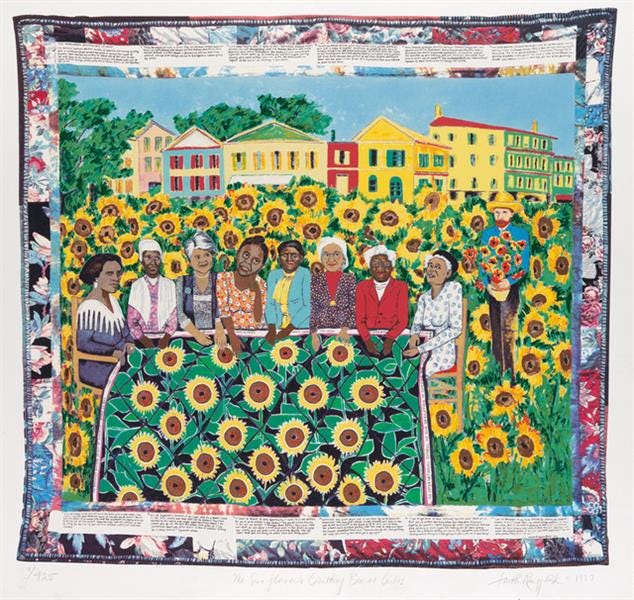
Fair Use — The Sunflower Quilting Bee at Arles (1991) by Faith Ringgold Courtesy of Wiki Art

If you want to see this piece “in person,” you’ll have to wrangle an invitation to Oprah Winfrey’s house. Winfrey commissioned and subsequently bought “The Quilting Bee at Arles” for her private collection.

It features eight historical Black women Winfrey admires — CJ Walker, Sojourner Truth, Ida B. Wells, Fannie Lou Hamer, Harriet Tubman, Rosa Parks, Mary McLeod Bethune and Ella Baker.

Time and geography separated these women in real life, but the artist united them on her quilt.

“The Quilting Bee at Arles” is the fourth in a series of 12 quilt paintings called “The French Collection.” Faith Ringgold, 92, completed them between 1991–1997.

They tell the story of a fictional Black girl in the 1920s — “Willa Marie Simone,” 16. She leaves Harlem for Paris to live as an artist and model. In a 1996 print version, Ringgold adds “Willa” to the group of quilters.

Self Portrait by Judith Leyster
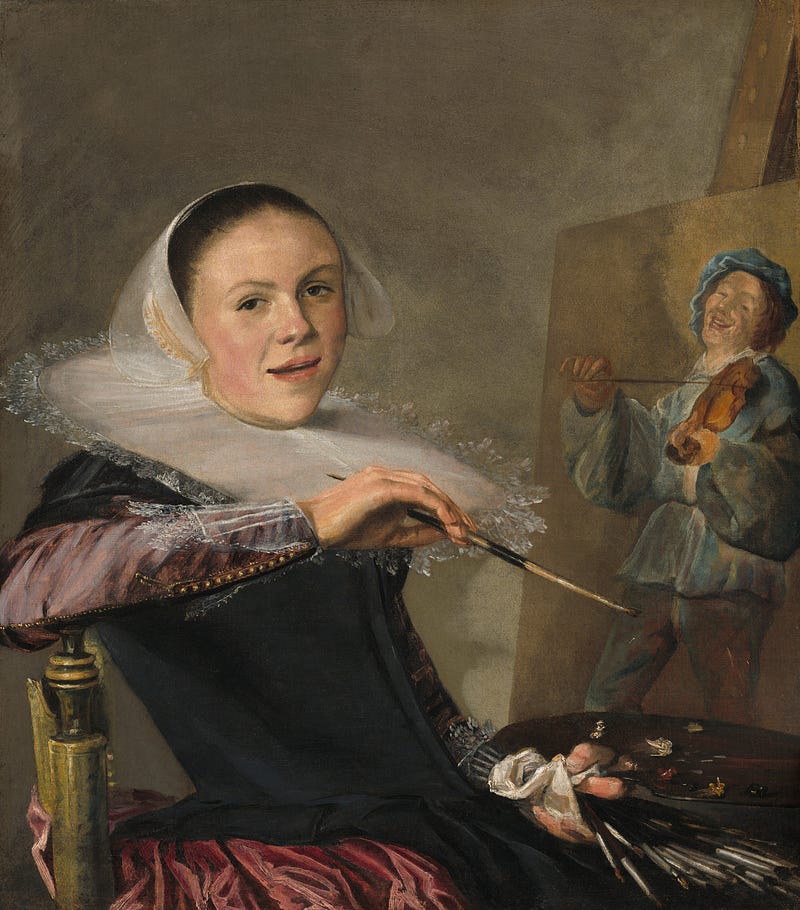
Self Portrait by Judith Leyster circa 1630 Public Domain

Judith Leyster taught, ran a workshop and sold her art in the Netherlands during the Dutch Golden Age (1588–1672). She was wildly successful at a time when there were few women painters.

Nevertheless, she was almost forgotten. For centuries historians misattributed her paintings to her husband or another artist, Frans Hels.

Leyster signed all her paintings with a monogram; her initials struck through with a five-pointed star. In 1892, an unhappy buyer noticed the monogram in a painting he bought of a couple making merry in a tavern. He thought he had purchased a Frans Hels.

He sued, and officials took a closer look at several paintings. The monogram appeared on all of Judith Leyster’s work. After centuries, she finally received recognition.

Leyster would not have worn an enormous lace collar and silk sleeves to paint. The portrait displays her ability to paint textiles and probably won her admission to the guild.

The laughing fiddler on the easel is typical of her work which often showed musicians having a grand time. Her subjects always look relaxed and happy.

Orangutan (1914) print by Samuel Jessurun de Mesquita
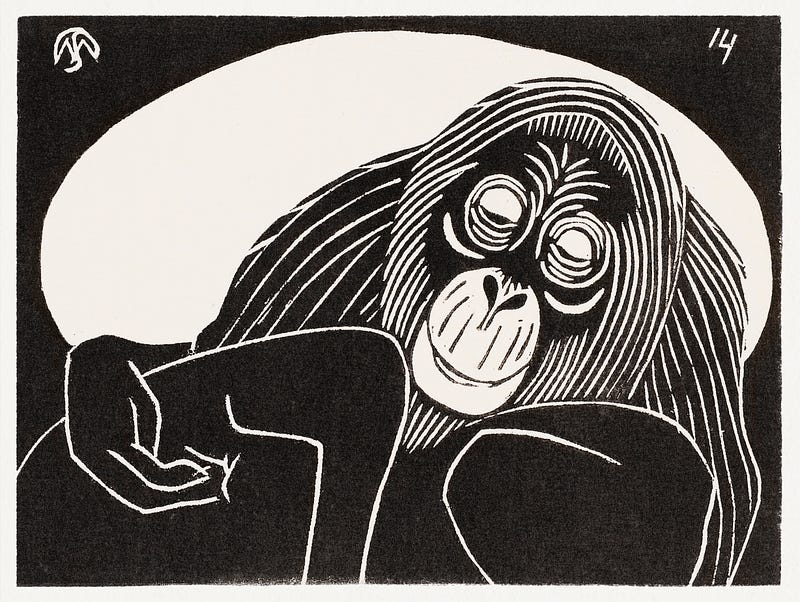
Orangutan, 1914, print by Samuel Jessurun de Mesquita, Public Domain

I am drawn to this print because of the orangutan’s wise and kind face. The artist, a Sephardic Jew, lived in Amsterdam and supported his family by teaching. One of his pupils was M.C. Escher.

In 1944, the Nazis burst into Jessurun’s home. They arrested him, his wife Elisabeth and their son Jaap. By then, Jessurun was elderly. He and Elisabeth died in the gas chambers. Their son perished in Theresienstadt, a concentration camp.

Escher and Jaap’s friends rescued some of the artist’s work.

Key Message: Don’t overlook art as a way to learn about history. And while you’re at it send me your recipes (vegan please). My next blog will be, “The World’s Stupidest Smart Person Makes Lasagna the Easy Way.”

Art
History
Midform
Education
Life Lessons
Recommended from ReadMedium