
The Nuance
The World’s Healthiest Foods Are Missing From Your Diet
When was the last time you ate barley, millet, or buckwheat?
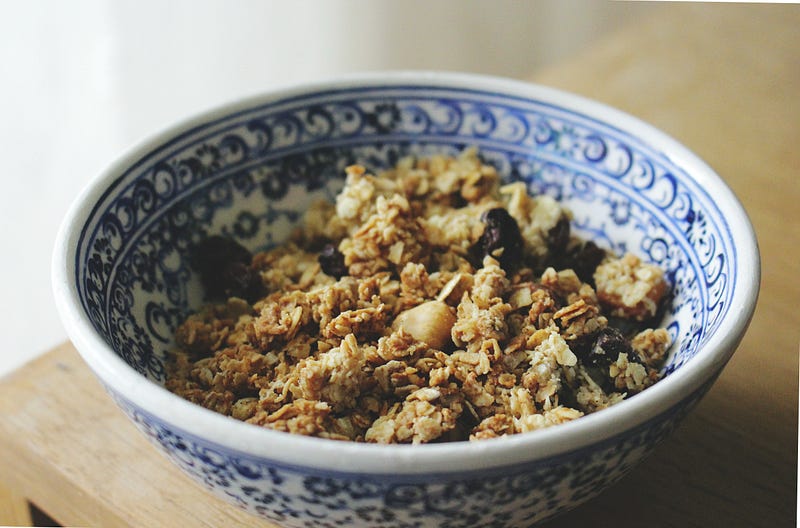
The study’s design was simple: Every day for four weeks, people ate a serving of either whole grain barley, whole grain brown rice, or both. They changed nothing else about their diets or lifestyle.
At the end of those four weeks, fecal samples revealed that the people’s microbiomes had undergone healthy changes; bacterial diversity had improved, and populations of several beneficial gut microorganisms had expanded. Meanwhile, blood samples showed a reduction in some biomarkers of inflammation, as well as evidence of heathier glucose and insulin responses.
“We showed that whole grains have a significant effect on the composition of the fecal microbiota that coincided with metabolic and immunological improvements,” the study authors wrote in the paper detailing their findings.
That study, published in 2012, was one of the first to show that whole grain foods may promote healthy microbiome shifts. But it’s just one in a long line of research efforts that have tied whole grain foods to health benefits — which is why pretty much very major public health organization in the world recommends that people eat more of these foods.
“There is a lot of strong research to support the recommendations to increase whole grain consumption,” says Janne Martikainen, PhD, a professor of health economics at the University of Eastern Finland. “The benefits have been seen in decreasing disease risk — especially for Type 2 diabetes — and also in reduced mortality.”
In a study published last month in the journal Nutrients, Martikainen and colleagues estimated that Finland could potentially save close to $1 billion in diabetes-related health care costs during the next 10 years if every person in that country ate just one additional daily serving of whole grains. (This is in a country of five million people, where the diabetes rate in adults is roughly 9%. In the U.S., 13% of the country’s 260 million adults has diabetes, according to the International Diabetes Federation.)
Whole grains aren’t sexy. They aren’t exotic. And yet over and over again, both observational and intervention studies have found that whole grains are arguably the healthiest foods human beings consume.
Earlier this year, a comprehensive research review on whole grain foods concluded that people who eat them are at reduced risk for Type 2 diabetes, heart disease, and several different types of cancer.
The review laid out all the ways that whole grains foods may support human health.
For one thing, they contain numerous essential vitamins and minerals — including a handful that are almost wholly absent in other foodstuffs. They’re also excellent sources of both soluble and insoluble fiber, which are indigestible carbohydrates that feed healthy gut bacteria and keep the GI tract from becoming clogged with partially digested food particles.
“Fiber acts like little scrubbies as it passes through your intestine,” says Robert Lustig, MD, professor emeritus of pediatrics and endocrinology at the University of California, San Francisco, and author of Metabolical, a new book about the dangers of processed food.
Lustig explains that when you eat foods containing both soluble and insoluble fiber — such as minimally processed whole grains — they combine to form a sort of protective “latticework” that slows the absorption of food molecules, which is helpful for digestion. Fiber also helps you feel full faster, which can prevent overeating, he says.
If all those health benefits aren’t reason enough, whole grain foods also tend to be more sustainable and environmentally benign than most of the other things humans consume— particularly meat and other animal-derived products.
But despite all of the benefits of whole grain foods, few of us eat them. According to the U.S. Dietary Guidelines, 98% of Americans don’t hit recommended whole-grain targets. Meanwhile, CDC figures show that whole-grain intakes are lowest among population groups that suffer from some of the highest rates of obesity and metabolic disease.
Some of this may be due to the popularity of low-carb diets, as well as widespread (and appropriate) public health warnings about the dangers of refined and processed grain-based foods.
There’s also been some speculation that genetically modified grains may cause health problems — a potentially valid concern, but one that researchers have found is likely outweighed by the benefits that whole grains provide. (Also, it’s increasingly easy to find non-GMO options in most food stores.)
Even setting aside all the research on whole grains, these foods come with some common-sense appeal.
For more than 10,000 years — beginning with the first Agricultural Revolution — whole grains helped form the foundation of the human diet. Their popularity and widespread consumption only started to dwindle — giving way to heavily processed and refined grains — about a century ago. It may be no coincidence that as our consumption of whole grains has fallen, our gut and metabolic health has deteriorated.
“I would recommend a large variety of whole grain foods, if possible, so that you get a variety of micronutrients and types of fiber,” says Martikainen.
He recommends oat bran, barley, and whole unprocessed wild rice as good additions to a healthy diet. Other whole grain foods include rye, sorghum, millet, buckwheat, whole oats, and popcorn. Buy these bulk or raw, and play with recipes online. (Most ready-to-eat foods are not going to do your health any favors.)
Eating a couple small servings — just an ounce or two — of these whole grain foods each day would put you far ahead of the average American. It would also get you to the daily intake linked to health benefits in most of the whole-grain research.
Whole grains may not have the glitz or appeal of exotic “superfoods,” but what they lack in flash that make up for in peer-reviewed research. Most of us would be healthier if we ate more of them.