
THE WORLD WE LIVE IN
Have Pickup Lines Changed From What’s your Sign to What’s your Diagnosis?
The Influence of Mental Health Awareness
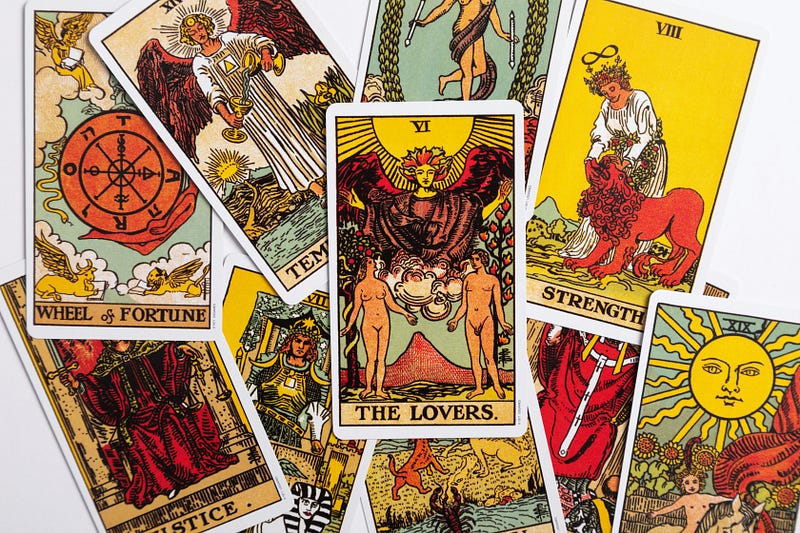
If you walked into a bar in the 1960s or 1970s I’d bet someone would come up to you and ask, Hey, what’s your sign?
At least that was a common pickup line on the campus of the Midwestern college I attended from 1968–1972.
Some of us were labeled as hippies and our astrological signs further defined us. To reveal your sign was to open the door for conversation. “Are you a Capricorn? A Sagittarius? Or maybe a Leo” A young college boy might ask. If you had the same sign, sparks would fly.
This Era was called the Age of Aquarius. We believed there would be an increase in harmony in the world. It was considered by some as an era of peace and love. Not all would agree, but that’s not my point.
My point is that the labels, hippies, flower children, freaks, and free spirits, told the world who we were. Our zodiac signs helped us understand who we were.
I was born between June 21 and July 22, which makes me a Cancer.
There are many characteristics of a Cancer according to astrologers. The ones I identify with are, emotional, creative, a homebody a nurturer, and resilient. Right On, Baby!
I doubt in today’s world college kids describe themselves by their zodiac signs, although I do believe they still use labels, just different ones. They are probably not used as pickup lines but are revealed in sincere, heart-to-heart conversations.
It seems that kids today are more open than we boomers ever were. We tried to deny and hide our problems. We just assumed we weren’t normal. There is an effort underway to encourage people to get help for their mental health issues, but along with seeking advice from a medical professional, often comes a diagnosis or label.
I recently discovered I am a highly sensitive person or HSP
This term was coined by psychologist Elaine Aron. She describes an HSP as someone who displays increased emotional sensitivity, stronger reactivity to both external and internal stimuli — pain, hunger. light, and noise — and a complex inner life.
This explains a lot and I wish I had known about this personality trait when I was much younger. Maybe I could have tempered my sensitivity or at least understood it instead of always doubting if I was normal. Having this insight might have improved my ability to maintain meaningful relationships early in life.
How many times have you heard someone say “OH, sorry I forgot, I’ve got ADHD’
“ADHD or Attention Deficient Hyperactivity Disorder is a chronic condition including attention difficulty and impulsiveness” — American Psychiatric Association.
People use this term loosely to label themselves. Those who have been diagnosed by a physician, and suffer from this disorder can be debilitated because of their inattentiveness and hyperactivity. Not being able to properly concentrate can be a stumbling block for academic success or success in the workplace.
Doctors may prescribe medication to help patients focus. However, I suspect that many of our young people are using ADHD as an excuse for poor grades and incomplete work. There is a fine line between having a medical diagnosis and someone taking advantage of the system.
I think everyone at one time or another has referred to someone as having OCD. Obsessive-compulsive disorder is characterized by excessive thoughts (obsessions) that lead to repetitive behaviors (compulsions).
But can you imagine going to bed at night tossing and turning because you didn’t get every spec of dirt off your floor after washing it ten times? Or getting up in the middle of the night to organize your closet — again? Sadly this is how those afflicted with OCD live.
There’s been a concerted effort over the years to destigmatize mental health issues, which helps us understand ourselves, our brothers and sisters, neighbors, and friends a little better.
But still, I wonder about being labeled. Is it another form of stereotyping?
A common term these days is “on the spectrum” I hear this term being thrown around in everyday conversations. “How’s your grandson doing?”, a friend asks. A grandmother answers “Oh I think he’s on the spectrum.”
This casual reference is often used as slang for Autism Spectrum Disorder (ASD), a developmental disability caused by differences in the brain causing problems with social communication and interaction, and restricted or repetitive behaviors or interests. — Centers for Disease Control and Prevention (CDC).
Not everyone with poor communication or interaction skills has ASD. Neither do those who engage in repetitive behaviors or have repetitive interests. It takes a medical professional to diagnose this disorder.
I met a lady in my neighborhood who described her daughter as “neurodivergent” This was a new term for me. Although I earned a Master's degree in counseling, it’s been several decades ago and times have changed.
The term “neurodivergent” came from the related term neurodiversity”. Judy Singer, an Australian sociologist, coined the word “neurodiversity” in 1998 to recognize that everyone’s brain develops in a unique way like a person’s fingerprints — no two brains are alike.
Unlike the labels of the 70s, the mental health labels we use to describe people now, are serious. I doubt that you’d really hear “What’s your diagnosis?” as a pickup line in a bar in the world we live in today, but we might hear a conversation using these terms to describe ourselves.
Labels aren’t necessary, but acknowledging that people have acceptable differences — is.
We all just want to feel normal — right? I believe the world we live in today is becoming more inclusive and accepting of others' differences, at least I hope so. Maybe the influence of mental health awareness will help all of us feel normal and unique.
Whatever normal is?