
The world needs to urgently unite and stop this nuclear threat
Because nuclear war is humanity’s last epidemic, and we cannot talk about it lightly
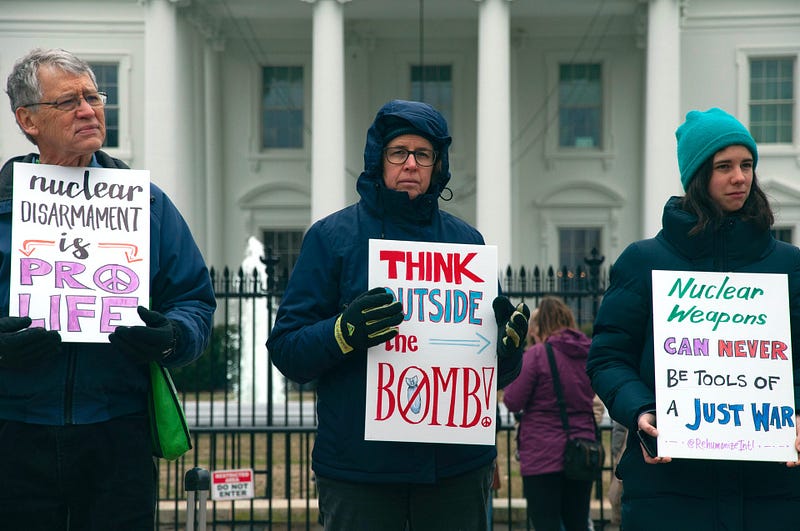
Russia’s invasion of Ukraine has revived the terrifying possibility of a nuclear war. Every media outlet is discussing the looming threat, but do we truly understand the consequences of this drastic Armageddon?
Our planet cannot survive a nuclear war, yet we talk about it so lightly and carelessly.
“Japan learned from the bombings of Hiroshima and Nagasaki that the tragedy wrought by nuclear weapons must never be repeated and that humanity and nuclear weapons cannot coexist.”- Daisaku Ikeda
There are 13,000 plus nuclear warheads across the world. Each is at least 10 times stronger than the one U.S.A dropped on Hiroshima. Today’s megaton nuclear warheads can instantly kill millions– within minutes.
Dinosaurs were wiped out by the radiation produced by an asteroid hitting our planet millions of years ago, humans could be next if we slacken our resolve on this man-made nuclear menace.
But what about the ban on nuclear weapons use and Nuclear Treaties?
Despite all the treaties signed after WWII, there are many countries around the globe holding tight to their nuclear arsenal.
- Russia (6,257)
- United States (5,550)
- China (350)
- France (290)
- United Kingdom (225)
- Pakistan (165)
- India (156)
- Israel (90)
- North Korea (50)
“The professed function of the nuclear weapons on each side is to prevent the other side from using their nuclear weapons. If that’s all it is, then we’ve got to ask: how many nuclear weapons do you need to do that?” — Carl Sagan
Although countless nuclear weapons have been tested over the years, none were used in any form of warfare since 1945. That’s a commendable 77 years of Nuclear-Teetotalling. Let’s keep it that way.
The two leading nuclear powerheads United States and Russia signed the New START Treaty on April 8, 2010. Both houses of the Russian parliament — the Duma and Federation Council — approved the treaty in late January 2011 and it entered into force on February 5, 2011. Both parties met the treaty’s requirement to complete the reductions by February 5, 2018. On February 3, 2021, the two parties agreed to extend the treaty for five years, till February 2026.
What about Nuclear Deterrence?
Russia’s recent invasion of Ukraine has shocked the world. It has also shown the Western countries, the limits of their reliance on nuclear deterrence.
Russia’s nuclear threat. Is it a real possibility?
Depends on Putin’s state of mind.
The world was on edge when Putin issued a warning saying, “No matter who tries to stand in our way or all the more so create threats for our country and our people, they must know that Russia will respond immediately, and the consequences will be such as you have never seen in your entire history.”
3 days after this warning, Putin put his nuclear forces on “special combat readiness”.
The world is translating this as a threat to use nuclear weapons be it for tactical or strategic reasons.
What if it happens? What are the short-and long-term impacts of Nuclear War?
Blasphemous.
A nuclear weapon detonated in any part of the world will affect the entire world
Unlike the “Little Boy” Nuclear bomb dropped on Hiroshima during WWII, today’s nuclear weapons are 60–100 times deadlier. They can detonate with an explosive force of about 100 kilotons (compare that to the 15 kilotons bomb on Hiroshima) instantly leveling most buildings within a 5-mile radius. The shock wave that follows, can generate a heatwave of 6,000°C (10,830°F), roasting every life form in its path. Finally, the post-explosion radiation and lingering radioactive fallout will be held aloft by atmospheric winds and will rain back on Earth for days.
The damage will be all-prevailing, long-term, and irreversible
Besides the immediate and long-term disaster to human life, nuclear bombs will destroy our soil, pollute our water, and poison the air we breathe.
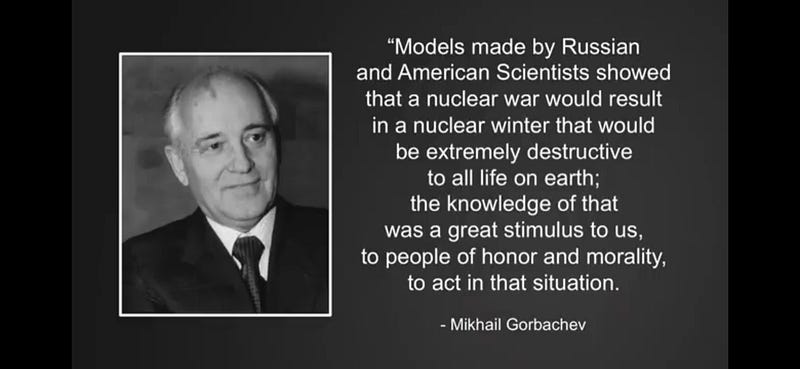
A single megaton nuclear detonation can result in average global temperatures dropping between 15º and 25º Celsius, enough to plunge our world into a “nuclear winter” — a deadly period of darkness, famine, toxic gases, and subzero cold.
It’s instant devastation
The world ecosystems and economies will collapse. The human race will collapse, and this is not something we can afford to talk about lightly.
“Nuclear weapons offer us nothing but a balance of terror, and a balance of terror is still terror.”- George Wald


