The World My Great Grandmother Knew
And how the son of the court poet of Queen Elizabeth started the deadliest war in American history, Climate Change too
A story of poets, rogues, villains, and genocide told against a backdrop of climate history. It’s all in my family.
I read an astonishing statistic in a Medium story: the world’s population has tripled since 1950. That’s all in my lifetime. I started musing about my ancestors. What were the climate indicators like in my great-grandparents’s time?
Many of you can relate, some have met your great-grandparents, even if only as small children. My wife remembers hers. I never met mine. One of my great-grandmothers was born in 1835 and her husband in 1828. Between them and my granddaughter born in 2021 is a span of nearly two centuries.
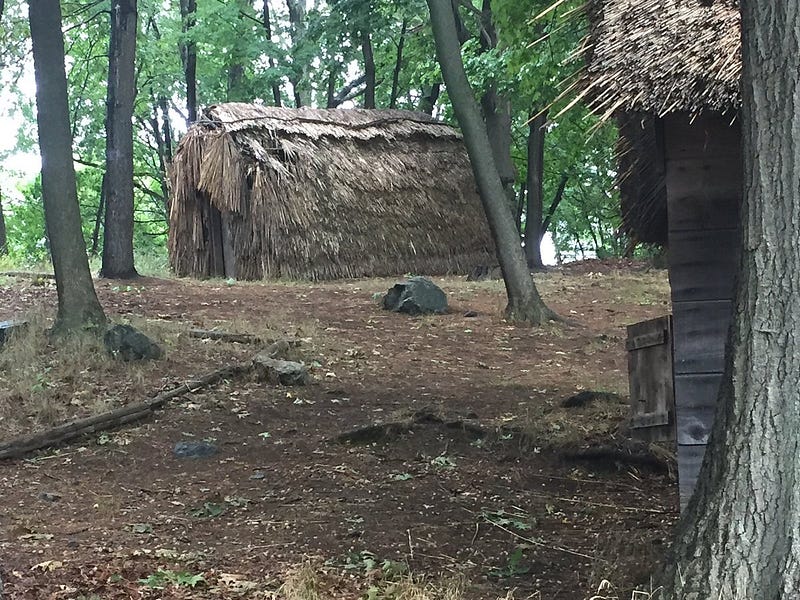
The first Salisbury in the United States was William Salisbury b.1622 in Wales, who landed in Massachusetts in 1630 with an older brother. William was the son of Sir John “the Strong” Salusbury, who was part of Queen Elizabeth’s court. He was a noted poet, very loyal to her. Unfortunately, when James VI of Scotland became James I of England, Sir John didn’t flow with the current. Be a willow, not an oak. The family lost favor with the Royal Court and suffered the setbacks of disfavor. So two sons embarked to the New World for a fresh start.
Although a staunch Church of England supporter, William settled in Puritan Salem and later Swansea. He lived a mile outside of town, because of his heretical or maybe unheretical, non-Puritanical beliefs. His notable contribution to history is starting King Philip’s War, the bloodiest war in US History. Warriors of the tribe of Metacomet, aka King Philip, led a raid on William’s farm in Swansea. William surprised them and ordered his son John to kill a fleeing native. The natives later killed and beheaded William, his son and five others. Another raid scalped and kidnapped his wife Susannah, who had taken refuge at the garrison headquarters. She later escaped to write a book about it.
In 1600 (the closest year to 1622 with data) world population was 560 million, 8% of now. The US population a miniscule, 4646. 276 ppm CO2, 50% of now, slightly less than it was in the year 1000.
In 1622 King James dissolved Parliament. No wonder my ancestors got the hell out of Wales.
My great-grandparents
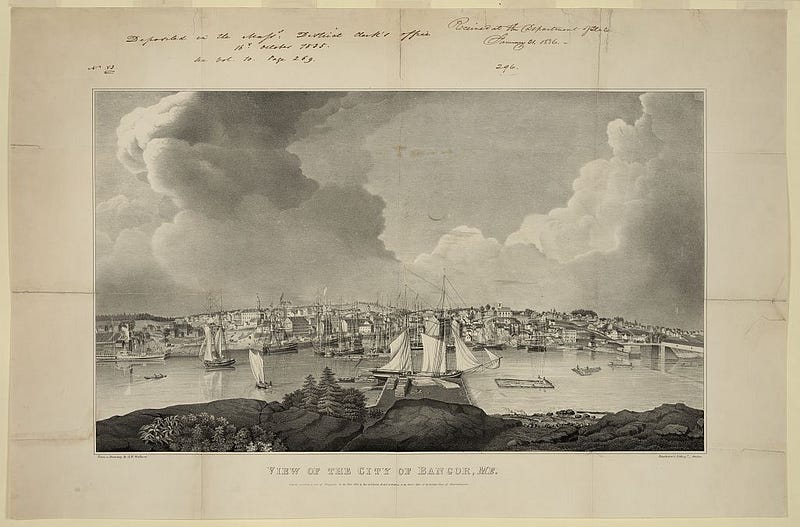
My grandmother’s father was born in 1828 and her mother in1835. My grandfather’s side 20 years later.
World population was about 1 billion, or 12% of current, double what it was in 1600. US population was 12.7 million. CO2 was 284 ppm or 68% of now, not much of a change from 1600 or even 1000.
In 1835 the US public debt reached zero, the only time in history. Texas declared independence and Mauritius abolished slavery. There are lessons to be learned from each. King Leopold of Belgium was born. Wonderful guy, we all miss him.
Both sets of great-grandparents lived in towns with newspapers, and I have no reason to believe they were not all literate. By the time they were born, the Jackson presidency had turned the nation’s attention west, and manifest destiny was the rallying myth. During the first half of their lives, the dominant political division was the issue of slavery.
One paternal great-grandfather was aged 33 and the other 10 when the Civil War broke out, so neither served. My great-grandmother saw the slide into the civil war, the war itself, the westward expansion, the end of slavery and the industrialization of the country.
My paternal grandparents were born in 1876 and 1877.
The world population in 1875 was 1.4 billion, 18% of today. US population 44 million. CO2 was 288 ppm 69% of now.
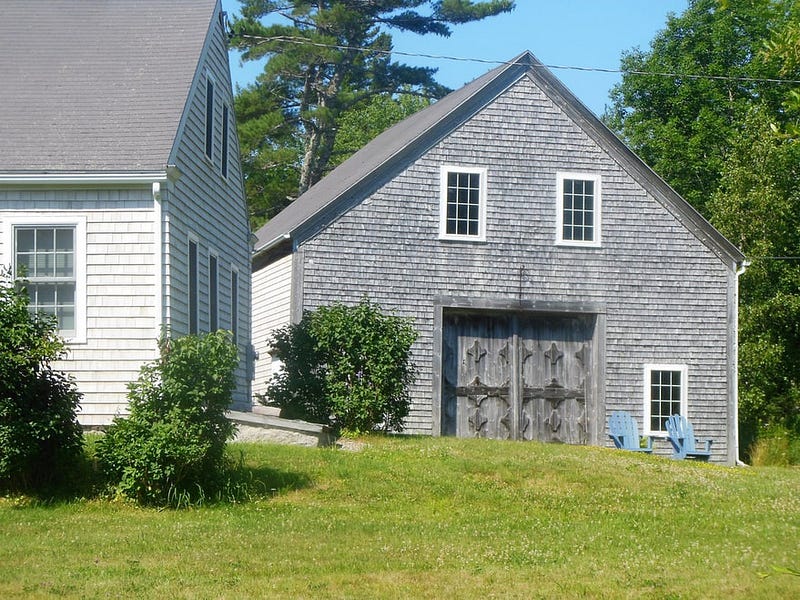
Grandmother Lucy was the brains in the family. She was a school teacher and taught me arithmetic with original 19th century textbooks. It was much more effective than the post-WWII crap that your grandparents were taught. She hated the other Salisburys, hence the change in spelling. We were known as the i-less Salsburys. Northern Hancock county was flooded with them. On a visit to Maine with my first wife, we were walking through a small graveyard in Salisbury Cove. She looked around and said, “My God, they’re all Salisburys!”
My grandfather earned money by odd jobs as a carpenter and as a gate operator at Graham Lake dam. (An early 1920s ecological disaster.) But his true love was hunting. He wasn’t happy with his take from hunting season. Neighbors would buy hunting licenses and give them to him to tag the deer in exchange for a share of the meat, Out of season he was just more careful. If my grandmother got tired of canning, he gave it away. The State got fed up with his antics and made him a Game Warden to embarrass him into good behavior. It didn’t work. He became a game warden and a poacher.
I know very little about my maternal grandparents, except they ran a dairy farm. My grandfather died when my mother was 13. My aunts and uncles took over the farm and ran it into the ground.
World population 1910, 1.7 billion, 21%. US population 92 million. CO2 300 ppm, 72% of now. We were teetering on the edge.
My father was almost a carbon copy of my grandfather, but was slid a couple generations into the future. He became a grocery clerk at 19. Roughly the same time, my mother graduated from nursing school as a registered nurse. After graduation, she moved to Blue Hill, Maine Hospital. My father served in France in WWII. He was told he was beyond draft age and had a family. He volunteered anyway, probably to get away from my mother.
I was always amazed at the changes my mother saw in her lifetime. She was born it Hermon, Maine, the western suburb of Bangor. The town is so boring that the town website has a picture of a truck stop. Her memories of innovations were of things that were commonplace elsewhere in the 19th century, but were new in Hermon in the second decade of the 20th.
Her uncle was the first person in Hermon to own a car. The engine burned up three months after he bought it, because no one told him he needed to change the oil.
She experienced WWI where my uncle died of the Spanish Flu, She became a nurse during the Great Depression. Airplanes went from WWI biplanes to scheduled airliners. The military was shrinking, but that didn’t matter. My mother educated, so I assume she read the Bangor Daily News and was up-to-date on national news, so she would have known of Zeppelins and the Hindenburg Disaster and may have listened to it on radio.
During WWII, she listened to Edward R Murrow’s broadcasts from London during the Blitz and watched him on the nightly news when television arrived in Eastern Maine. Here her life begins to overlap my own. Atomic bombs, nuclear power (even crypto or meta didn’t evoke such hyperventilating), computers. The Interstate Highway design emerged full-blown from Eisenhower’s experience with the autobahn to be the greatest engine of American growth. Concurrently was the emergence of jet airliners and military jets, like the B-52s, which were based a few miles from our home.
Then there is me, born in 1944, too young to be in the greatest generation and too old to be a boomer. The silent generation. You haven’t heard of us, and we haven’t either. The defining event for my cohort was the Vietnam War.
World population 2.3 billion, 29% of now. US population 140 million. CO2 310 ppm, 76% of now.
My son was born in 1980.
World population 4.4 billion, 55% of now. US population 227 million. CO2 341 ppm, 81% of now.
I have a new granddaughter.
World population 8 billion. US population 331 million. CO2 420 ppm. Now is now.
Reflection
It amazes me that a relationship that many of you have known personally takes me back to the presidency of Martin Van Buren, where genocide of Native Americans was not something in history books, it was still happening. In their lifetimes, the abolition of slavery was new and accomplished, not something dragged on and unfilled a century and a half later.
While researching some of the dates, I came across a University of Wisconsin book that traces the Salisbury family back to 1022. Can you imagine a thousand years of us? If my first US ancestor started the bloodiest war in American history, what kind of atrocities did the earlier ones commit? I shudder to think.
Year 1000: world population 275 million, 3% of now. US population, 3–4 million. CO2 280 ppm, 33% lower than today. Number of people below the current poverty level: nearly everyone.
The CO2 level was pretty much constant until my grandparents' birth, now it is 140 ppm higher.
A request for comments and other begging
I thrive on comments, especially if you disagree with me. Your comments give me ideas for new stories. If you have an itch, I might be able to scratch it. I try to pay attention and respond to everyone.
Please read the comments my readers leave. Many add thoughts that make my stories much better.
Please clap. Apparently Medium is paying attention again. It helps me gain additional views and more people to talk to.
Help support my writing addiction. If you join Medium, you get to read stories from me and thousands of other Writers. A nice chunk of your subscription fee helps support my writing at no cost to you. Subscribe
© Copyright Russell Salsbury