
The World is Yours With a Flick of Your Thumb
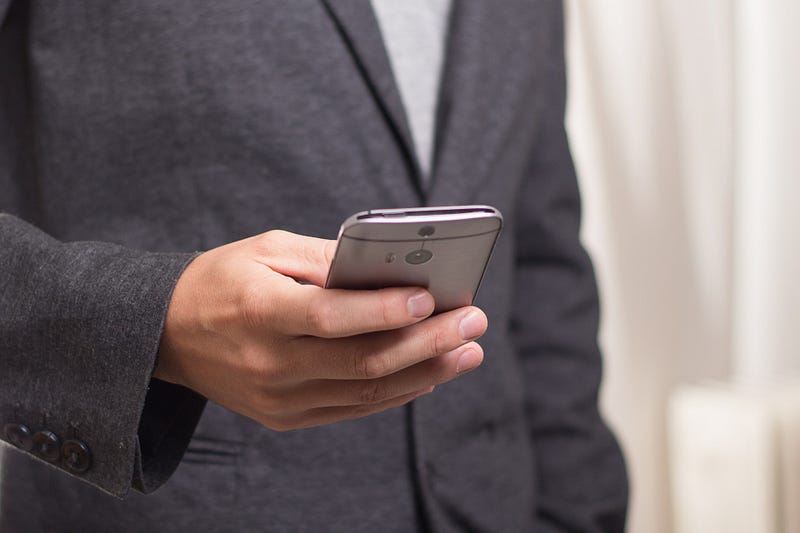
Information has never before been so easily accessible. All you have to do is pick up your smartphone and move your thumb. Forget dictionaries or encyclopaedias. This is way too old-school now. Everything you want or need to know is just a small scroll away.
TMI — too much information
Twenty years ago, before the rise of the smartphones, we usually knew and were interested in local news. We didn’t know so much about what was going on in the world as now. And yes, we might fall into a media bubble and only see the world through a warped viewpoint, especially using social media, but still we see and know a lot more than just mere two decades ago.
With just one swipe of your thumb you get easy access to news all around the globe. Forget the papers, using internet is a much faster way. Soon enough our upcoming generations will be asking what is a newspaper, much like kids today are wondering about floppy discs (yep, the very same save icon) right now.
People try to keep up with the latest news in order to stay in the circle. We want to be up to date. Most of us suffer from FOMO (fear of missing out). And if you miss a week or two, you’re suddenly an outsider. Jared Leto claimed he went on a meditation retreat for twelve days in early March 2020 and when he returned, he had no idea how bad the pandemic situation was. If you unplug completely, you’re suddenly out of the loop.
The other extreme would be knowing everything that’s happening in the world. I believe human brains are not ready to comprehend as much information as is thrown our way. We are not ready to process everything that’s happening. Knowing that thousands of people all around the globe die every day due to the virus makes us anxious. What if your country is next? People are fighting somewhere far away…now. But what if people in my country find something to fight about as well? Then what? All of these questions, beginning with “what if” give us anxiety and could even drive us into depression.
The key to avoid total desperation is to stop moving your thumb across your smartphone screen. It’s all about finding that balance. It’s okay to keep up with the news to some extent, but do we really need to know every single detail about every single story? There’s too much negativity in the world as is, so why not try and concentrate on our own lives for a change? I mean more locally. The obligation to stay at home couldn’t have come at a better time. Now we have to learn how to put down our phones as well. And not pick them back up every three minutes.
Social distancing
In my opinion, social distancing began way before the COVID-19 pandemic hit us. It began when smartphones and wifi took over around the early 2000s. Everyday use of smartphones has increased tremendously in the last 20 years. I consider myself somewhat old-school. When I meet my friends or relatives, I try not to use my phone at all, except for urgent calls.
Before self-quarantine and complete lockdown, did you notice how today’s teenagers communicated to each other? They gathered somewhere, like a park or a mall, and just sat there with their smartphones. They’re side by side, and yet they don’t know how to communicate to one another without the comfort of their devices. They are together alone.
Social distancing made us realise how important and crucial it is to have real human contact. Communicating via video feed is just not the same as talking to another person face-to-face. When it comes to using smartphones, the pandemic situation is like a double-bladed sword.
On one hand we love to finally get some rest at last and just hang out at home without rushing somewhere. It’s awesome to catch up with our friends, scroll through social media feed, play some games and so on. Five minutes turns into an hour, an hour turns into three until finally screen time of six hours blows up in our faces. That’s the reality.
Many of us might get fed up after some time and are eager to go out again, without the need to socialise via smartphone. Others might get too attached to this kind of situation and might not want to get back out there. Being at home is comfortable, limitless phone use is addictive. And sadly, the lockdown is making it worse.
Smart insincerity
Sharing news and information with your friends has never been easier. Just take your other thumb as well and keep tapping away. Who wants to call these days? Or even worse — video chat? It’s so much more uncomfortable. Having a phone call means you don’t have that much time to think before you have to respond. Texting and messaging is so convenient. You don’t have to look the other person in the eyes, you don’t have to hear their voice or wait until they stop talking.
Messaging seems to be the most convenient and fastest communication manner. But it’s not always sincere. When we message, we can’t see the other person’s true facial expressions. We can’t read their emotions through a text message. Sure, we use emojis, but do you really laugh with tears every time you use that emoji? Or actually cry a river ever every time you use the crying emoji? Mostly, our faces stay neutral while we use all kinds of extremely emotional emojis. We might be bubbling up inside, but out expression stays zen-calm.
Some people prefer to solve their problems with another person through messaging. And usually, this gets nowhere near to the solution. Problems are still left up in the air, or even made worse. Because if we don’t have to physically face another person, it is easier to ignore them, or even pretend that they do not exist at all.
From social to emotional distancing
This is what happens when people stay apart for too long. First, we are forced to stay at home due to the virus, and I’m all for it. Safety first! But there’s a slippery slope that comes with it. If we neglect our friends or relatives, and “forget” to call them, we’ll be soon drifting towards emotional distancing from them.
I have a brother, and he lives in another country. I sometimes forget how my brother sounds because we barely call each other. We share an occasional message or a video call once in a while and see each other twice a year. Is that enough to develop a healthy sibling relationship? Doubt that. Sure, I see what he’s posting online and I even like every single photo of his. But a heart symbol or a thumbs up symbol will never replace a genuine smile when seeing someone. These will never replace your kind comments about another person. Communication works best when it’s done face-to-face, rather than online. So yeah, I can’t wait for the pandemic to be over, so I can put away my phone to give my thumb some rest, and actually go and see him and his family.


